
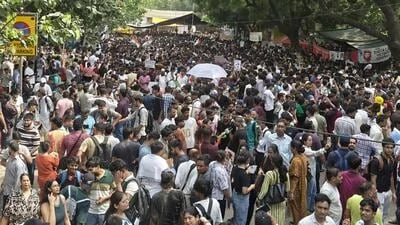
The Supreme Court on Thursday agreed to examine whether the Delhi Police’s use of facial recognition technology and biometric surveillance to monitor protesters at Jantar Mantar has legal backing, and whether such mass surveillance violates fundamental rights to privacy, dignity, free speech and peaceful assembly.
A bench comprising Chief Justice of India (CJI) Surya Kant and justices Joymalya Bagchi and V Mohana issued notice to the Centre and the Delhi Police commissioner on a public interest litigation (PIL) filed by CPI(M) Rajya Sabha MP AA Rahim, challenging the alleged use of facial recognition technology, AI-powered surveillance systems and biometric identification tools against protesters. Rahim has sought a declaration that indiscriminate deployment of facial recognition and biometric surveillance against peaceful protesters is unconstitutional. He has also sought directions restraining the Delhi Police from deploying such technologies until Parliament enacts a law specifically authorising their use. Among other reliefs, the petition seeks disclosure of the surveillance technologies, databases, standard operating procedures and vendor agreements used during the Jantar Mantar protest. It also seeks deletion of protesters’ biometric data from the National Automated Fingerprint Identification System (NAFIS), Crime and Criminal Tracking Network and Systems (CCTNS) and allied databases. The plea contends that there is no law authorising biometric surveillance of people participating in a lawful protest. It also claims that the Delhi Police’s stated use of facial recognition technology is limited to tracing missing persons and identifying deceased persons, rather than policing peaceful assemblies.
It argues that neither Delhi Police standing orders governing protests nor the Criminal Procedure (Identification) Act, 2022 permits such surveillance of peaceful demonstrators.
Senior advocate Menaka Guruswamy, appearing for Rahim, told the bench that the plea specifically challenges the Delhi Police’s use of facial recognition technology against protesters and alleges that the data collected is being held by private companies. “This is very specific prayer concerning facial recognition being used by the Delhi Police against protesters, and the data is held with private companies,” Guruswamy said. The bench then directed that notice be issued and the plea be tagged with other pending petitions concerning the July 20 “Sansad Chalo” protest, which raise allegations of police excesses, including the use of pellet guns and violence against protesters and police personnel.
