
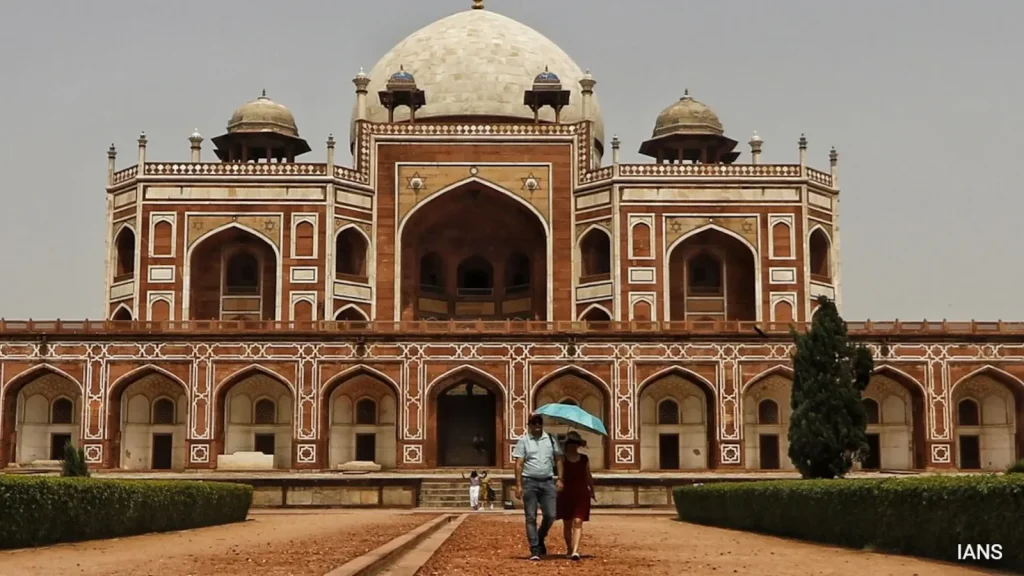
A recent study by IIT Roorkee and IIT Kanpur reveals that air pollution is causing significant damage to Humayun’s Tomb in Delhi, a UNESCO World Heritage Site. The research highlights that a black crust has developed on the sandstone of the monument due to prolonged exposure to polluted air, accelerating its deterioration. This finding underscores the urgent need for conservation efforts to protect this historic site from environmental threats.
Pollution-Induced Black Crust Weakens Humayun’s Tomb Sandstone
A recent study published in the International Journal of Architectural Heritage has revealed that black crust samples from Humayun’s Tomb are primarily composed of gypsum. This mineral forms when sulphur dioxide from polluted air reacts with calcium-rich dust and moisture. The research provides clear evidence linking air pollution to the deterioration of this historic monument.
The findings suggest that the presence of this black crust weakens the sandstone of Humayun’s Tomb, raising concerns about the monument’s preservation. To combat this issue, the researchers recommend periodic removal of the crust using scientifically validated conservation methods. They also advocate for continuous monitoring of pollution levels around the site and a careful evaluation of protective coatings before their application.
These recommendations aim to assist conservation agencies in prioritizing preventive measures and developing targeted strategies to protect Humayun’s Tomb from further damage due to pollution.
