
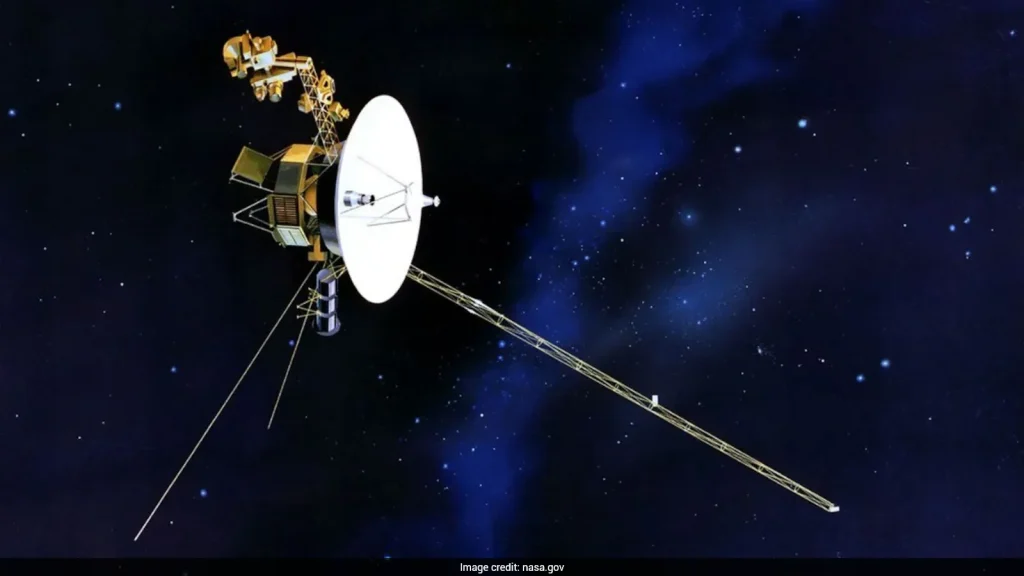
Located billions of miles away from Earth in interstellar space, the probe is running critically low on power. However, NASA found a brilliant way to squeeze out extra energy, keeping all of its scientific instruments operating longer than anticipated. NASA’s Voyager 2 spacecraft was launched in 1977 and has been travelling through deep space for nearly five decades.
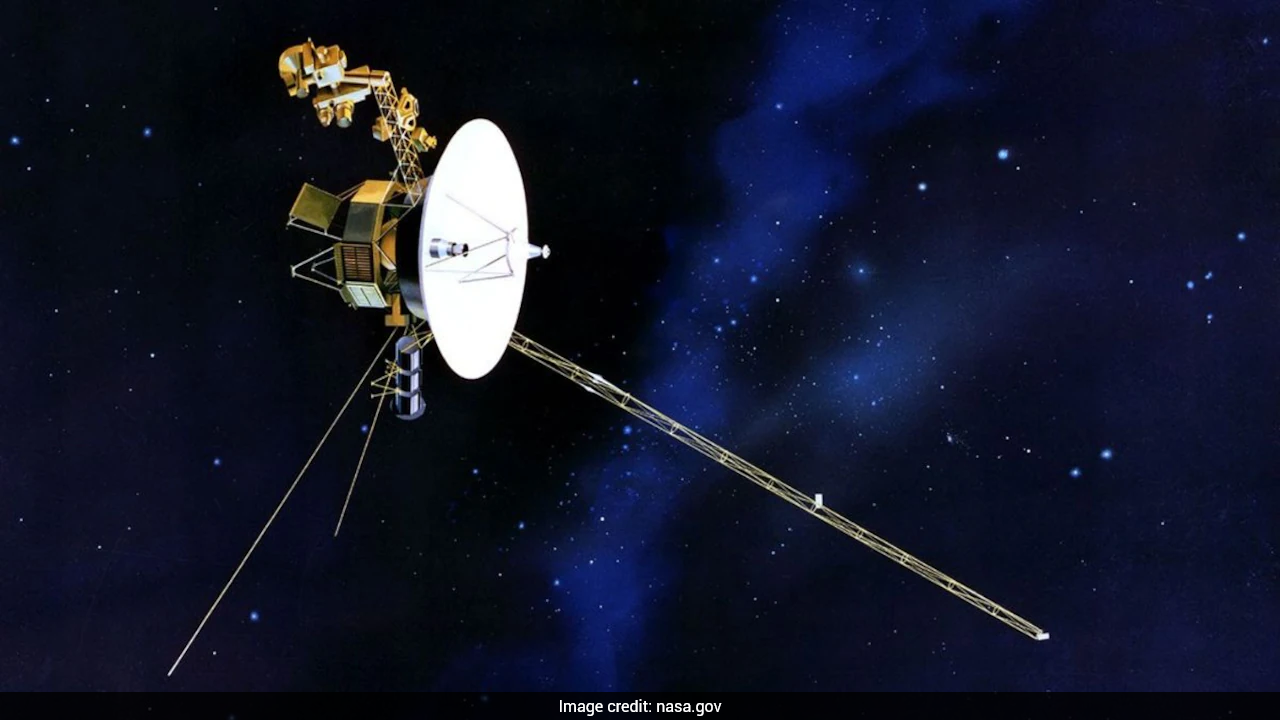
The space agency revealed that, nicknamed the ‘Big Bang’, the effort involved simultaneously turning off certain powered devices and substituting them with lower-power alternatives while ensuring the spacecraft remains warm enough to operate. Instead of shutting down an instrument, NASA engineers looked for hidden power reserves. Because plutonium constantly decays, the spacecraft loses roughly 4 watts of power every year.
Voyager 2 relies on radioisotope thermoelectric generators, which convert heat from decaying plutonium into electricity.
“Engineers at NASA’s Jet Propulsion Laboratory have successfully freed up power on Voyager 2, extending how long the spacecraft can continue to do science,” NASA wrote in an official statement . “The spacecraft power margins have grown razor thin, requiring the team to conserve energy by shutting off non-essential devices and systems,” NASA officials said in a statement.
Eventually, the probe reached a point where NASA faced a tough choice: turn off one of its five remaining science tools or run out of usable electricity.
To adapt, engineers previously shut down non-essential systems like onboard heaters and cameras.
