
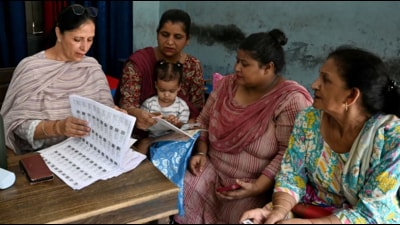
As many as 20.70 million, or 21.16% of the 97.85 million electors in Maharashtra, including 3.6 million (34.65%) of the 10.39 million in Mumbai, are expected to be deleted from the electoral roll as Booth Level Officers (BLOs) could not trace them during field visits as part of the Special Intensive Revision (SIR) that began in the state on June 30.
The electors will have one month to submit suggestions and objections after the draft electoral roll is published. Enumeration rates were higher in rural areas. “Thane was ahead of Mumbai in recording the lowest enumeration rate. First, the floating and migrant population is high in Thane. The SIR exercise in West Bengal was one of the most contentious electoral revision exercises in recent years. The difference in absolute votes the BJP and the Trinamool Congress (TMC) polled was similar to the total SIR deletions. The TMC has maintained that the deletions helped the BJP win West Bengal elections.
Because of higher floating population and migration, most urbanised districts and cities recorded lower rates, largely. In May, the ECI announced the rollout of Phase 3 of SIR in Andhra Pradesh, Arunachal Pradesh, Chandigarh, Dadra and Nagar Haveli and Daman and Diu, Haryana, Jharkhand, Karnataka, Maharashtra, Manipur, Meghalaya, Mizoram, Nagaland, Delhi, Odisha, Punjab, Sikkim, Tripura, Telangana, and Uttarakhand. On April 10, ECI announced the deletion of nearly nine million from the electoral roll. The BJP, which swept to power in the state for the first time, winning 207 of 294 seats, rejected this link.
“Eligible electors whose names are deleted from the roll will have an opportunity to contest the deletion within one month of the draft publication,” said an official in the CEO’s office. Since many families travel to Mumbai daily for work and return late, tracing them for enumeration was difficult,” said a second official in the CEO’s office. Out of these, around 2.7 million deletions fell under the “logical discrepancy” category.
