
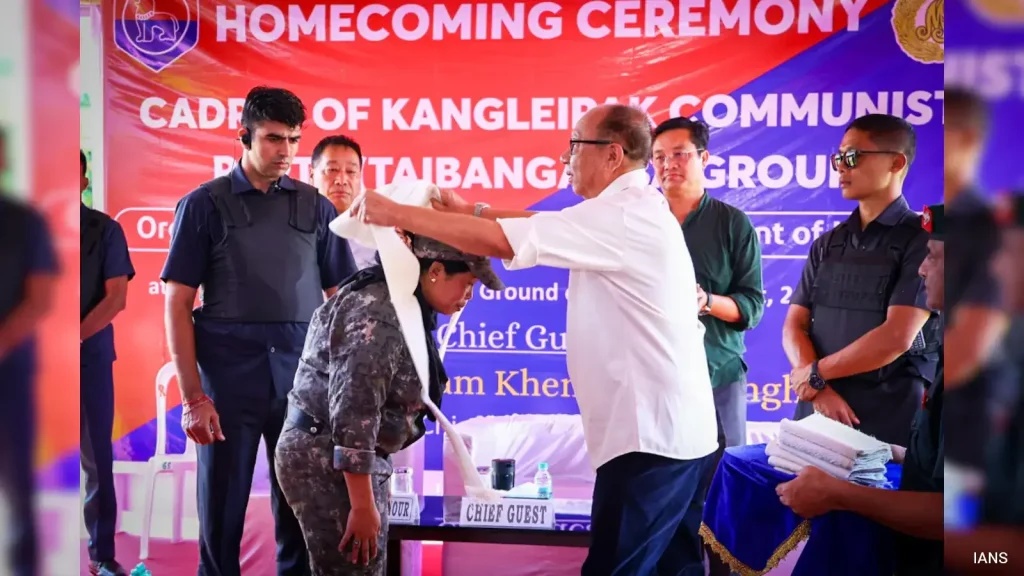
In a significant move towards fostering peace and development in Manipur, 46 militants, including four women from the banned Kangleipak Communist Party-Taibanganba faction, surrendered to the state government on Tuesday. During the surrender, they laid down 20 weapons, marking a crucial step in the ongoing efforts for reconciliation in the region.
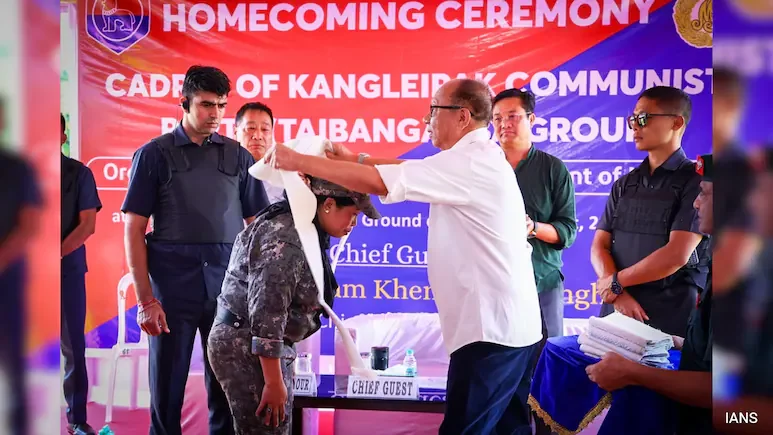
During the ceremony, an acceptance of surrender agreement was also signed between the government and the KCP-Taibanganba faction. The acceptance was signed by KCP-T Chairman Haobijam Dilip alias Taibanganba, on behalf of the group, while Joint Secretary, Home, Dr M. Veto Singh, signed on behalf of the state government.
At the same time, for those who genuinely give up violence and want to rejoin society, the police would support the legal process of surrender, verification and rehabilitation.
In his welcome address, Director General of Police Mukesh Singh said that by giving up armed activities, the cadres had chosen to return to their families, communities and responsibilities as citizens. He said the Manipur Police would continue to perform its constitutional duties with firmness.
Government Support for Surrendered Militants
The government has announced its commitment to support the recent surrender of 46 militants from the KCP rebel group. Khemchand Singh emphasized that the act of surrendering is a step towards peace, stating that violence has not benefited the state. Under the Revised Surrender-cum-Rehabilitation Policy of 2018, each surrendered militant will receive a monthly stipend of up to Rs 6,000 for 36 months, along with a fixed deposit grant of Rs 4 lakh.
Additionally, the government plans to provide skill-based training to these individuals, helping them reintegrate into society and secure sustainable livelihoods. Singh also expressed support for the implementation of the National Register of Citizens (NRC) in the state but criticized the use of bandhs as a form of protest, suggesting that alternative democratic methods should be pursued to avoid disrupting the lives of students and daily wage earners.
