
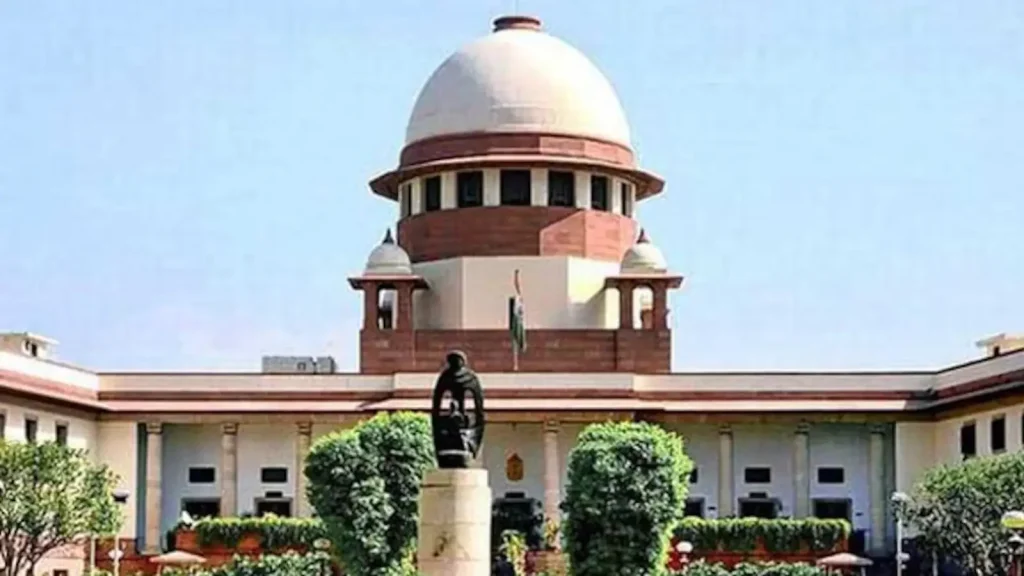
The Supreme Court has determined that an allegation of a casteist slur made in a private setting does not constitute an offense in a public context. This ruling came as the court canceled proceedings against a school manager who had been charged under the Scheduled Castes and the Scheduled Tribes (Prevention of Atrocities) Act, 1989.
The Supreme Court said an incident occurring within four walls where no members of the public are present cannot automatically be deemed to have taken place in “public view”
A bench comprising Justice Vikram Nath and Justice Sandeep Mehta was hearing an appeal against an Allahabad High Court order that had dismissed an appeal filed under the law known as the SC/ST Act in short. Subsequently, a police case was filed under the SC/ST Act, followed by a chargesheet. A cross FIR was also filed against the complainant by the school manager’s wife. She alleged the complainant verbally abused and assaulted her in the school office. Subsequently, the manager intervened and was also assaulted, she alleged. In this FIR too, a local court had admitted the chargesheet. The school manager then challenged the special court’s summons order in the Allahabad High Court, which declined to grant relief, saying that the proceedings could not be quashed merely on the ground that the case was filed out of vendetta. The high court held that a prima facie case was valid.
The Supreme Court said the alleged casteist slur was claimed to have been made inside a closed room, and on top of that the prosecution could not establish, even prima facie, that the incident happened in a place where people could see or hear it. The Supreme Court then raised the condition about “public view”. The school manager’s lawyer said the alleged incident happened inside a closed room and witness statements did not prove the presence of any member of the public in the room or that anyone outside heard what was said.
