
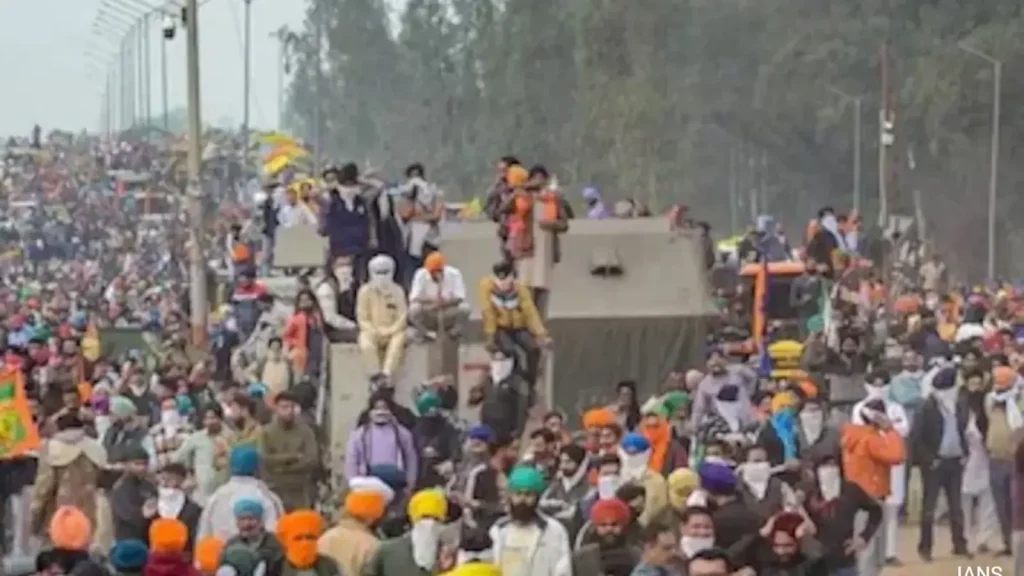
Markets stayed shut, buses stayed off the road, but the day passed off peacefully, with no untoward incident reported anywhere in the state. Punjab saw another bandh this week. Roads blocked, slogans raised, the same old demand repeated once again: Release the Sikh prisoners, or Bandi Singhs. This has been going on for more than a decade now. Every few months, some party or the other picks up this issue, makes a big statement, holds a rally, writes a letter to Delhi. Then things go quiet again, until the next round. The truth is simple, even if nobody wants to say it out loud – every major party in Punjab has used this issue. Not one of them has actually closed the file when it had the power to do so.

Congress: Loud in Opposition, Quiet in Government
When it lost the chair, the file reopened as a slogan. Three of the eight were reportedly already out; three others were subsequently released, while Bhullar and Gurdeep Singh Khera remained unresolved. If any party had the means to push this through, it was the SAD. Waryam Singh’s release was subsequently cleared. When the SAD had the chair, the file gathered dust. That is six years of a decision sitting half-done. The BJP points out, fairly, that most of these convictions happened under Congress rule but that does not explain why its own notification has still not been fully carried out. Out of power now, leaders like Gurkirat Singh Kotli and Charanjit Singh Channi back the release at rallies. The twist: Kotli is Beant Singh’s own grandson, while another Congress MP and Beant Singh grandson, Ravneet Singh Bittu, has publicly opposed releasing the men who killed his grandfather. Congress does not even speak with one voice inside its own family. That changed this August, when Chief Minister Bhagwant Mann personally sought parole for Jagtar Singh Hawara from the Punjab Governor Gulab Chand Kataria. The pattern is difficult to ignore. In opposition, parties demand action; in government, legal complications, jurisdiction and political caution slow them down. Then, as elections approach, the issue returns with fresh urgency. That does not make every intervention cynical or every concern insincere. But after more than a decade, Punjab still lacks a transparent, case-by-case process capable of bringing the matter to a conclusion. For the families, this is not an election issue; it is a decades-long wait.
Because any single government sat down and resolved it, the list has shrunk mostly on its own, case by case, not. When this campaign started in 2013, the list of Sikh prisoners being demanded free ran to 119 names. More than a decade of releases, deaths and legal action later, that number has come down to around 21. The Shiromani Akali Dal (SAD) ruled Punjab for 10 years, from 2007 to 2017, and was allied with the BJP at the Centre for most of that time. Though Punjab’s former chief Minister Parkash Singh Badal wrote to several governments in 2014 seeking the release of 13 prisoners, formed a high-level committee in 2015, and Punjab also moved the Supreme Court. The issue only returned to SAD’s speeches after it lost badly in the 2022 election. In 2019, the Centre government issued a formal notification, reportedly, for the release of eight Sikh prisoners, timed with Guru Nanak Dev Ji’s 550th birth anniversary. The Indian National Congress ruled Punjab from 2017 to 2022 and did little concrete on this at the state level. The AAP has governed Punjab since 2022 and stayed largely non-committal for three years. With the 2027 election approaching and the Panthic vote up for grabs, a government finding sudden urgency now is hard to read as anything but timing, even the BJP’s own Punjab unit has called it out as such. In 2027, voters may ask a simpler question: not who is making the promise now, but what they did when they had the power.
