
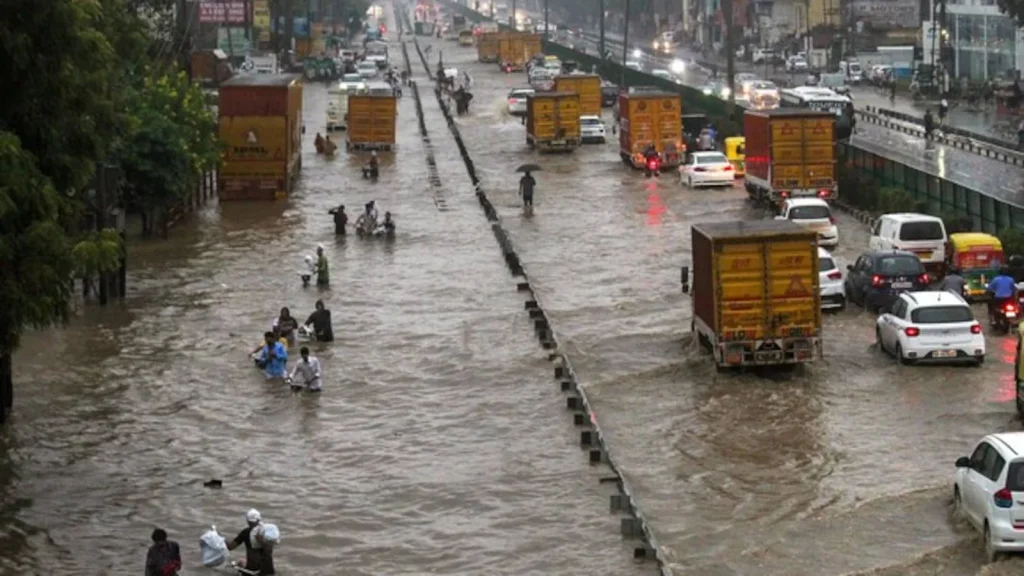
Heavy rain once again flooded roads and disrupted traffic across Gurugram today, leaving schoolchildren stranded in some areas and putting the city’s civic infrastructure back in focus.
Many of these issues fall under the jurisdiction of state governments. Large urban infrastructure projects can face delays due to land-related issues, public objections, multiple departmental clearances and No Objection Certificates, the Ministry said. With the city’s infrastructure once again under scrutiny, Minister of State for Housing and Urban Affairs, Tokhan Sahu, today chaired a series of review meetings on the Gurugram Metro Connectivity Project, AMRUT 2.0 and CITIIS 2.0, with a focus on speeding up implementation and resolving bottlenecks. Sahu reviewed the implementation of AMRUT 2.0 and discussed the Ministry’s response to observations made in the 10th Report of the Parliamentary Standing Committee on Housing and Urban Affairs. The Ministry said Rs 71,133 crore has been allocated for sewerage and septage infrastructure under AMRUT 2.0. This accounts for nearly 36% of the Mission’s total approved project cost of Rs 1,97,191 crore. the Ministry said they account for a much larger share of the overall investment While sewerage and septage projects account for around 6.8% of the total number of approved projects. The Ministry also addressed observations on the coverage of AMRUT 2.0. It said the Mission covers 500 cities, with around 7.41 crore urban households based on 2025 data reported by these cities. The Parliamentary Standing Committee’s assessment, however, considered around 4,900 urban cities and approximately 11.32 crore households, which the Ministry said was a wider universe than the Mission’s defined coverage.
