
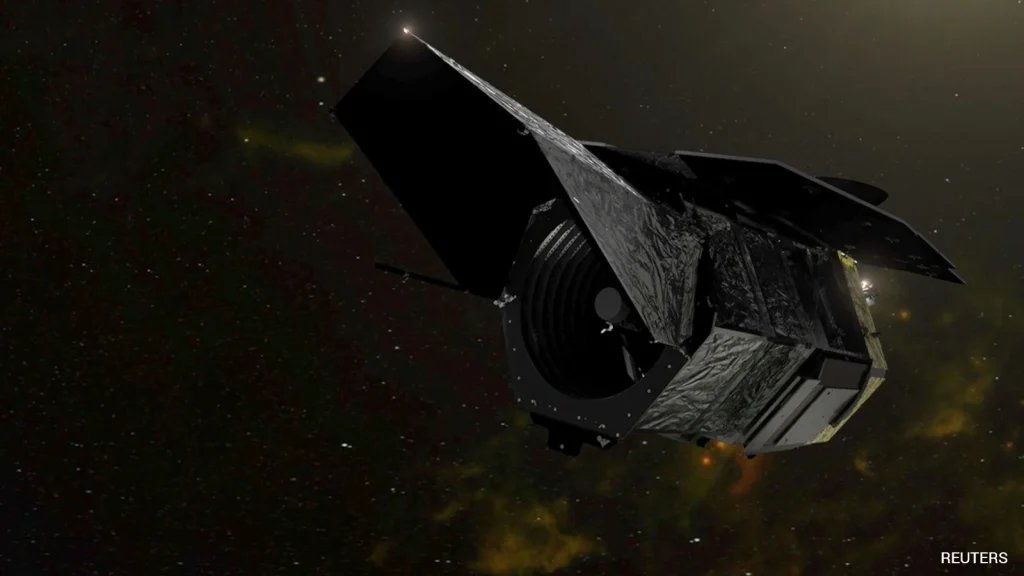
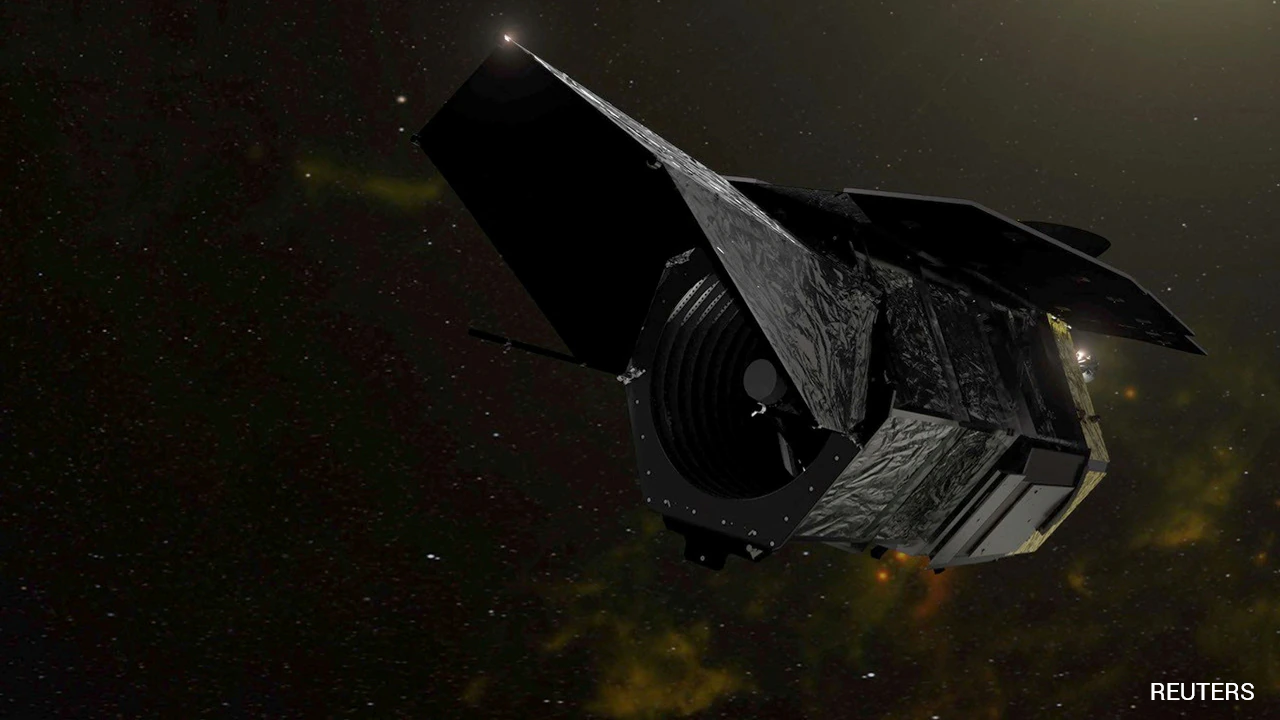
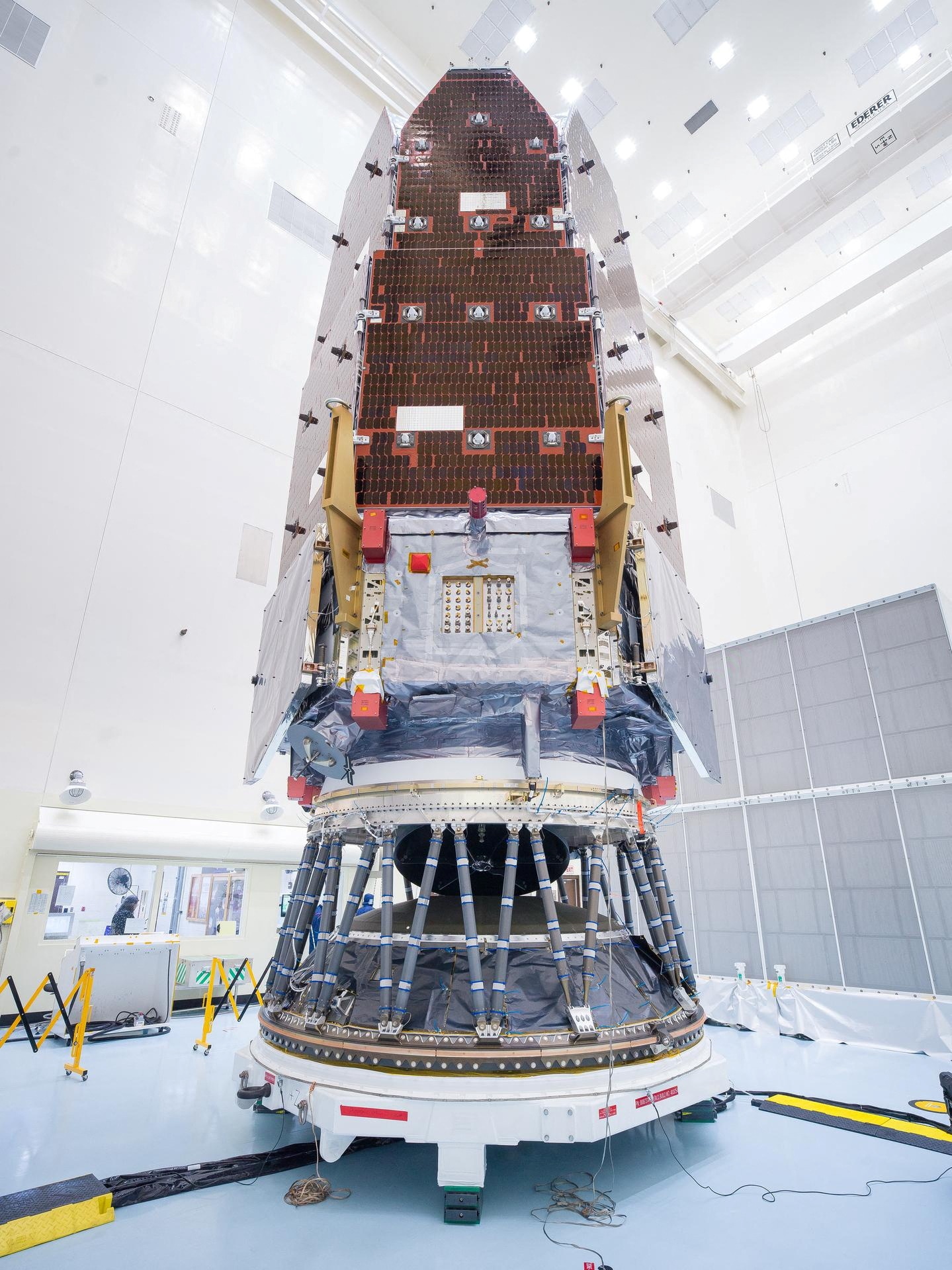
NASA is set to launch its next flagship space observatory, aimed at unraveling some of the universe’s most profound mysteries. This mission will focus on investigating dark energy and dark matter, testing gravitational theories across vast distances, and searching for planets outside our solar system. The observatory’s advanced capabilities are expected to enhance our understanding of these critical scientific questions.
“The survey will contain over two billion galaxies and enable us to study how the structures in our universe – the stars, the galaxies, the clusters of galaxies – grew and evolved. We’ll also measure how our universe has expanded over time. “The recent results from the DESI – Dark Energy Spectroscopic Instrument – collaboration indicate tantalizing hints of a time evolution of dark energy. Could the observed acceleration instead indicate that our theory of gravity needs modification on the largest scales?
The Big Bang event roughly 13.8 billion years ago initiated the universe, and it has been expanding ever since. Scientists in 1998 disclosed that this expansion was actually accelerating, with an invisible force called dark energy as the hypothesized reason. To date, more than 6,350 exoplanets – planets outside our solar system – have been discovered, as scientists search for evidence of potential life beyond Earth.
And these are the keys that will allow us to unlock the fundamental nature of dark matter and dark energy and the fabric of the universe itself,” McEnery said. Answering these questions is one of the most important goals of modern cosmology,” Ishak said.
Revolutionary Telescope Enhances Cosmic Exploration
A new telescope is set to transform our understanding of the universe. Its wide panoramic view and rapid survey capabilities allow scientists to conduct extensive studies of cosmic structure, composition, and evolution like never before. By performing wide-field surveys, researchers can gather unprecedented data, paving the way for groundbreaking discoveries in astrophysics.
