
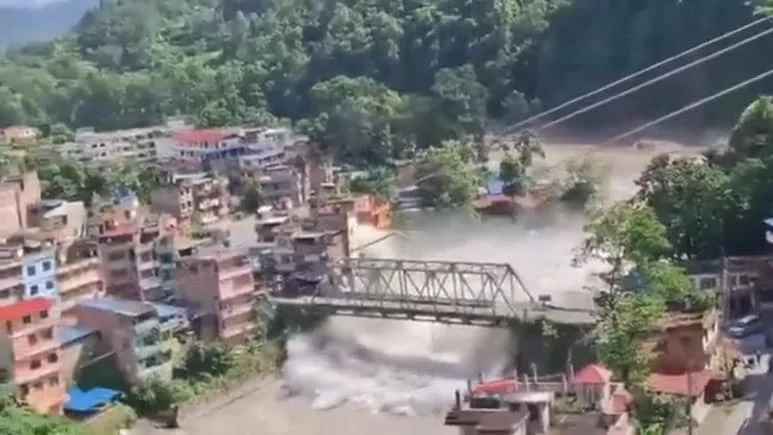
On Wednesday, flash floods swept through Nepal’s Rasuwa district and surrounding areas near the Nepal-Tibet border. The disaster has resulted in at least 160 confirmed deaths, with hundreds more reported missing. Among those unaccounted for are approximately 142 Indian nationals, many of whom were pilgrims on their way to the Kailash Manasarovar Yatra. Rescue efforts are ongoing as authorities work to locate the missing individuals and assess the full extent of the damage.
The Nepal Army, police and helicopter teams are continuing search-and-rescue efforts in the affected areas. Indian authorities are working closely with their Nepali counterparts, and emergency helplines have been set up for families of those affected.
The floods were triggered by a sudden surge of muddy water along the Bhote Koshi River, which originated on the Tibetan side. The force of the water destroyed settlements, bridges and hydropower projects in its path, and the death count has continued to rise as rescue operations carry on. In an exclusive conversation with NDTV, Nepal Medical Association President Badri Rijal, who is involved in the medical rescue effort, spoke about what health teams are up against. For now, the focus remains on sheltering those affected, with emergency care being handled at nearby primary health centres before patients are referred elsewhere. The Nepal Army, police and helicopter teams are continuing search-and-rescue efforts in the affected areas. Indian authorities are working closely with their Nepali counterparts, and emergency helplines have been set up for families of those affected.
Because of poor weather, setting up temporary field medical stations has proven difficult.
“We are managing the doctors who are needed in the rescue,” Rijal said.
