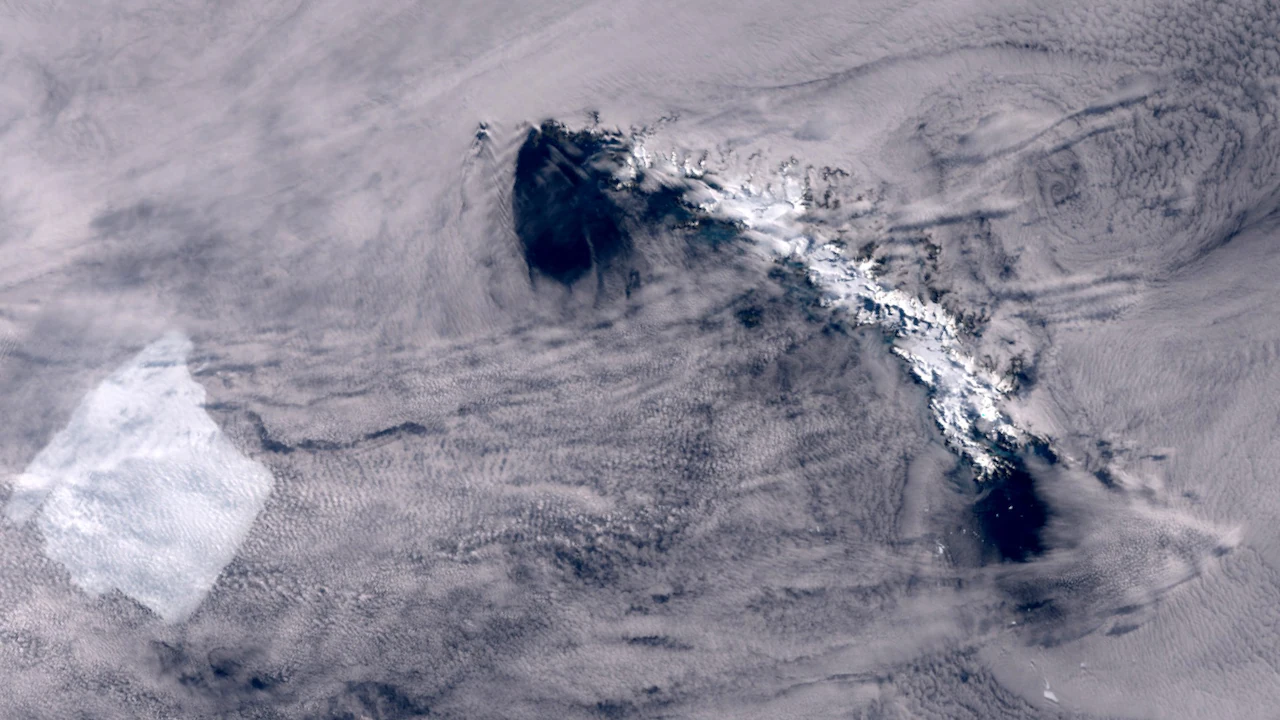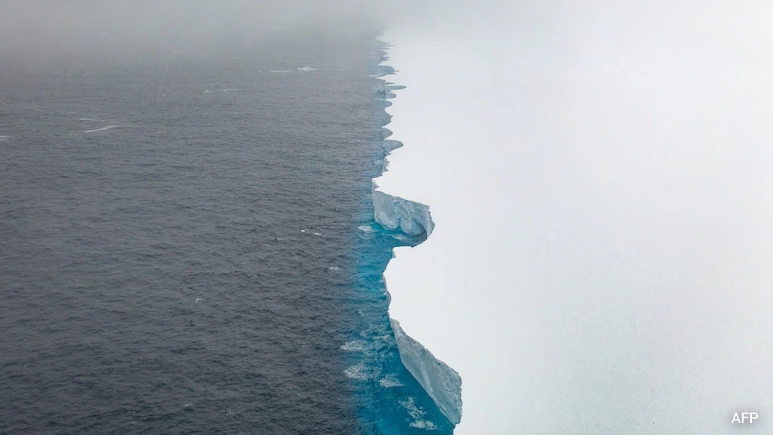
A23a, once the world’s largest iceberg, has almost completely disappeared after spending nearly 40 years drifting through the waters around Antarctica and the Southern Ocean.
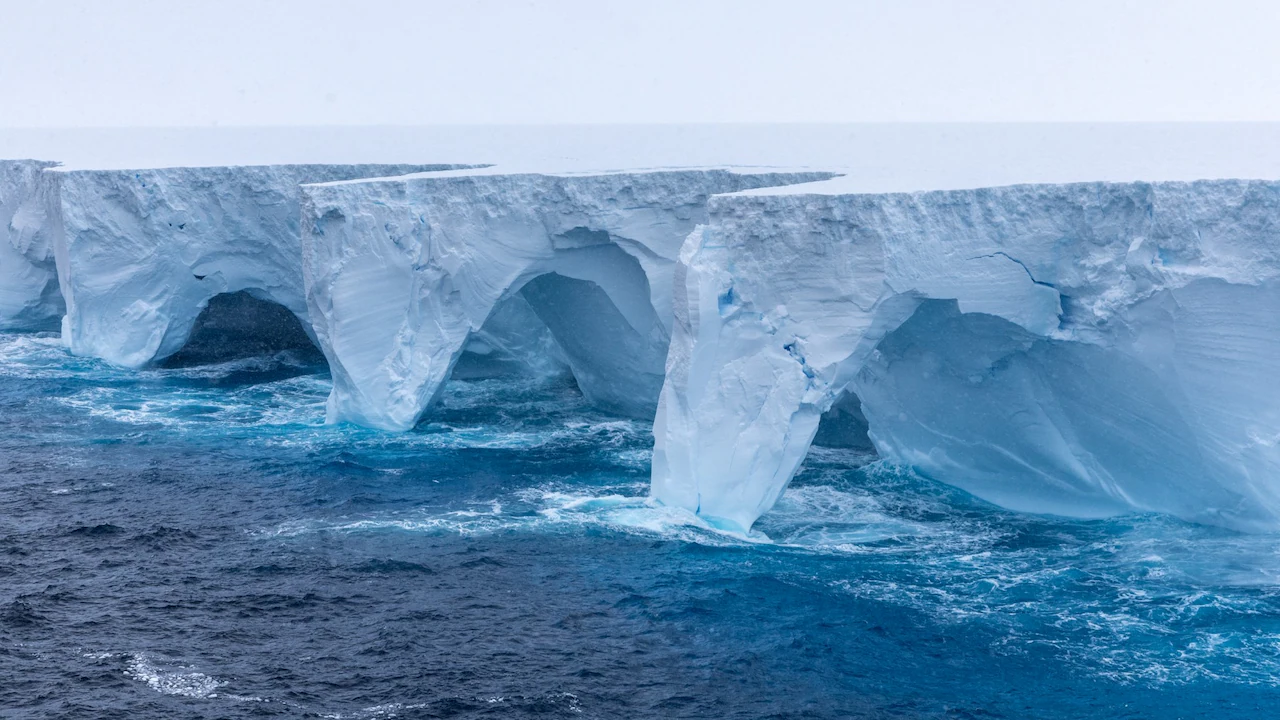
The reports described it as the biggest iceberg on the move. Scientists closely followed A23a as it travelled through the ocean. One of the researchers tracking it was Jan Lieser, an ice specialist with Australia’s Bureau of Meteorology. After reaching open water, A23a took an unexpected turn. The iceberg later broke free and continued moving. “It’s so powerful. It’s like a wall. An infinite wall. And with caverns. During the filming, they found an underwater ledge near the iceberg where divers could safely film the ice. But when they returned after some time, the ledge had disappeared. The team was also surprised to see so much wildlife around A23a. They spotted whales, penguins, birds, leopard seals and snow petrels. “We really had the thought that it was a piece of Antarctica that came to us with all the inhabitants of Antarctica—like a ship with a whole crew coming and traveling all together … Satellite images in March and April showed the iceberg breaking into smaller sections and spreading across the Southern Ocean. Scientists later identified more fragments that they believed had once been part of A23a. By May, researchers were still able to spot tiny remnants of the iceberg from space. After surviving for almost four decades, A23a is now believed to have largely melted away.
The giant iceberg broke away from Antarctica’s Filchner Ice Shelf in 1986. It later became known as A23a after splitting from a larger iceberg called A23 in 1991. At its largest, A23a covered about 2,000 square miles, roughly the size of Bali. A23a iceberg seen in the waters of The Southern Ocean off Antarctica in January 2024 Photo Credit: AFP The iceberg finally began moving in 2020. It was carried by ocean currents and reached the open waters of the Southern Ocean in November 2023. Instead of continuing north, it became trapped in a powerful ocean current known as a Taylor column in March 2024, which forms when an underwater mountain disrupts the movement of water above it. By June 2025, its area had fallen below 1,200 square miles, meaning it was no longer the largest iceberg in the world. Satellite images taken in January 2026 showed plumes of chlorophyll around the iceberg. In early 2025, tourists spotted old barrels and storage tanks near the iceberg. They were later identified as remains from Druzhnaya 1, the Soviet research station that had accidentally been carried away on the iceberg when it broke from Antarctica in 1986. The US National Ice Center stopped officially tracking A23a in March 2026 after it became too small to meet its criteria for an iceberg of its size.
It remained stuck in the Weddell Sea for decades, with part of its underside resting on the ocean floor, according to National Geographic . “A-23A is on the move!” scientists said on July 10. And there is ice falling, part of the cliffs falling everywhere,” said documentarian Jerome Bouvier. It’s like an island and just moving,” Bouvier said.
Then, it continued losing ice as it entered warmer waters. The iceberg spun repeatedly for about eight months before breaking free in November 2024. In March 2025, it became stuck again near South Georgia, around 70 miles from the island. Satellite image shows A23A Iceberg getting closer to the South Georgia Island in the Weddell Sea in Antarctica on February 24, 2025 Photo Credit: AFP