
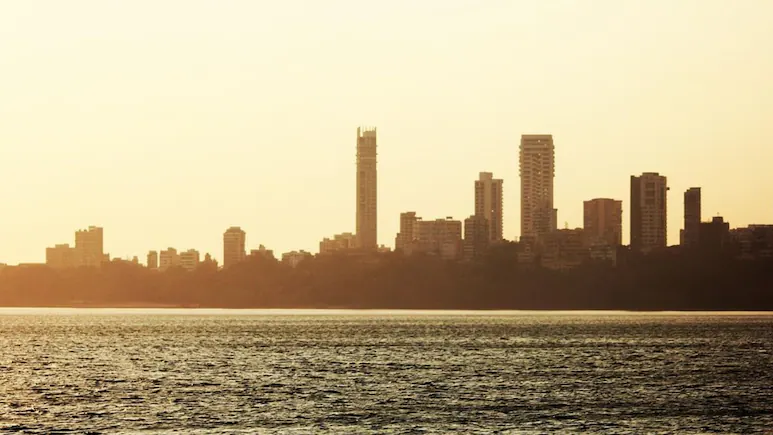
A recent United Nations report highlights that millions of residents in Kolkata and Mumbai face an “immediate risk” of losing their homes. This alarming situation is attributed to rising sea levels and the possibility of permanent flooding in these densely populated cities.
The report, released Monday, said that sea level rise is already damaging urban infrastructure, water systems, transport networks, energy grids, buildings and groundwater resources.
It added that this divergence underscores the need to strengthen and broaden the indicators used to assess coastal vulnerability and exposure, ensuring that social risks measured in human lives and displacement receive the same level of urgency as those quantified in financial terms. The combined effects of sea level rise and land subsidence are also intensifying flooding risks, degrading coastal ecosystems and increasing the loss of lives, livelihoods and critical aquatic ecosystem services and habitats. As the freshwater-saltwater interface migrates inland, coastal aquifers experience the salinisation of freshwater wells and soils, while storm-driven overwash can cause the long-lasting contamination of surface and groundwater, affecting public health. The result has a direct impact on drinking water security, agricultural productivity, irrigation systems and groundwater-dependent ecosystems. Across all regions, sea level rise is intensifying existing climate vulnerabilities, including coastal flooding, freshwater salinisation, erosion and ecosystem degradation, with profound consequences for safety, livelihoods, economies, cultures and the environment. Critical infrastructure, agricultural productivity, trade, tourism and cultural heritage are increasingly at risk, making sea level rise a core sustainable development challenge.
In high-income cities such as Miami and New York in the United States and Guangzhou in China, the primary impact is the staggering financial exposure of coastal infrastructure, with assets at risk estimated between USD 2 trillion and USD 3.5 trillion. Between 2014 and 2023, global sea level rose by 4.7 mm per year. In 2024 alone, the sea level rose 5.9 mm, a new record, driven primarily by exceptional ocean warming – in some regions faster than at any time in the past 4,000 years – and this rate is expected to continue to increase through 2050 owing to warming already locked into the climate system.
“In the low-lying deltas of South Asia, in cities such as Kolkata and Mumbai in India, and Dhaka, the defining impact is human displacement, with more than 14 million people at immediate risk of losing their homes to permanent inundation,” the report said. This requires adequate, accessible and predictable finance, strengthened data and science capacities and robust technical, institutional and legal frameworks to support affected populations and States, especially those most at risk, in preparing for and managing escalating impacts, it said.
