
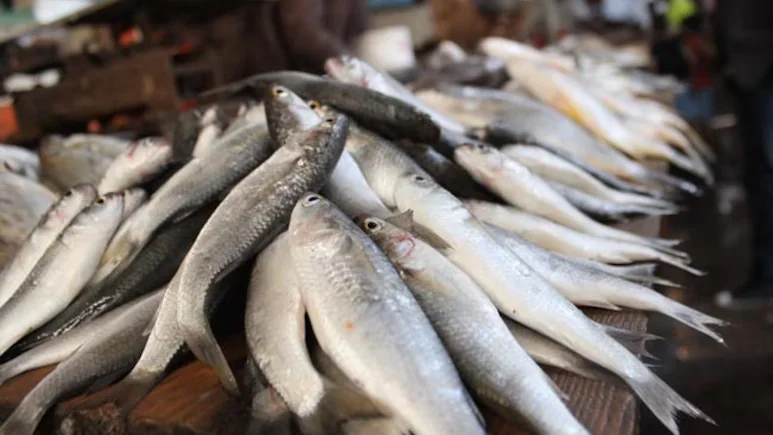
Fish carried into Bihar by floodwaters from Nepal could be dangerous to eat, the state government has warned, urging people not to catch, sell or consume them until conditions return to normal.
Following flash floods in Nepal, water from the Trishuli River has been flowing into Bihar via the Gandak and Kosi rivers, both major waterways in the northern part of the state.
As river levels rise, unfamiliar types of fish have been turning up in flood-affected areas, and some people are said to have fallen ill after eating them.
The Animal and Fisheries Resources Department has advised people not to buy, sell or consume fish caught from floodwaters, saying such fish may carry sewage contamination, bacteria, viruses and other pathogens. Nepal police have also issued a similar warning for residents. The advisory, issued by the Department of Dairy, Fisheries and Animal Resources in Bihar, states that during floods, fish move out of ponds, rivers, lakes and reservoirs and spread widely with the floodwater. It notes that continuous exposure to polluted drains, dead animals and other contaminants makes these fish unsafe to eat, and that people should avoid consuming fish caught from floodwaters until environmental conditions stabilise. The department has made the following appeal to the public: The Kosi and Gandak rivers, both fed by waters originating in Nepal, have swelled following the flash floods and are now carrying large amounts of debris along with dead fish. Landslides and glacial bursts in Nepal’s hilly regions have washed down silt, mud, stones and large tree trunks. Wreckage from collapsed bridges and damaged hydroelectric projects in Nepal, along with vehicles, household items and LPG cylinders from flooded villages, has also been seen floating into Bihar’s rivers. Human and animal remains washed down from Nepal are adding to the risk of infection in the water. Health experts warn that the mixing of contaminated floodwater with drinking water sources such as hand pumps and wells could lead to a rapid spread of diseases such as diarrhoea and cholera. The consumption of contaminated water and food also raises the risk of typhoid, while hepatitis A and E can infect the liver through contaminated water. He described the diseases linked to this contaminated water as a serious threat to people’s lives. Authorities have urged residents in flood-hit districts to stay alert, avoid contact with floodwater where possible, and follow official guidance until river levels stabilise and the affected water bodies return to normal.
Read: The River Took It All: Aerial Visuals From Nepal Show Scale Of Catastrophe | NDTV Exclusive Speaking to NDTV, Dr PV Singh of LNJP Hospital under the Bihar government said that to protect people from these health risks, the government needs to relocate residents of affected areas to safe locations in a timely manner.
Flooding Raises Health and Agricultural Concerns in Bihar’s Border Districts
Recent flooding in Bihar’s border districts is leading to stagnant water and waterlogging, which are likely to promote mosquito breeding. This increases the risk of diseases such as dengue, malaria, and chikungunya, as well as skin and eye infections.
Adding to the health concerns, groundwater in several districts bordering Nepal, including West Champaran, East Champaran, Sitamarhi, Kishanganj, Purnia, and Araria, has arsenic levels that exceed the safe limit of 10 ppb. The highest arsenic concentrations are found along the banks of the Ganga and in floodplains created by rivers originating in Nepal.
High iron content has also been detected in water across nearly all seven districts bordering Nepal, resulting in an unpleasant taste and leaving red-yellow stains on utensils and clothing. Kishanganj has reported iron levels significantly above normal. Officials warn that iron carried by the floodwaters could further contaminate local water sources.
The flooding is also expected to impact farmland in these districts, raising fears of potential shortages of grains and vegetables, which would exacerbate the challenges faced by local farmers.
