
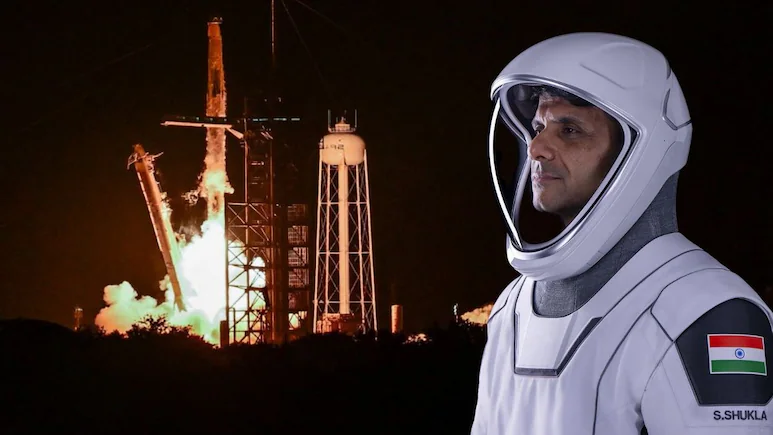
Indian astronaut Shubhanshu Shukla has introduced B.H.E.E.M., a concept aimed at exploring how humans could live and work beyond Earth in the future. B.H.E.E.M. stands for Bharatiya Habitable Expandable Extraterrestrial Habitat.
Shukla said the concept emerged from his academic research during the Indian phase of his astronaut training and was developed at the Aloke lab at the Indian Institute of Science in Bengaluru.
The B.H.E.E.M. concept represents Shukla’s effort to look beyond the spacecraft of today and consider the habitats that could support humans during the next phase of space exploration.
The B.H.E.E.M. concept represents Shukla’s effort to look beyond the spacecraft of today and consider the habitats that could support humans during the next phase of space exploration. As part of the programme, the astronauts were also encouraged to carry out academic research on subjects connected to future space exploration. The aim was to deepen their understanding and potentially contribute to India’s future space programmes. Shukla chose to study extraterrestrial habitats. Rather than focusing only on the spacecraft used to travel into space, he began looking at where humans could live once they reached another world. His research examined technologies and concepts that could eventually support human life and work on the Moon, Mars and other destinations beyond Earth. The question of where astronauts will live is likely to become increasingly important as countries and space agencies plan longer missions beyond Earth. Shukla stressed that research into such habitats needs to begin well before humans establish permanent settlements elsewhere.
