
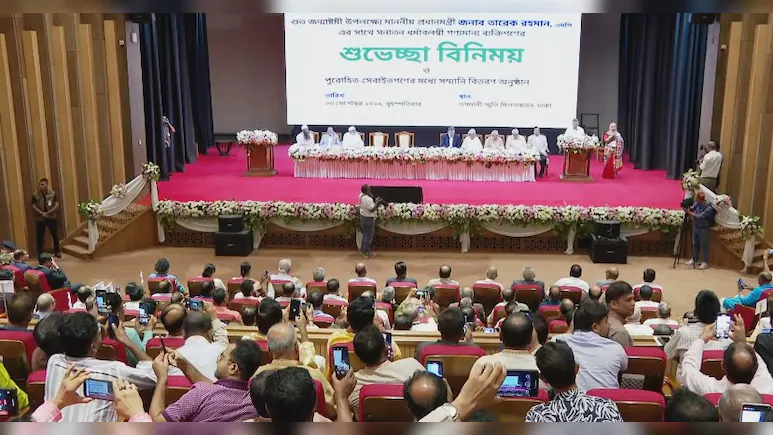
Bangladesh Prime Minister Tarique Rahman On Thursday compared former Prime Minister Sheikh Hasina to Kansa, the tyrannical ruler of Mathura, while addressing a Janmashtami event in Dhaka, where he exchanged greetings with members of the Hindu community and distributed honorariums among priests and sebaits.
The Ministry of Religious Affairs and the Hindu Religious Welfare Trust jointly organised the programme, which is being attended by leading representatives of the Hindu community, religious leaders, eminent citizens, and priests and sebaits from different parts of the country. The Prime Minister walked from his office at Bangladesh Secretariat to Osmani Memorial Auditorium in the capital to attend the Janmashtami programme as the chief guest at 10:00 am today.
“Bangladesh is now again on the path of democracy. “Let us not think of ourselves as a majority and minority. The Bangladesh PM also distributed honorariums among nine priests and Sebaits at the programme. The honorarium was simultaneously sent to the bank accounts of priests and Sebaits across the country through electronic fund transfer (EFT).
Drawing a parallel with Bangladesh’s political situation, Rahman alleged that “Kansa-like” ruler had deprived people of their democratic rights for over a decade and a half. Without naming former Prime Minister Sheikh Hasina directly, he said people from different political and social backgrounds had united and made sacrifices to bring down what he described as Kansa-like fascists. With improvement in the economy, fair administration and better law and order, it is now time to rebuild the country,” Tarique Rahman said. He said people of different religions and views live together in every country and urged citizens not to view themselves through the lens of majority and minority identities. Let us think ourselves as Bangladeshi,” he said, as minority groups continue to raise concerns over the safety of minorities in Bangladesh amid law-and-order incidents targetting the Hindu community. Tarique Rahman appealed for communal harmony and peace and said there was an attempt to destabilise the country and instigate people while reiterating that everyone enjoyed equal rights and everyone had the right to security.
