
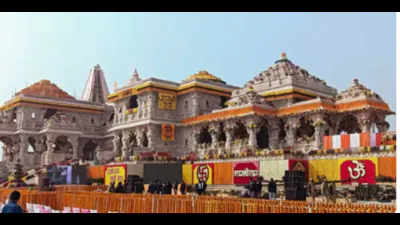
The trust overseeing the Ayodhya Ram Temple is set to discuss amendments to its governing deed on December 2. This marks the first revision since the trust was established in February 2020. The changes come in response to recent controversies surrounding irregularities in donation collections, prompting a need for better security, logistics, crowd control, and fund management.
It removed administrator Gopal Rao and announced a three-member panel to appoint a new CEO. Air Marshal (retired) Mishra arrived in Ayodhya on Wednesday and held a series of meetings to familiarise himself with the trust’s functioning. He has not yet formally assumed charge.
Because of other pressing issues on the agenda, shri Ram Janmabhoomi Teerth Kshetra Trust general secretary Govind Dev Giri said the amendments could not be taken up at the September 2 meeting. On July 6, the trust accepted the resignations of Rai and Anil Mishra.
Giri said the trust would request him to take charge at the earliest.
Investigation Launched into Alleged Donation Misappropriation
The controversy over alleged misappropriation of temple donations emerged on June 7, when Tej Narayan ‘Pawan’ Pandey, a leader of the Samajwadi Party, claimed that between ₹5 crore and ₹7.5 crore had been siphoned off from temple offerings. In response, the state government established a Special Investigation Team (SIT) on June 13 to probe the allegations.
New Governance Structure for Ayodhya Temple Trust
The Ayodhya temple trust is set to implement significant amendments that will define the role of the newly appointed chief executive officer (CEO). These changes will clarify the CEO’s powers, tenure, and responsibilities. Additionally, the amendments aim to enhance transparency in the trust’s accounting and administrative processes as it transitions from the construction phase to operational management.
Established in February 2020 following a Supreme Court ruling that granted the trust control over the 2.77-acre disputed Ayodhya land, the focus has primarily been on building the temple and its related facilities. As the temple ecosystem evolves, it will now encompass visitor management, infrastructure, security, financial operations, and daily administration.
