
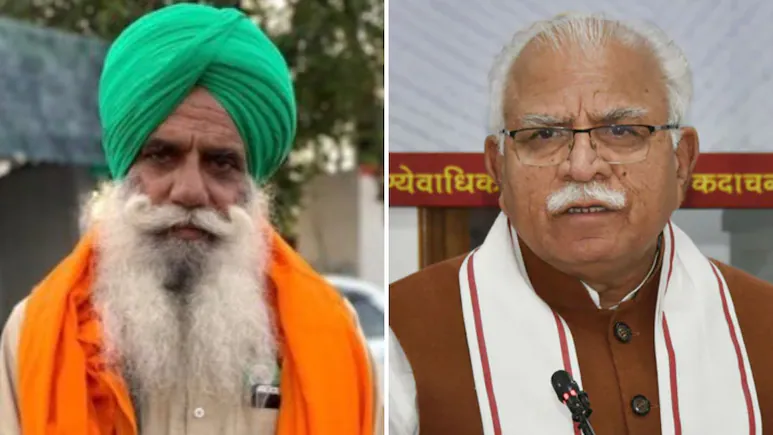
About six months ahead of the 2027 Punjab assembly elections, in which the rural/farmer vote is key, the BJP-led NDA government at the Centre has moved to engage with protesting farmer groups. Union Minister Manohar Lal Khattar held a late-night meeting with the Samyukta Kisan Morcha (Non-Political), an umbrella organisation of farm unions, in Gurugram on Thursday, September 3. The nearly three-and-a-half-hour meeting saw farmer leaders submit a 10-point charter addressed to Prime Minister Narendra Modi, putting guarantees for minimum support price (MSP), waiver of farm debt , concerns over the India-US trade deal, issues related to electricity transmission lines, and the withdrawal of cases against protesters on the table.
Farmers Postpone March Following Dialogue Assurance
Farmers have delayed their planned 228-km ‘Kisan Bachao Padyatra’ (Save Farmers Footmarch) to Delhi. This decision came after the Haryana administration assured them of a dialogue. The march was set to begin from the Khanauri-Data Singhwala border, but the promise of discussions led to its postponement.
On electricity, Khattar, who is the Power Minister, reportedly acknowledged shortcomings in the existing compensation policy for land affected by high-tension transmission lines. He assured the delegation that corrective measures were being considered and that a better policy would be brought soon, and agreed to bring transparency into the process of assessing land market value. It further demanded a national policy to compensate farmers for losses caused by floods, droughts and other climate-related disasters, and wide-ranging changes to the crop insurance scheme, arguing that the government’s own data shows the existing scheme benefits corporate houses rather than farmers.
The Centre also agreed to examine the demand for 60 per cent of market value as compensation for Right of Way in rural areas. The charter argued that rural land is already valued lower than urban land, and that villages receive only 30 per cent of market value for Right of Way against 60 per cent in cities. The 10-point charter also seeks Rs 600 per quintal sugarcane FRP (Fair and Remunerative Price), payment to cane growers within 14 days citing a court order and 12-15 per cent interest as additional payment in case of delay, and restoration of key provisions of the 2013 land acquisition law, such as written consent of 75 per cent of farmers before acquisition, compensation at four times the market rate, and priority to barren land.
It further sought four times the market value as compensation for high-tension lines under a national policy, withdrawal of a “lottery system” of assessing market value, and participation of farmers’ valuers in the assessment process.
Because they were denied remunerative MSP, on debt, the charter argued that farmers were pushed into borrowing. The charter stated that in 2011, as chairman of the Working Group on Consumer Affairs, Narendra Modi as Gujarat CM recommended to then Prime Minister Manmohan Singh that statutory provisions be used to ensure that crop transactions between farmer and buyer do not take place below the government-declared MSP.
Khattar, who was chief minister of Haryana before shifting to PM Narendra Modi’s Cabinet, termed the talks “very good and cordial” and said the farmers’ demands would be conveyed to the concerned departments.
