
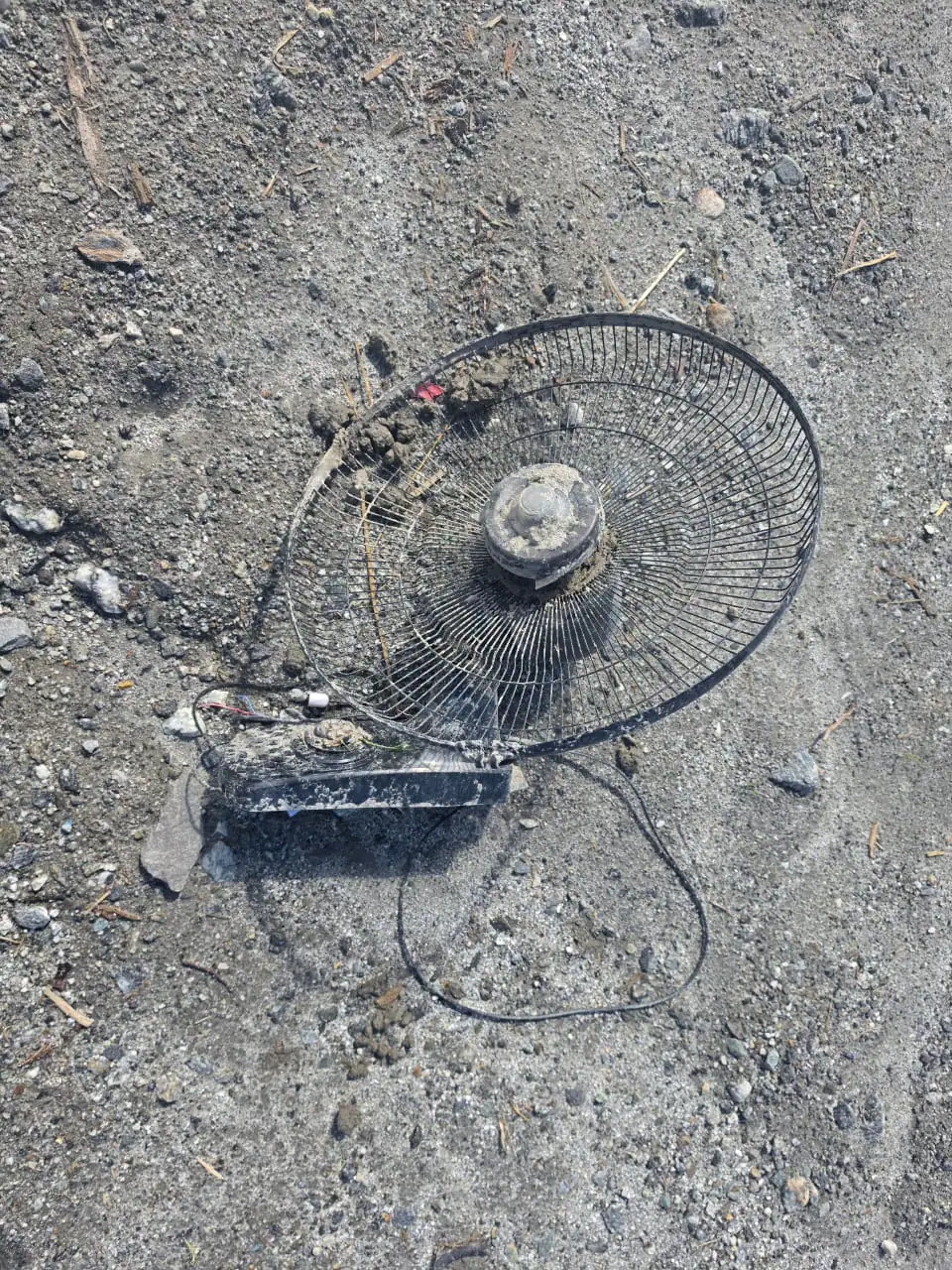
After the Nepal floods, Devi Ghat’s beauty has become unsettling. The Trishuli River, swollen and moving with a fierce, muddy current, cuts through the picturesque landscape. Around 20 metres from the water body, the ground is littered with the broken remnants of the lives of those who lived here just ten days ago.
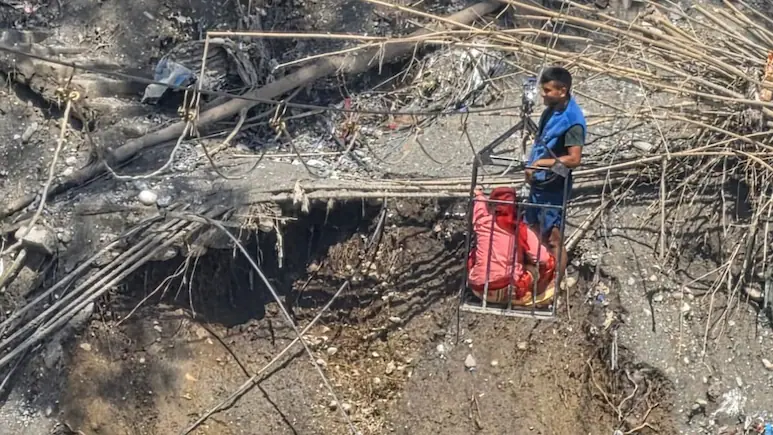
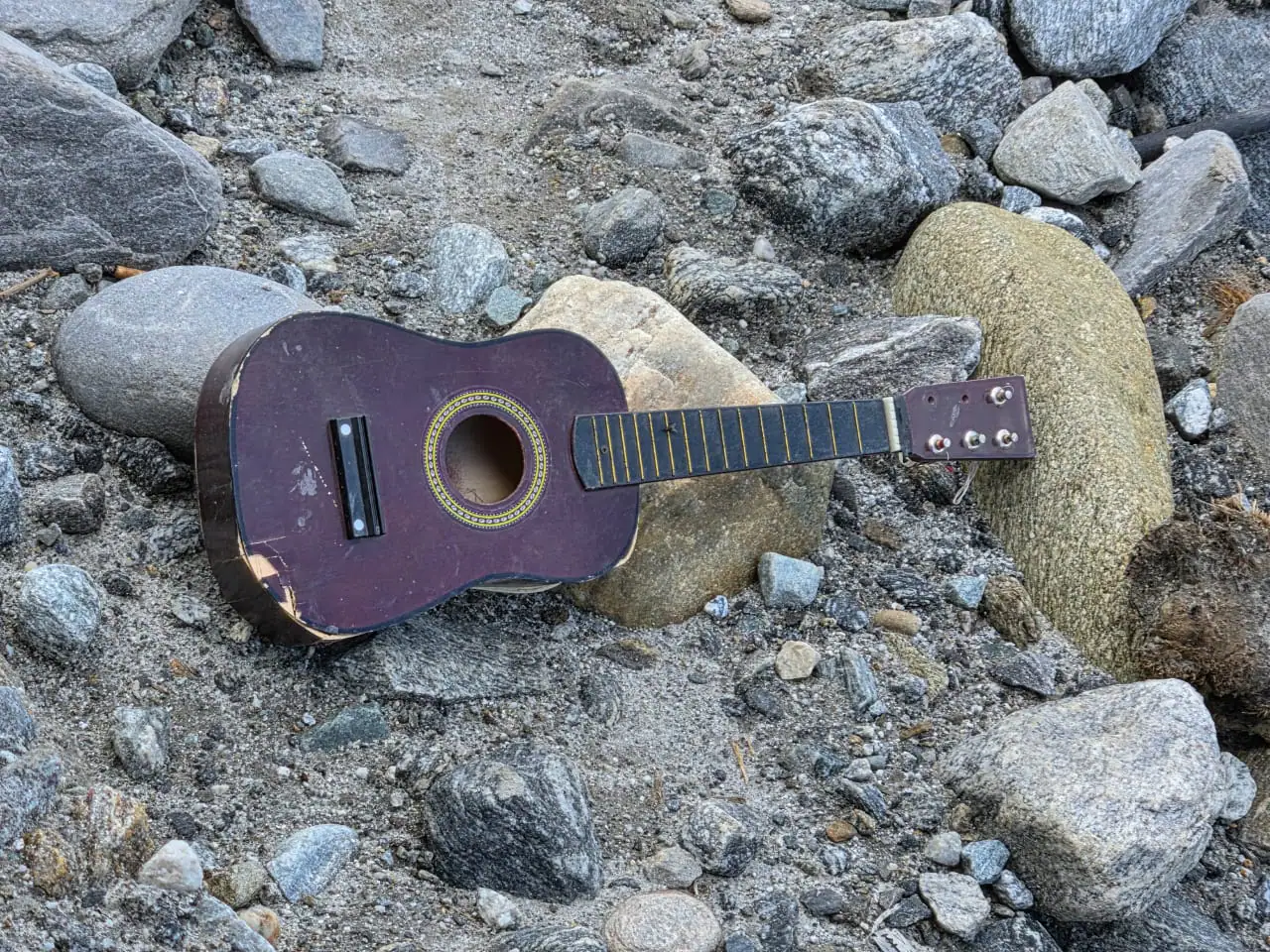
A slipper of an adult, half-buried in the silt; a much smaller slipper, belonging to a child; a damaged suitcase, lying half-open; a guitar, left behind among the mud, rocks and debris — they are all ordinary objects in ordinary times. They now serve as haunting monuments of lives upended by the flash floods. Beyond this strip closest to the river, the devastation stretches further inland. Further up, on the slight rise, buildings that stood away from the immediate riverbank have also been badly damaged. It is as if the river came through and erased the settlement in layers. The bridge that once connected the two sides of Devi Ghat is gone. All that remains is the staircase that once led up to it. A flight of steps, standing alone, leading nowhere. Right beside it are the foundations of homes that once stood along the riverbank. Iron rods jut out from broken concrete. Rocks and fragments of walls are all that remain. It looks as if the homes have been uprooted from the earth itself. And the river keeps moving. The Trishuli has now become a symbol of both a physical and emotional divide. And even the zipline tells the story of what happened here. On one side of the river, its ropes are fastened to an iron rod jutting out of the ground, one of the few remnants of a home destroyed by the flood. On the other side, the ropes are secured to a banyan tree. One end is anchored to what remains of a destroyed house; the other to a tree that survived. It is an unlikely bridge between two banks, and between what Devi Ghat was and what it has become. People now use it to move across the river, carrying food, essentials and belongings. Keeping that lifeline running are local volunteers. They work in three-hour shifts, rotating through the day. They have been here since morning, helping people cross and moving supplies between the two sides. When we asked one of the volunteers whether he was afraid that someone could fall from the zipline, his response was striking. The force of the water did not scare them, so what was this compared to that? he added. The river has already shown them what fear looks like. And so they keep working. For now, the zipline is the only link between the two sides. Sitaram remembers how quickly it happened.
Within roughly 50 to 60 metres of the banks, homes have been ripped apart, uprooted or reduced to their foundations. Bridges have been washed away, and their essential duties are now being performed by a 250-metre zipline suspended above the river.
The flash flood had come and gone, he said. “Everything was fine at first, then within 25 minutes, everything was destroyed,” he says.
Today, the family is living at a relief centre in a school. Today, Masina walks through the devastated riverbank carrying essentials on her head, secured with a cloth strap. Today, when he wants to reach his parents, his wife and his children, he has to use the zipline.
However, rebuilding here is not easy. The rains continue to hamper construction, relief and rescue operations. When we arrived at Devi Ghat, it was sunny. When we left, it was pouring nonstop. Across the devastated areas, excavators and diggers are at work, pulling out and clearing the enormous quantities of soil deposited by the flood. But even walking through some parts of Devi Ghat is difficult. The ground is still waterlogged and unstable, covered in deep, loose silt. Residents trying to cross it find their feet sinking into the earth. Some struggle to pull themselves free. The landscape has been physically altered, and it is difficult to know what is safe to stand on, let alone where it is safe to rebuild. For Dipak Sunar, the consequences of the flood are waiting at home. Dipak is a banker. He was not at home when the flood struck. His brother was. So were his parents, his other brothers and their families. When the mudslide came, they ran towards higher ground. They survived. But they could not return home. Dipak walks us towards the two-storey family home where he was born. The ground floor has been badly damaged. Around the house, the earth is covered in soft, unstable silt. The soil is so fragile that the house can no longer be considered safe to live in. Before showing us his own home, Dipak points towards another concrete building closer to the river. It is difficult to comprehend the force required to move a concrete building that distance. Then Dipak takes us to his own house. This is the place where he was born. The place where his parents lived. The place his brothers and their families called home. But for now, none of them can return. “The mudslide was so devastating. Just ten metres away is another family home-Sitaram Remalchi’s. And the contrast between the two could not be more stark. When we met Sitaram, he was carrying a bag filled with kitchen utensils from his motorcycle to the place where his home once stood. His father built this house. Now, almost nothing is left. The entire house has been swept away, except for a part of the kitchen at the back. On a surviving concrete wall, the impression of the bed that once stood against it can still be seen. A trace of a room. A trace of a life. They were warned about the flood only moments before it hit. Sitaram and his family ran towards higher ground to save their lives. But the place they had called home for four decades was gone. His family has rented accommodation for now. But he is not sure he wants to rebuild here at all. He would rather move somewhere safer. He does not want to put the lives of future generations at risk. Ten metres separate Sitaram’s home from Dipak Sunar’s. Yet the flood has left them with two very different realities. For one family, the home is still there, but the earth beneath it has become too unstable to live on. For the other, there is barely a home left to return to. What remains of both families’ lives now has to be carried, moved and pieced together elsewhere. And that is where the zipline takes on a different meaning. It is no longer simply a way to cross a river. It is how people are continuing to live. For Masina Nepali, the flood was a story of a decision made in seconds. She was near the river with her daughter when the flash flood struck. There was no time to think. She grabbed her daughter by the arm and ran uphill. That instinct saved their lives. Her home was not spared. The Trishuli flows behind her, swollen and fast. Her home is across the river. She uses the zipline every day to carry essentials across and take them back to her house. Her daughter is sick and in hospital. Even as she deals with that, Masina is trying to salvage what she can from a home that has been devastated. The zipline has become part of her daily life. As it has for Raju Rimal. His family is on the other side of the Trishuli. His parents, his brothers and their families were all living there when the flood struck. When we meet him, he stands beside the zipline and looks across the river. He whistles. He calls out to his family. Then he waves. For a moment, it is an ordinary exchange between a family separated by distance. Raju remembers the day the flood came. But his own home and village were severely damaged. Houses, clothes and food were swept away in the floodwaters. Food is now scarce. Moving from one place to another has become a daily struggle. Raju and his family also had a furniture shop. That too is gone. For Raju, this has already become routine. A journey that once would have been unthinkable is now simply part of the day. That may be the most striking thing about Devi Ghat. The extraordinary has become ordinary. A school has become a relief centre. A family home has become unsafe to live in. A four-decade-old house has been reduced to a kitchen. Excavators work through the mud as the Nepal Army races to rebuild the bridge. And the rain keeps coming. Along the riverbank, the remnants of ordinary lives remain scattered in the mud. A slipper. A child’s slipper. A suitcase. A guitar. The Trishuli still flows past them, swollen and powerful. The bridge is gone. The homes are broken. The community has been physically divided. But people have found another way across. For now, that thin line suspended above the Trishuli is more than a zipline. It is the thread holding Devi Ghat together.
Because the bridges are gone, except that the distance now exists. The house stands about 150 metres from the banks of the Trishuli. The flood moved it roughly 50 to 70 metres from where it once stood, leaving it partly buried in the earth. Sitaram had lived here for 40 years. He says around 200 people were saved that day. A 250-metre zipline over a swollen river is now a daily means of transport.
We can’t return for five or six months,” Dipak says. When asked how long it would take to rebuild, Sitaram says he does not know. He says the place is unsafe now. He says he warned his family and villagers to run. “Run, the flood has hit us, rush,” he shouted.
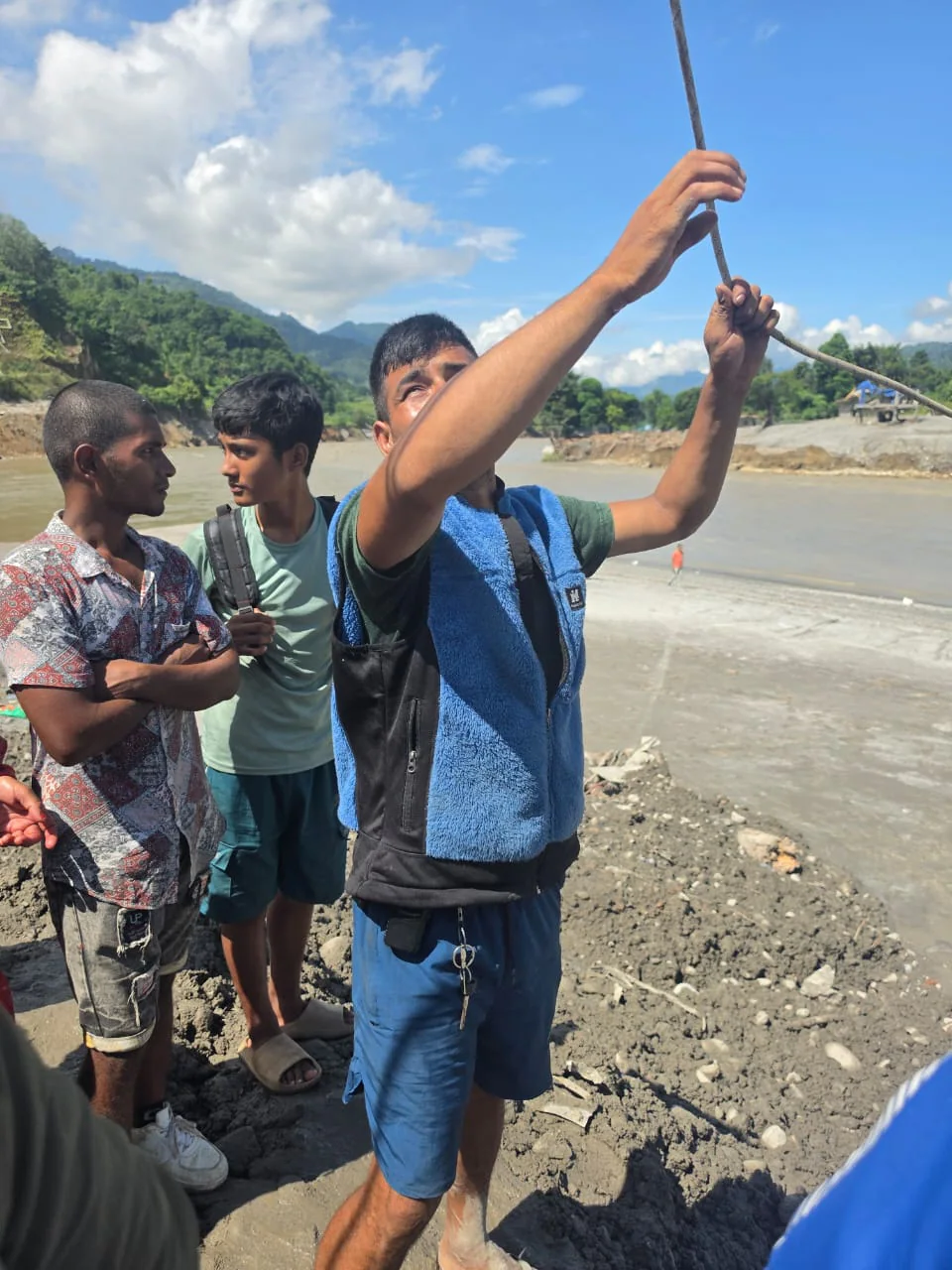
But a bridge is being built. The Nepal Army is working to reconnect the two banks, with the new bridge expected to take another three to four days to complete. Until then, this thin cable remains the lifeline for residents who have no other way across.
