
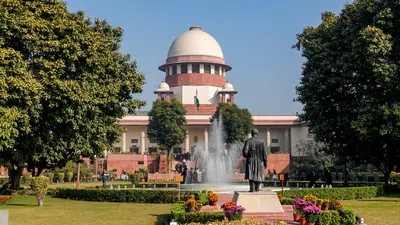
The Supreme Court has recently ruled that criminal proceedings for human rights violations can proceed without prior inquiry or recommendation from the national or state human rights commissions. This decision strengthens the authority of human rights courts and streamlines the legal process for addressing such offences.
Custody complaint led to proceedings against police
The rule permits the court either to order a police investigation by an officer not below the rank of superintendent of Police or conduct its own inquiry in accordance with the procedure governing private complaints. The bench rejected the argument that the human rights commission was the exclusive gateway for prosecution. The ruling came while setting aside a Karnataka High Court judgment which had struck down Rule 6 of the Karnataka State Human Rights Courts Rules, 2006, and consequently quashed criminal proceedings against police officials accused of violating the human rights of a man in custody. In January 2024, the human rights court directed investigation under the Code of Criminal Procedure (CrPC), following which a case was registered against the police officials. It further noted a Supreme Court’s 2021 ruling, which had recognised that complaints relating to use of force in police stations could be made either to the state human rights commission or the human rights court.
The court held that an inquiry or recommendation by a human rights commission cannot be treated as an “indispensable condition precedent” to initiating criminal proceedings before a human rights court.
The case arose after Sayad Asifulla, who was himself an accused in a criminal case registered in Vijayapura , filed a private complaint before the principal district and sessions judge and special judge, Human Rights Court, Vijayapura, alleging violation of his human rights by police officials in connection with his custody.
The court also upheld Rule 6 of the 2006 Rules, which allows a victim, legal representative or, subject to prescribed safeguards, an NGO or public person to approach a human rights court with a complaint against a public servant alleged to have committed or abetted an offence involving violation of human rights.
