

Pakistan’s poll cycle seems to be ending with Shehbaz Sharif taking over the nation’s prime minister for a second term While India enters its own season of general elections. But it could not win enough seats to form a majority government on its own. This made some kind of coalition a veritable necessity.
In last month’s elections, independent candidates backed by Imran Khan’s Pakistan Tehreek-e-Insaf (PTI) ended up winning 93 National Assembly seats, defying all odds and the military’s will. The Pakistan Muslim League-Nawaz (PML-N) of Nawaz Sharif came in second with 75 seats, followed by the Pakistan People’s Party (PPP) of Bilawal Bhutto Zardari with 54 seats.
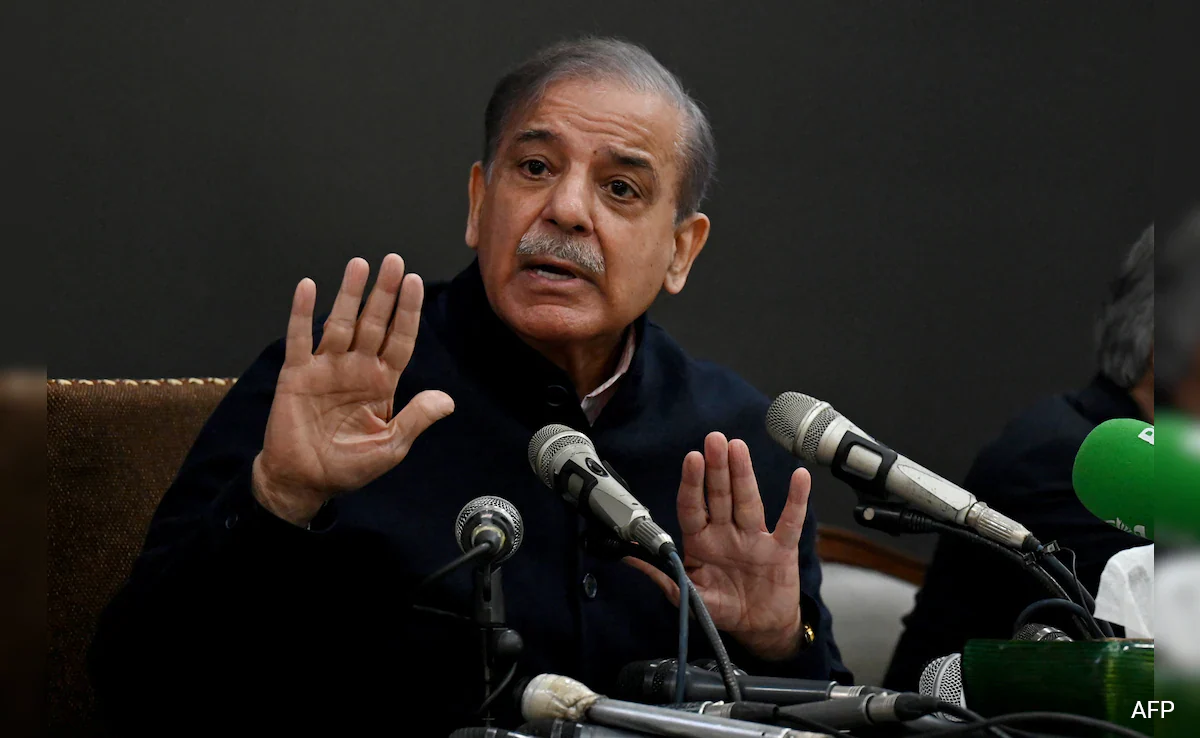
After weeks of political negotiations and horse-trading, an eight-party coalition was formed, which has now assumed power with Sharif as the Prime Minister; PPP co-chair Asif Ali Zardari would be the new president.
The dissonance in Pakistani polity was evident as Shehbaz Sharif in his speech thanked his older brother Nawaz, describing him as “the one who built Pakistan”, while Imran Khan’s supporters called the new alliance government a “coalition of losers”.
Now, with an unstable coalition in power, Khan will continue to wield influence from behind the bars, seeking to disrupt the functioning of the government with a sizeable number in Parliament. By sitting in the opposition, he is also ensuring that he is seen as not compromising on his anti-corruption plank. The coalition has no one who can match his charisma or his credibility. That the PPP decided not to join the government suggests that it is already concerned about its future by being associated with a seemingly discredited coalition. For a country that is reeling under multiple crises, this is the worst possible outcome. The kind of policy reforms that are needed to manage the gargantuan challenges the nation faces stand in direct contrast to the nature of the government that is being formed. A ragtag bunch of discredited parties are no match for the difficulties Pakistan is facing on every front. The economic situation is particularly dire, with inflation sky-high and state bankruptcy on the cards. For foreign lenders, some semblance of political stability is a basic necessity for moving forward with financial support. The PML-N-led coalition, which few expect to last long, is hardly likely to inspire any confidence. Those who have formed the new government in Pakistan do not seem enthused by the prospect of running the country, but those who are outside in the opposition are basking in the glow of a mandate that came their way despite all the tactics of the establishment. [Harsh V. Pant is a Professor of International Relations at King’s College London. His most recent books include ‘India and the Gulf: Theoretical Perspectives and Policy Shifts’ (Cambridge University Press) and ‘Politics and Geopolitics: Decoding India’s Neighbourhood Challenge’ (Rupa)]
It is therefore trying to maintain its distance, though it is far from evident whether there are any takers for this in Pakistan anymore.
