

Two recent decisions by the Karnataka government have garnered significant national attention. Second, all multinational corporations (MNCs) must disclose the number of Kannada-speaking employees in their offices, with this data prominently displayed on signboards. Failure to comply may result in government action. The latter order, in particular, has sparked debate.
First, 60% of all signage must be in the local Kannada language .
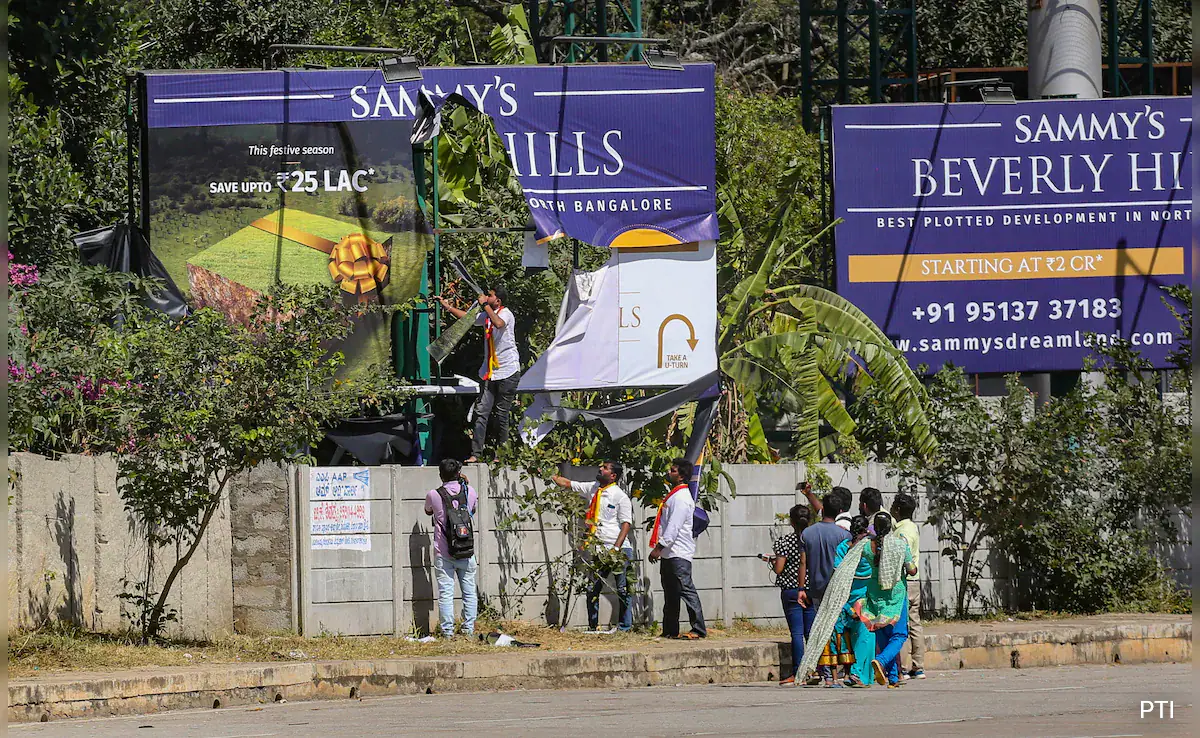
These decisions did not come about in a void. The Kannada linguistic identity holds considerable sway over a significant portion of the Kannada-speaking populace. Politically, the Kannada linguistic identity serves as a potent tool for the Congress to counter the Bharatiya Janata Party’s (BJP) overarching pan-India narrative. This is not the first time the Congress has sought to foreground the Kannada linguistic identity. With the Lok Sabha elections looming, the recent language mandate signifies an attempt to tap into sub-national sentiments. The language mandate comes close on the heels of Karnataka’s dispute with the centre over tax revenues, wherein leaders like Chief Minister Siddaramaiah and his deputy D.K. Shivakumar raised concerns about the Centre’s fund devolution, which they deemed unfair. Through the protests, the Karnataka government, along with their counterparts from Tamil Nadu and Kerala, alleged that southern states have not been given their rightful due. Both parties argued that the underlying demand to have more Kannada signboards was legitimate. The BJP went a step further and attacked the Congress for arresting Kannada activists who were involved in the vandalism. Former Chief Minister Basavaraj Bommai pinned the blame on the Congress for not formulating a policy mandating Kannada signboards. After the recent orders by the Karnataka government, the BJP targeted the Congress for nominating Ajay Maken, a non-Kannadiga, as the Rajya Sabha from the state.
By shifting focus from national to regional issues, the Congress aims to replicate the blueprint that proved successful during the 2023 assembly elections in the state. Article 370, and the Uniform Civil Code, the Congress aims to leverage sub-national sentiments While the BJP prioritises national issues such as the Ram Temple. In 2018, a panel appointed by the Siddaramaiah government, ahead of state assembly elections, recommended the recognition of a separate Karnataka state flag. In December 2023, when the K annada Rakshana Vedike vandalised shops and establishments for not having Kannada signboards, the BJP and the Congress appeared to be on the same page.
The Congress government’s appeal to this sub-national linguistic identity comes just months before the Lok Sabha election, suggesting a broader electoral strategy. Similarly, last year’s Amul versus Nandini controversy, positioned by the Congress as a battle to protect a Karnataka-based dairy brand, preceded the assembly elections.
