
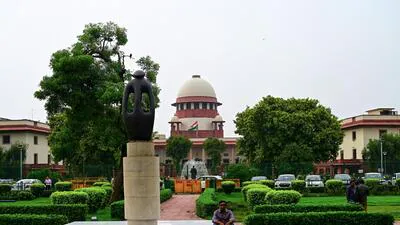
On Thursday, the Supreme Court clarified that its five-member high-powered enquiry committee (HPEC) does not have the authority to order the registration of FIRs related to the protests by the Cockroach Janta Party (CJP) that occurred in July. The court emphasized that only it holds the power to direct criminal investigations, reaffirming the boundaries of the HPEC’s role in this matter.
Solicitor General Tushar Mehta, appearing for the Centre and Delhi Police, told the court that the committee’s first meeting had been scheduled for September 15. The HPEC, headed by former Supreme Court judge Justice R Subhash Reddy, was constituted to independently examine competing allegations arising from the July 20 student protest, including allegations of excessive use of force by police as well as violence against security personnel and damage to public property. Delhi Police subsequently invoked provisions of the SC/ST (Prevention of Atrocities) Act and criminal intimidation in the case relating to the alleged assault on the 38-year-old man.
“We would like immediate action to be taken on that FIR and a report to be filed,” said the bench, directing that police protection and appropriate safeguards be provided to the girl and her family by Uttar Pradesh Police. The intervention came amid a criminal case against right-wing influencer Swatantra Bhardwaj, who was arrested after allegedly claiming in an interview that he had “cracked the skull” of the father of a student activist, the minor referred to by the bench on Thursday, during the CJP protest.
Court Halts Criminal Proceedings Linked to Protests
On September 1, the court exercised its extraordinary powers under Article 142 to terminate criminal proceedings related to protests that occurred between July 20 and 25. The court mandated that all First Information Reports (FIRs) filed during this period would not be pursued or investigated, effectively closing the cases. Additionally, it instructed that no new FIRs should be registered concerning these incidents.
A bench, comprising Chief Justice of India (CJI) Surya Kant and justices Joymalya Bagchi and V Mohana, said the committee would examine the allegations, identify victims and make recommendations, but any decision to order a criminal investigation would have to be taken by the Supreme Court. The clarification came as the bench agreed to expedite the proceedings before the committee and said it would “iron out” any creases that emerge in the course of its functioning. “The committee has to work under the direct supervision of this court,” said the bench, adding that the HPEC could appoint its own amicus or lawyer to assist it before the Supreme Court.
