The world is celebrating Electric Vehicles Day, which brings the global electric-mobility transition into focus. For India, the question is not only how quickly EVs will replace conventional vehicles on the road but also what the country can gain from that shift in manufacturing, economic output and jobs.
The report highlights that more domestic capacity will be needed if India wants to increase domestic battery production. India currently has about 1.4 GWh of domestic battery-cell manufacturing capacity. Announced projects could raise this to around 128 GWh.
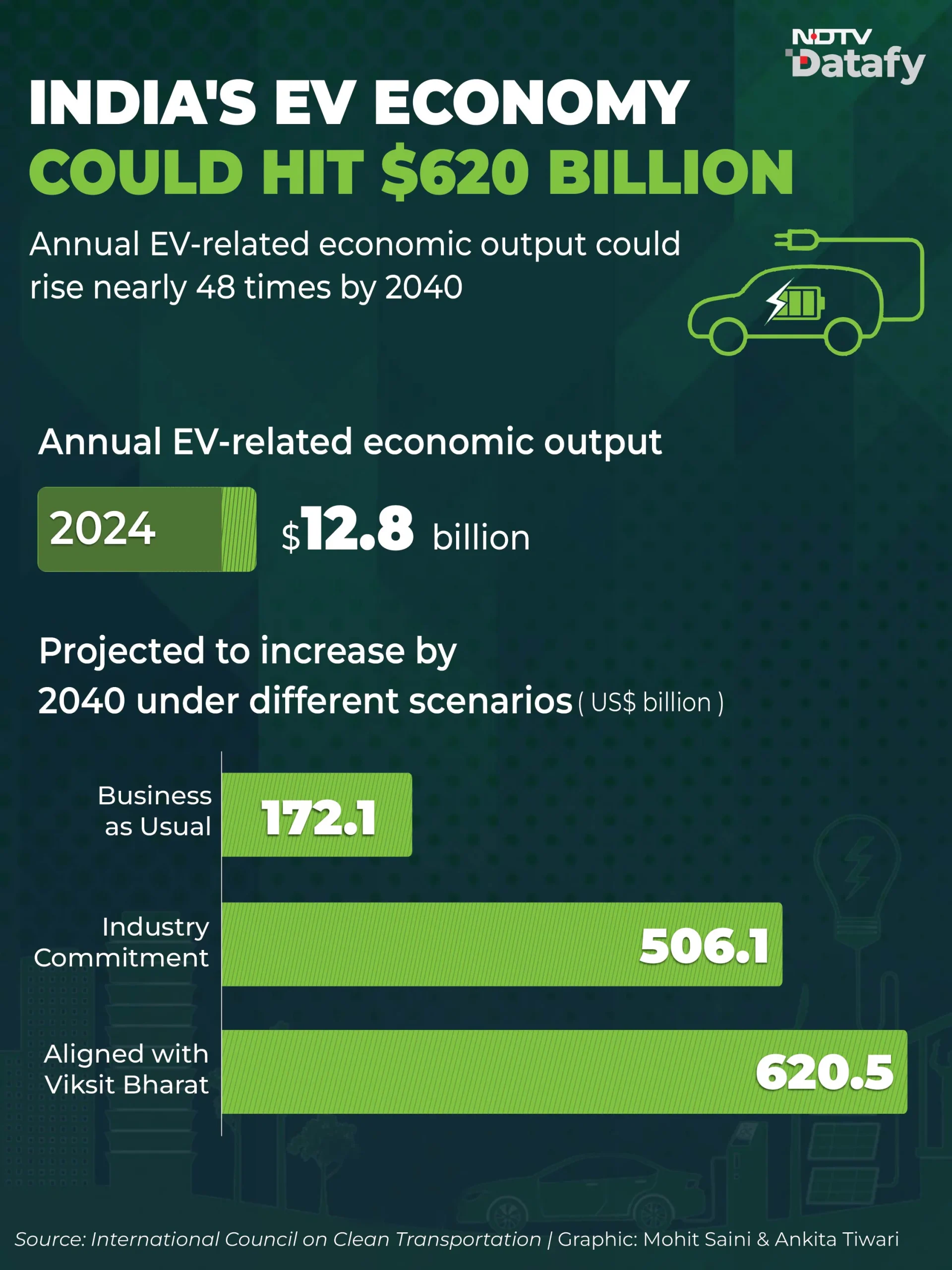
A new report by the International Council on Clean Transportation estimates that annual economic output linked to electric vehicles could rise from $12.8 billion in 2024 to $620.5 billion by 2040.
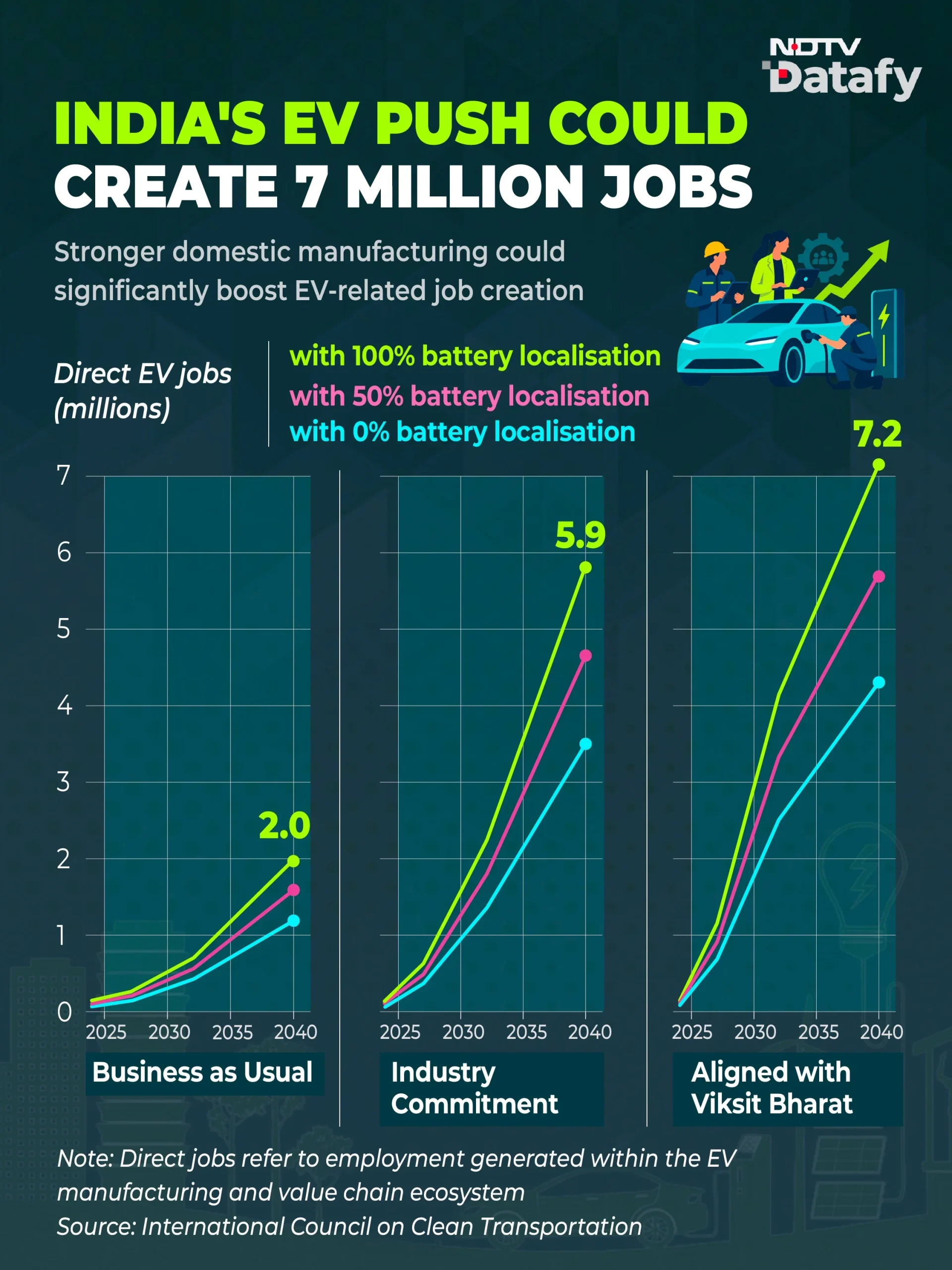
Industry Commitment is based on automakers’ announced electrification targets. BAU reflects current policies and market trends. Aligned with Viksit Bharat is a high-ambition pathway with rapid electrification and stronger policy measures. The shift to EVs is expected to boost jobs too. With full domestic battery manufacturing, direct jobs could cross seven million. Battery manufacturing will be important. More domestic battery production could create more jobs and keep more of the value within India. Battery demand will also increase as EV sales grow.
A new report by the International Council on Clean Transportation estimates that annual economic output linked to electric vehicles could rise from $12.8 billion in 2024 to $620.5 billion by 2040 — a figure aligned with the Viksit Bharat scenario. Under the Business as Usual scenario, the figure is projected at $172.1 billion, while the Industry Commitment scenario puts it at $506.1 billion. The report examines three EV pathways for India through 2040. Under the aligned-with-Viksit Bharat scenario, direct jobs in EV manufacturing are expected to rise from about 90,000 in 2024 to 4.3 million by 2040, assuming little battery localisation. The report also estimates that indirect jobs in areas such as logistics, trade, finance and services could reach about 17.3 million by 2040. This could take total EV-related employment beyond 20 million. The report estimates that direct EV employment could reach about 5.8 million by 2040 with 50 per cent battery localisation. With 100 per cent localisation, the figure could rise to 7.2 million. Under the Aligned with Viksit Bharat scenario, demand is projected to rise from about 12 GWh in 2024 to 312 GWh by 2032 and 480 GWh by 2040.