
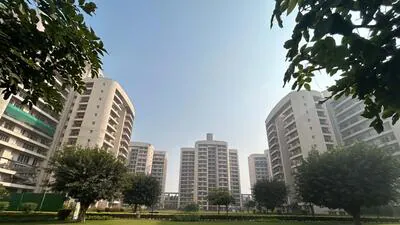
The Supreme Court has authorized the reconstruction of the Chintels Paradiso housing project in Gurugram. In its ruling, the court has instructed residents of flats deemed unsafe following a roof collapse in 2022 to vacate their units by January 1, 2027. This decision marks a significant step in addressing the safety concerns surrounding the housing complex, which has been under scrutiny since the incident.
It also barred courts or authorities from passing any coercive or restraining order that may affect the implementation of the redevelopment scheme. Residents approached the Supreme Court seeking structural audits and rehabilitation, saying they had invested their life savings in the project. The court has left it open for flat buyers to exercise the buy-back option on mutually agreed terms. CIPL is in discussions with Sobha Ltd and will be executing the agreement pursuant to the court’s order, the developer had informed the court. Besides this, there shall be no additional or hidden financial burden on the existing homeowners, the court clarified.
With a settlement now reached between the residents and Chintels India Pvt Ltd (CIPL), a bench of justices PS Narasimha and Alok Aradhe directed occupants to enter into agreements under the terms approved by the court and hand over peaceful possession by January 1, 2027. A February 10, 2022, collapse of part of Tower D had killed two residents, and triggered a prolonged dispute over the safety of the project. Homeowners in Phase-II towers have also agreed in principle to contribute ₹ 1,000 per sq ft, subject to Sobha undertaking the redevelopment.
“All persons presently occupying flats in the towers declared unsafe are directed to enter into agreements as per the terms of our order, to vacate and hand over peaceful possession of their respective units on or before January 1, 2027, so as to enable the redevelopment process to proceed without any further impediment,” the court said.
It directed that all disputes, grievances or claims related to the redevelopment framework approved by this order shall be filed only before the Supreme Court.
