
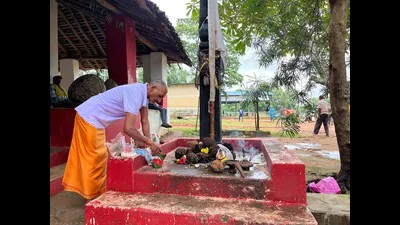
The devotees who arrived at Chhattisgarh’s Bhangaram Devi temple in Bastar region on Saturday were carrying their gods with them, but this was not just a day of worship; some arrived their with grievances.
Mangal Chand Markam of Keshkal block worshipped a deity for years, yet illness continued to affect members of his family. His complaint was that the deity failed in its duty of protecting his family, so he sought punishment. The Bhado Jatra is where tribal communities of Keshkal villages and in surrounding areas bring symbolic representations of the deities they worship to the temple. This is when the religious gathering takes on the character of a traditional court. Here, the complainant is usually a devotee and the accused could be a god. The complaints are about everyday life, including when a family member remains ill despite prayers. Or, when crops fail despite hard work. A household feels it has received neither protection, nor prosperity from the deity it worshipped for years. When devotees believe their deity failed in its responsibility, they take it to the court of Bhangaram Devi temple. For the communities that follow the tradition, Bhangaram Devi is not merely another deity, she is regarded as the presiding deity of this traditional court and is believed to perform the roles of judge and jailor. The proceedings also show how closely religion remains intertwined with everyday community life in this part of Bastar. Illness, farming, family welfare and misfortune — matters that might elsewhere be separated from religious institutions — become grievances that can be taken before a divine court.
“I brought the deity before Bhangaram Devi’s court,” he said. A judgment is then pronounced according to the community’s traditional beliefs.
Complaints against other deities are brought before her, devotees explain their grievances and what they regard as evidence is placed before the court.
