
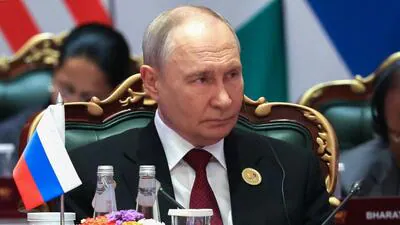
On Sunday, President Vladimir Putin introduced a new insurance mechanism aimed at enhancing collaboration within the grain market among BRICS member states. He emphasized the need for a unified approach to address significant global challenges. This proposal underscores Russia’s strategic intent to strengthen economic ties within the BRICS framework, particularly in the agricultural sector.
“The broad participation in today’s meeting confirms that international interest in Brics continues to grow. Putin proposed the initiatives as the Brics member states and partner countries came together for an outreach session at the concluding day of the Brics Summit hosted by India against the backdrop of wide-ranging sanctions imposed by the West on Russia for the invasion of Ukraine. “We have independent routes for moving capital, labour and technologies. “We have some promising initiatives going forward, such as creating an insurance mechanism and a grain market. These are Russian proposals, and we invite all other member states to make use of those. The proposals came against the backdrop of the European Union (EU), the G7 and Britain prohibiting Western companies from insuring any merchant vessel transporting Russian energy unless the oil is purchased at or below a specified price cap. Widening sanctions on the insurance sector have already hit Russian crude exports. “Global South countries should jointly advance better [global] governance structure and tackle both traditional and non-traditional security threats.
Because of the bloc’s focus on charting an independent course to combat global challenges, he contended that the global stature of Brics is on the rise.
In fact, we can operate regardless of outside pressure,” Putin said. Putin complimented the functioning of the New Development Bank, a multilateral development bank established by Brics states that is handling projects worth $140 billion, as he backed a “holistic approach” towards international challenges. “As global challenges keep surfacing, we should adopt a holistic approach to address both the symptoms and root causes,” he said. Many around the world find our core values and ideals appealing, including our commitment to charting an independent course and a desire to resolve problems collectively, guided by international law and key provisions of the UN Charter,” he said.
