
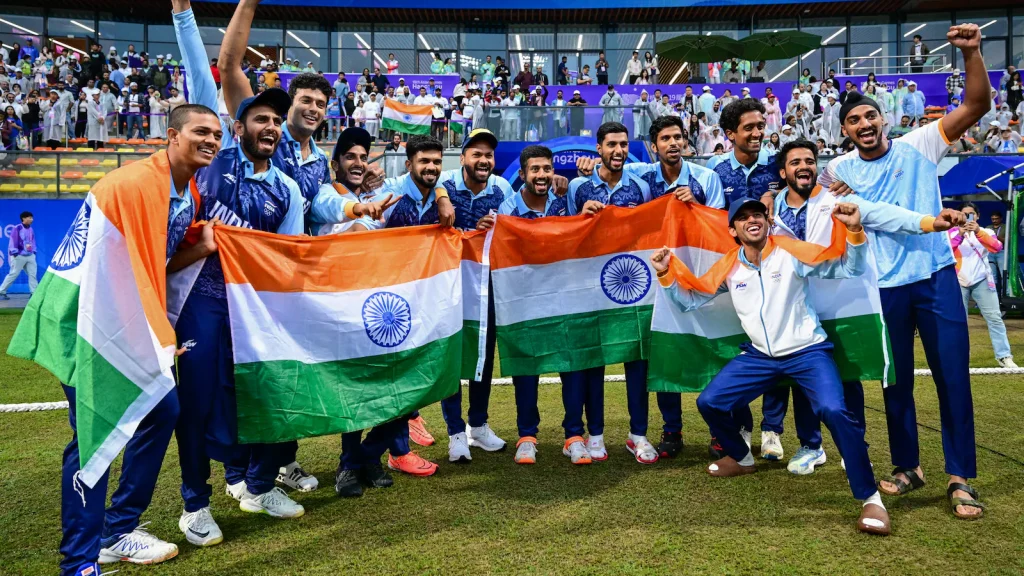
The Sports Ministry on Tuesday said more than Rs 702 crore have been spent in the last three years on the training, equipment support and hiring of coaches and experts to prepare athletes for the Asian Games beginning September 19 in Japan where India’s contingent will feature 310 event debutants. CEO of the Ministry’s flagship Target Olympic Podium Scheme (TOPS), N S Johal, on Tuesday said the country’s athletes have the requisite momentum to deliver strong performances and match up or better the best ever haul of 106 medals achieved in the previous Hangzhou edition.
“There is good momentum across disciplines and the contingent features a lot of debutants which is as TOPS CEO, a very proud thing for me. Among the youngsters who would draw attention in the Aichi-Nagoya Games are 15-year-old cricket star Vaibhav Sooryavanshi, who is not funded by the Ministry, paddler Syndrela Das, shuttler Ayush Shetty, and 18-year-old squash player Anahat Singh, who recently won the junior world title, and judoka Asmita Dey, the first Indian to win a Commonwealth Games gold in the sport. The Ministry said Rs 702.86 crore have been spent as part of the Annual Competition and Training Calendar to prepare the athletes. An additional Rs 97.84 crore have gone into the preparations from the TOPS fund.
The gestation period in sport is high and when young athletes are able to enter the top level early, it is a very good sign for the future,” Johal said in a media interaction here. “Since January this year, we have had nine coordination meetings of the Target Asian Games Group and the whole effort has been to provide athletes with the best possible environment despite the administrative challenges posed by issues in various federations,” Johal said. Asked to specify the challenges with regards to the federations, Johal said he would not comment on the issues but his comment was indicative of the routinely publicised administrative turf wars and selection controversies that plague several national federations.
“Every team has women’s support staff. One third of the authorised support staff is from sports sciences.
These are the little things we have worked on to ensure balance in the contingents,” he said.
