
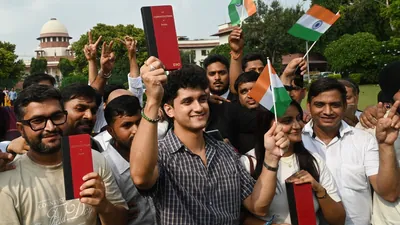
The Supreme Court has instructed its five-member high-powered enquiry committee (HPEC) to investigate the protests that occurred in July, which were organized by the Cockroach Janta Party (CJP). The probe will focus on several critical issues, including the use of pellet guns, incidents of targeted violence, harassment of female protesters, injuries sustained by police, and property damage. Furthermore, the court has stated that it will address broader constitutional questions related to these protests directly.
The order recorded allegations that threats had been made to the life of the child and her family and that no action had been taken by Delhi Police against those allegedly responsible. The committee was tasked with examining allegations of excessive police force as well as violence against security personnel and damage to public property. In a detailed order issued after the September 10 hearing, a bench comprising Chief Justice of India Surya Kant and justices Joymalya Bagchi and V Mohana also directed the committee to ensure protection and confidentiality for vulnerable witnesses, including keeping their identities undisclosed, and said a separate online portal could be created to enable them to submit evidence and documents. The court’s latest directions give the HPEC a specific priority list as it begins its inquiry into the competing allegations surrounding the July 20 protests. The order is a significant sharpening of the mandate given to the HPEC by the court on August 18. In a separate direction, the bench ordered Delhi Police to assess the threat perception of a 14-year-old female protester and provide protection to her and her family. The court subsequently clarified on September 10 that the HPEC could examine allegations and make recommendations but could not order registration of FIRs , since the power to direct a criminal investigation remained with the Supreme Court.
The committee has been asked, “in the first instance”, to examine four sets of issues — use of pellet guns; targeted violence and harassment of female protesters; injuries sustained by police personnel; and excessive violence and destruction of property “occasioned on either side”. the Supreme Court reiterated that wider constitutional questions arising from the controversy, including the use of facial recognition by law enforcement agencies, would remain for its own consideration “at the appropriate stage” While the committee will examine the factual allegations and assist the court.
It also directed the police to expeditiously investigate allegations that anti-social elements had threatened or harassed the girl and her family and submit a status report before the next hearing.
The Supreme Court had already expressed concern during last week’s hearing over the treatment of the minor, saying allegations of intimidation of a child could not simply await the outcome of the HPEC inquiry if those accused were free to threaten or browbeat the victim and her family.
The HPEC’s fact-finding exercise will therefore proceed within a framework in which the Supreme Court has retained control over any decision to order criminal investigation while asking the committee to focus first on the allegations it considers most pressing.
