
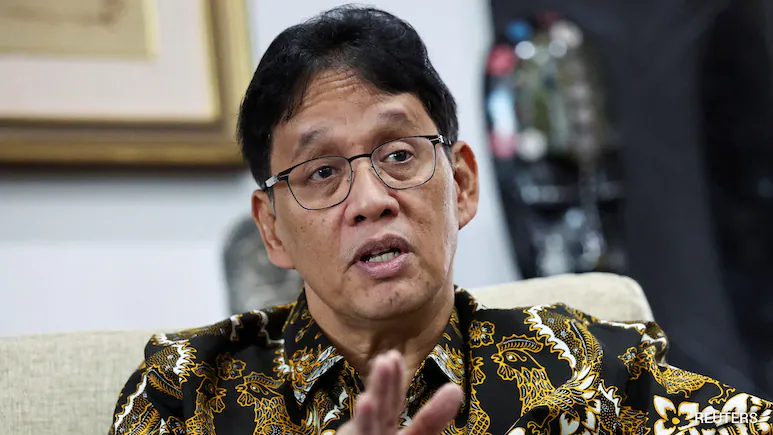
Indonesian President Prabowo Subianto has dismissed Finance Minister Purbaya Yudhi Sadewa following a confrontation with a senior official from the ministry. This official is known to have previously served on Prabowo’s special forces team. The decision to remove Sadewa was confirmed by three government sources.
Djaka denied on Tuesday there was any conflict preceding the sacking. Two sources who heard about it later said Djaka objected to the plan and reported it directly to Prabowo on Friday before the president left for India to attend the BRICS summit. The episode is another example of Prabowo’s personal style of governance, with the former special forces commander making decisions based on feedback more from his trusted inner circle and loyalists than professionals and experts, analysts say. Customs chief Djaka was a member of the president’s special forces team during military service. The behind-the-scenes clash illustrates how Prabowo’s reliance on trusted allies, including former military figures in senior civilian posts, can override technocratic decision-making in Southeast Asia’s largest economy, analysts say. Bimo and the presidential office did not respond to requests for comment. The dispute peaked at an inauguration ceremony last Thursday for hundreds of officials across senior and middle-management ranks. He clashed with Bank Indonesia’s previous governor Perry Warjiyo over his policy of placing government cash in state-owned lenders to support credit. Prabowo has appointed close allies and several fellow former and active soldiers to top spots in running the government, including Defence Minister Sjafrie Sjamsoeddin and his cabinet secretary Teddy Indra Wijaya, who handles all of the president’s agenda. Other key appointments have also been handed to former soldiers, including the head of the national airline Garuda Indonesia.
Because they had not agreed to it, the sources said, and Djaka took his complaints directly to Prabowo, djaka and the head of the tax department Bimo Wijayanto both objected to the job rotation. Analysts and investors welcomed the replacing of Purbaya as a move that would help restore confidence in the $1.5 trillion G20 economy after months of uncertain policy-making. Purbaya was also at odds with Danantara chief Rosan Roeslani after saying the sovereign wealth fund would transfer 120 trillion rupiah ($6.8 billion) of its profits to help meet this year’s fiscal-deficit target.
But it was bureaucratic infighting that led Prabowo to finally oust the minister, said the people familiar with the matter. The three sources said a clash between Purbaya and customs and excise chief Djaka Budhi Utama erupted over the reshuffling of hundreds of officials at the finance ministry, most of them in the tax and customs directorates. Both officials report to the finance minister but were handpicked by Prabowo, the first source said. One source said Djaka, who according to media reports was found guilty in a military court of kidnapping and forcibly disappearing rights activists in the 1990s, enjoys unusually direct access to Prabowo. Purbaya, according to the same source, needed approval from the president’s inner circle to secure meetings. Prabowo has previously said a successful leader must choose “the best” people for the team, not because of family, friendship or crony ties. Purbaya spoke on the occasion and said the rotation was based on professional assessments as well as consultation with relevant officials. Rosan later said no such plan had been discussed. Wijayanto Samirin, an economist at Paramadina University, said Prabowo places a high value on loyalty, an emphasis he described as understandable given Prabowo’s long period outside government – but warned that it could come at the expense of a merit-based system. “For a country to succeed, its political system must be sound and technocratic, and its bureaucracy must be based on meritocracy,” he said. (Except for the headline, this story has not been edited by NDTV staff and is published from a syndicated feed.)
Prabowo returned to Jakarta early on Monday. Purbaya said on Tuesday, after he handed over to his successor Suahasil Nazara in a terse ceremony, that an internal reshuffle played a part in his sacking, but did not explain further. But when asked about the matter just after his appointment on Monday, Suahasil – a veteran technocrat who was promoted from a deputy finance minister – told reporters he would review all the appointments. The customs office said on Tuesday it was awaiting direction from the new finance minister on the appointments.
Bimo supported timely repayments, while Purbaya tended to delay refunds, frequently arguing companies’ claims should be closely scrutinised to prevent leakages in state revenue. Suahasil did not respond to Reuters’ request for comment. it was not the only fractious relationship Purbaya had with top officials While the falling out with Djaka proved to be the decisive one.
The same day, Purbaya was informed he had been sacked in a call from the president’s spokesperson as he was in the middle of answering lawmakers’ questions at a hearing discussing Prabowo’s 2027 budget plan, the first source said.
He also said he was following Prabowo’s policies. The first source also said Bimo and Purbaya had differences over tax refunds. A third source close to Purbaya said the minister had justified the rotation decision to Prabowo as being necessary to improve revenue collection by both agencies.
