
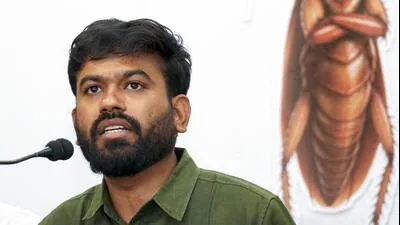
Abhijeet Dipke, founder of the Cockroach Janta Party (CJP), initiated the ‘Adivasi School Thik Karo’ (Fix Tribal Schools) campaign on Wednesday. This movement aims to highlight the government’s neglect of tribal education, particularly in light of a tragic incident where three tribal children died from snakebites at a government-aided ashramshala in Gadchiroli, Maharashtra, last month. The campaign seeks to draw attention to the urgent need for improvements in the safety and quality of education in tribal schools.
The initiative comes amid widespread hunger strikes by students across Maharashtra’s tribal belt and strong intervention by the Bombay high court. The bench took notice of the youth-led protests. “Instead, these children die in silence, and their grieving families are dismissed with insultingly nominal compensation—in some states, as meagre as a couple of goats. Questioning the national narrative of rapid development, Dipke urged leaders to look beyond macroeconomic figures. They deserve the exact same dignity, safety, and quality of education as children in major metros.”
Dipke said that more than 590 tribal students have died in Maharashtra over the past two years alone, many of them due to snakebites. CJP leader Dipke said the Fix Tribal Schools campaign is set to kick off in Gadchiroli on September 17. Similar fatalities have recently been reported in neighbouring states, including more than 30 tribal deaths in Madhya Pradesh’s Balaghat district within two months, along with casualties in Chhattisgarh, Jharkhand, Odisha, Andhra Pradesh and Uttarakhand. The campaign chief also called out broader systemic failures across the country, saying key initiatives such as the Eklavya Model Residential Schools were crumbling, with 477 out of 720 sanctioned facilities currently non-functional. He added that higher education enrolment among tribal students remained stagnant at just 22.8%. He also claimed that only 130 Scheduled Tribe (ST) applicants secured admission to the prestigious Indian Institutes of Technology (IITs), highlighting severe pipeline gaps and faculty underrepresentation.
A division bench comprising acting chief justice Ravindra Ghuge and justice Gautam Ankhad issued stern directions to the state government to safeguard students, emphasising that “no more young lives should be lost”. “Over the last 80 years, successive governments—regardless of political banner—have turned a blind eye to tribal education,” Dipke said, condemning what he termed institutional negligence and deep-seated discrimination. The CJP chief said, “Political parties spend crores of rupees constructing lavish district headquarters, yet claim they lack the funds to fix tribal residential schools operating out of cramped, rented properties,” drawing a sharp contrast between political priorities and grassroots realities. “If these tragedies had occurred in premier schools in Mumbai or Pune, the entire nation would be in an uproar,” Dipke said. “Boasting a 7.8% GDP growth rate or chasing a $5 trillion economy means nothing if we abandon our vulnerable rural and indigenous youth,” he said, adding, “Students in tribal belts possess immense potential.
CJP Inspections in Gadchiroli to Assess Tribal Student Facilities
Starting Thursday, representatives from the Citizens for Justice and Peace (CJP) will conduct on-site inspections in Gadchiroli. They will evaluate infrastructure, safety standards, and living conditions at institutions serving tribal students. This initiative is part of CJP’s wider ‘School Thik Karo’ campaign, which aims to enhance public education across the country.
