
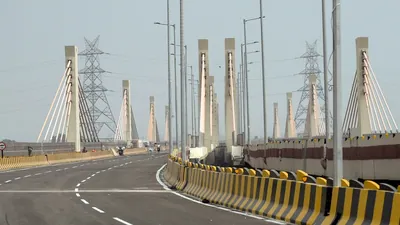
The Barapullah Phase III elevated corridor in Delhi will officially open to the public on September 29. This announcement was made by Public Works Department (PWD) minister Parvesh Verma during a site inspection of the project. The corridor, which has faced delays, is expected to enhance connectivity in the region.
Union home minister Amit Shah is scheduled to inaugurate the corridor in the presence of Delhi chief minister Rekha Gupta, HT reported earlier .
The project is expected to make travel easier for people coming from Mayur Vihar, East Delhi and Noida towards Sarai Kale Khan, AIIMS and other parts of South Delhi. Barapullah Phase III is an elevated road corridor that connects Mayur Vihar Phase I in East Delhi with Sarai Kale Khan. It will join the existing Barapullah corridor at Sarai Kale Khan. The biggest expected benefit is faster travel. The road will allow vehicles to bypass several traffic signals and congested stretches on the route to South Delhi . The project is particularly relevant for people travelling between: The new corridor will provide a faster connection from Mayur Vihar towards Sarai Kale Khan, where commuters can continue on the existing Barapullah route. Barapullah Phase III is not just a road over the Yamuna. The project includes several structures designed to distribute traffic and improve connectivity. He described the Yamuna crossing as having the potential to become a riverfront attraction if the river is cleaned up. “This is the country’s first flyover to feature both a cycle track and facilities for pedestrians. Since this bridge spans the Yamuna, people will naturally visit. Once the Yamuna is fully cleaned up, people will be able to enjoy the area and take leisurely walks. The higher cost has been linked to the prolonged delay and changes during the project’s execution. Barapullah Phase III has been under construction for years. Several issues delayed the work, including: The project has missed multiple completion deadlines. The allegations are under investigation. The two ramps are ready. One connects the corridor from the Mayur Vihar side, while the other connects it with the existing Barapullah corridor near Sarai Kale Khan. The bridge over the Yamuna has also been completed.
Together, the connected stretch will extend for about 9 km, providing a largely signal-free route towards South Delhi. The Phase III corridor is about 3.5 km long, while some project descriptions refer to the full elevated corridor and connecting structures as roughly 5 km. Officials have said the corridor could reduce the average journey from East Delhi and Noida to AIIMS from around 35-40 minutes to about 15 minutes, depending on traffic and the starting point. The project was originally estimated to cost about ₹ 1,260 crore. Its revised cost has reportedly risen to around ₹ 1,635 crore, an increase of more than ₹ 370 crore from the initial estimate. The project was approved in 2014, while construction began in 2015. It was originally scheduled to be completed in 2017. The latest deadline of June 30, 2026 was also missed. Final arrangements are being carried out ahead of the September 29 inauguration.
Verma said the project would also offer space for pedestrians and cyclists. In a sense, it will serve as a riverfront attraction,” Verma said. PWD officials have said that the major structures have been completed.
The Delhi Anti-Corruption Branch registered a case earlier this year over alleged irregularities linked to the project.
