The Joint Parliamentary Committee (JPC) examining the Constitution (129th Amendment) Bill, 2024, has been holding consultations across states, with its chairman PP Chaudhary claiming that an overwhelming majority of stakeholders consulted so far favour simultaneous polls.
The idea of holding Lok Sabha and state Assembly elections together – popularly called “One Nation, One Election” (ONOE) – is back at the centre of India’s political agenda.
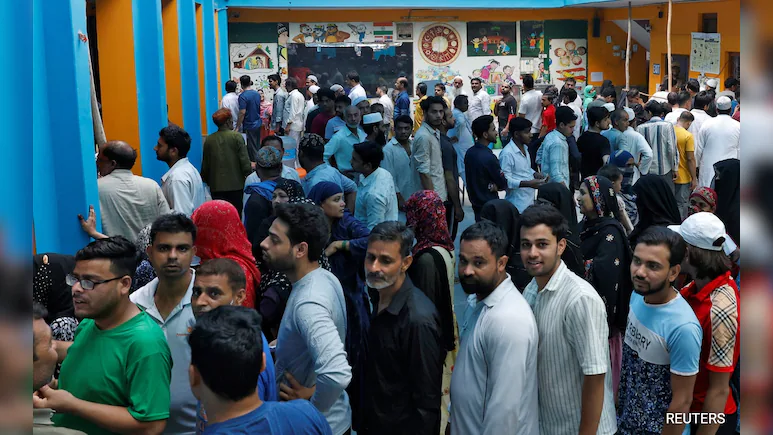
The high-level committee headed by former President Ram Nath Kovind, which submitted an extensive report recommending a phased move to simultaneous elections, argued that frequent polls create policy paralysis and disincentivise long-term governance decisions. Opposition parties, including the Congress, AAP, TMC, DMK, CPI(M), and the Samajwadi Party, have pushed back hard. Their core objection is constitutional: they argue that synchronising election cycles would require dissolving state assemblies before their full terms, undermining federalism and the autonomy of state governments. Beyond the legal argument lies a more political one – that a nationally dominant party with superior organisational reach, funding and media visibility could use a single, unified campaign to override state-specific concerns, effectively nationalising every election. This political worry is backed by some data. Studies on past simultaneous elections – including analysis cited by the Association for Democratic Reforms (ADR) and referenced in the Kovind committee’s own report – have found a strong tendency among voters to back the same party for both the Lok Sabha and the Assembly when the two votes happen on the same day. This pattern isn’t just theoretical. India currently holds simultaneous Lok Sabha and Assembly elections in four states – Andhra Pradesh, Sikkim, Arunachal Pradesh and Odisha – and in each of these, the same party has typically swept both state and national contests together, reinforcing the idea that a shared ballot day narrows the gap between state and national voting behaviour. On the surface, this history seems to support the idea that a national, incumbent party benefits most from synchronised polls – since a wave in its favour nationally would be expected to carry down to the states.
India actually had simultaneous elections as the norm from 1952 to 1967, a period when the Congress party dominated both the Centre and all states, except for intermittent periods in a few states like Kerala and Odisha. That alignment broke down in 1967, when the Congress lost power in a large number of states (8/16) even as it held on to a reduced majority at the Centre – a result widely seen as the moment separate election cycles began to take root, driven partly by dissolutions and defections that threw state and national timelines out of sync.
The Congress has called it a move that could alter the “basic structure” of the Constitution. The ADR’s submission to the JPC went as far as arguing that this “steamrolling” effect is precisely why the ruling party has been keen to push for simultaneous polls, since it tends to align votes in its favour at every tier of government.