
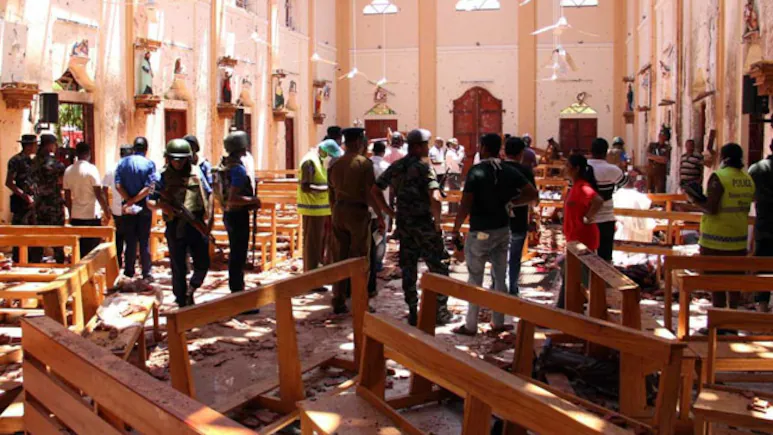
On Tuesday, Sri Lanka’s High Court convicted 14 out of 24 men accused of participating in the 2019 Easter Sunday bombings. This tragic event resulted in the deaths of 279 individuals. The court’s decision marks a significant step in addressing the violence that shook the nation during the attacks.
The presiding judge told a packed court that sentencing would be done later on Tuesday. Dozens of police commandos provided security outside as the verdicts were read. All of the accused are from Sri Lanka’s minority Muslim community. Twenty-five men were originally charged, but one defendant died in custody.
Local media has said some could face the death penalty, although Sri Lanka has not carried out an execution since 1976 and capital punishment is typically commuted to life imprisonment.
Rajapaksa Family’s Political Maneuvering Under Scrutiny
Investigators have revealed that a network was developed to create a security threat, which ultimately served to enhance political backing for the Rajapaksa family. This political strategy coincided with Gotabaya Rajapaksa’s election as president, several months after the attack.
The Rajapaksa family has maintained a stronghold on Sri Lankan politics for nearly two decades. However, they have denied accusations of state involvement in the alleged orchestration of this security threat.
Ongoing Investigation into Sri Lanka Bombings
A trial is currently underway linked to a sensitive investigation regarding potential connections between Sri Lankan state elements and those responsible for recent bombings. Former intelligence chief Suresh Sallay is in custody, facing accusations of orchestrating the attacks, which he denies.
