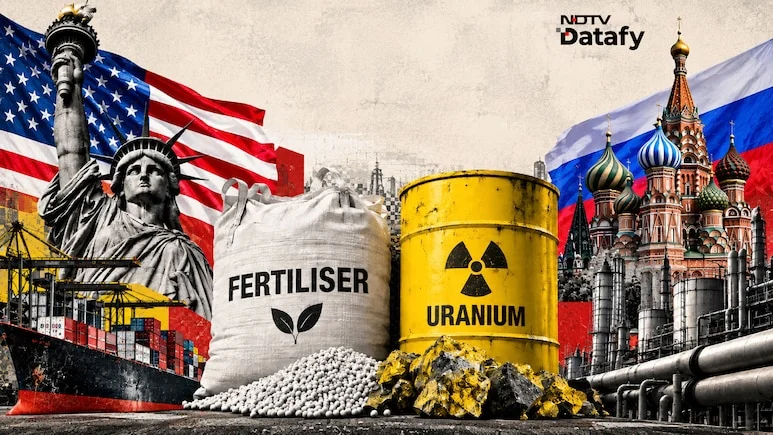
The move puts the spotlight on countries that have helped keep Russia’s energy exports flowing since the Ukraine war. The United States has taken a tougher stance against countries buying Russian fossil fuels, with a new law proposing 100 per cent tariffs on nations that continue purchasing oil from Moscow.
The Russian connection extends beyond the nuclear sector.
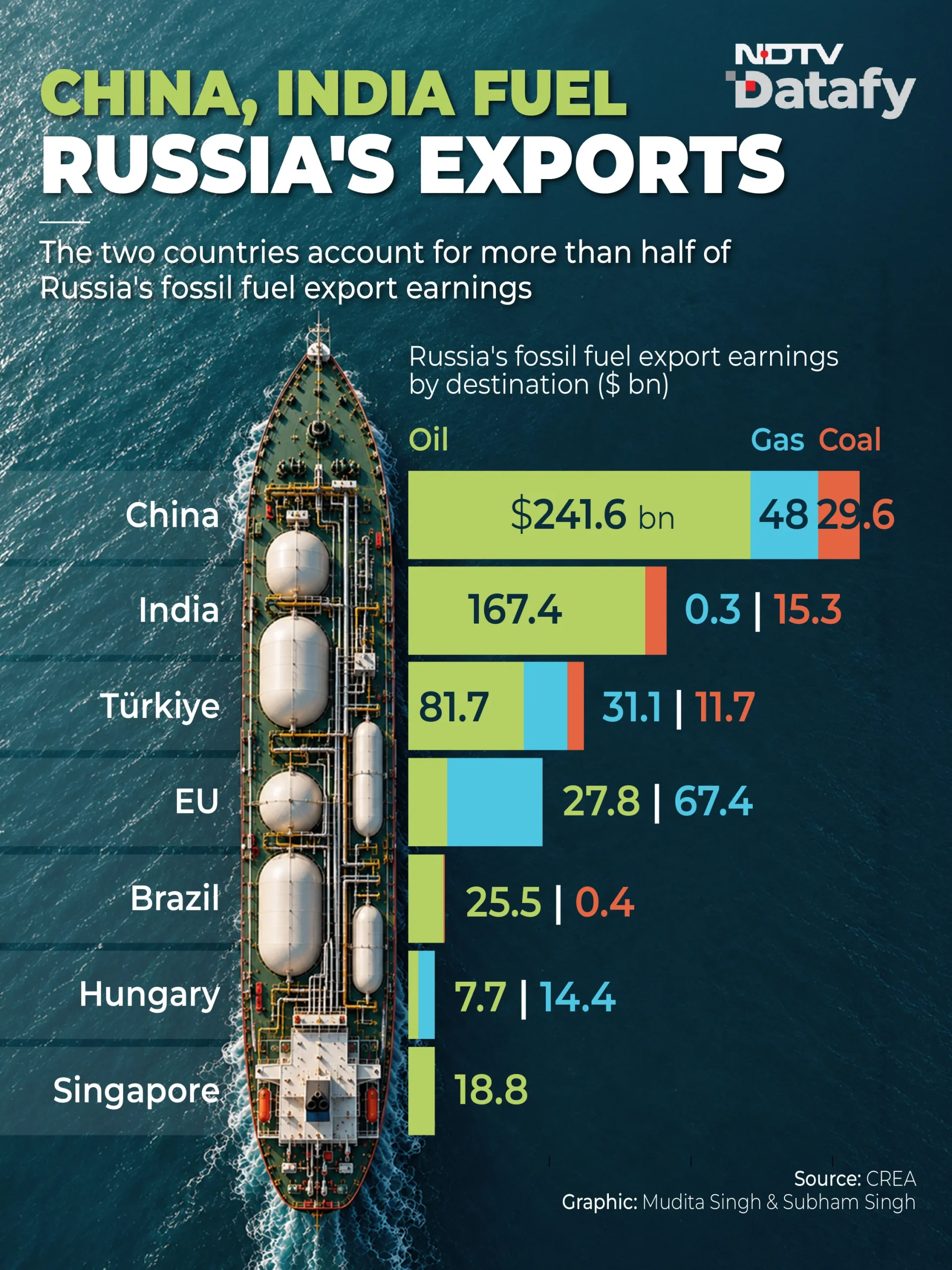
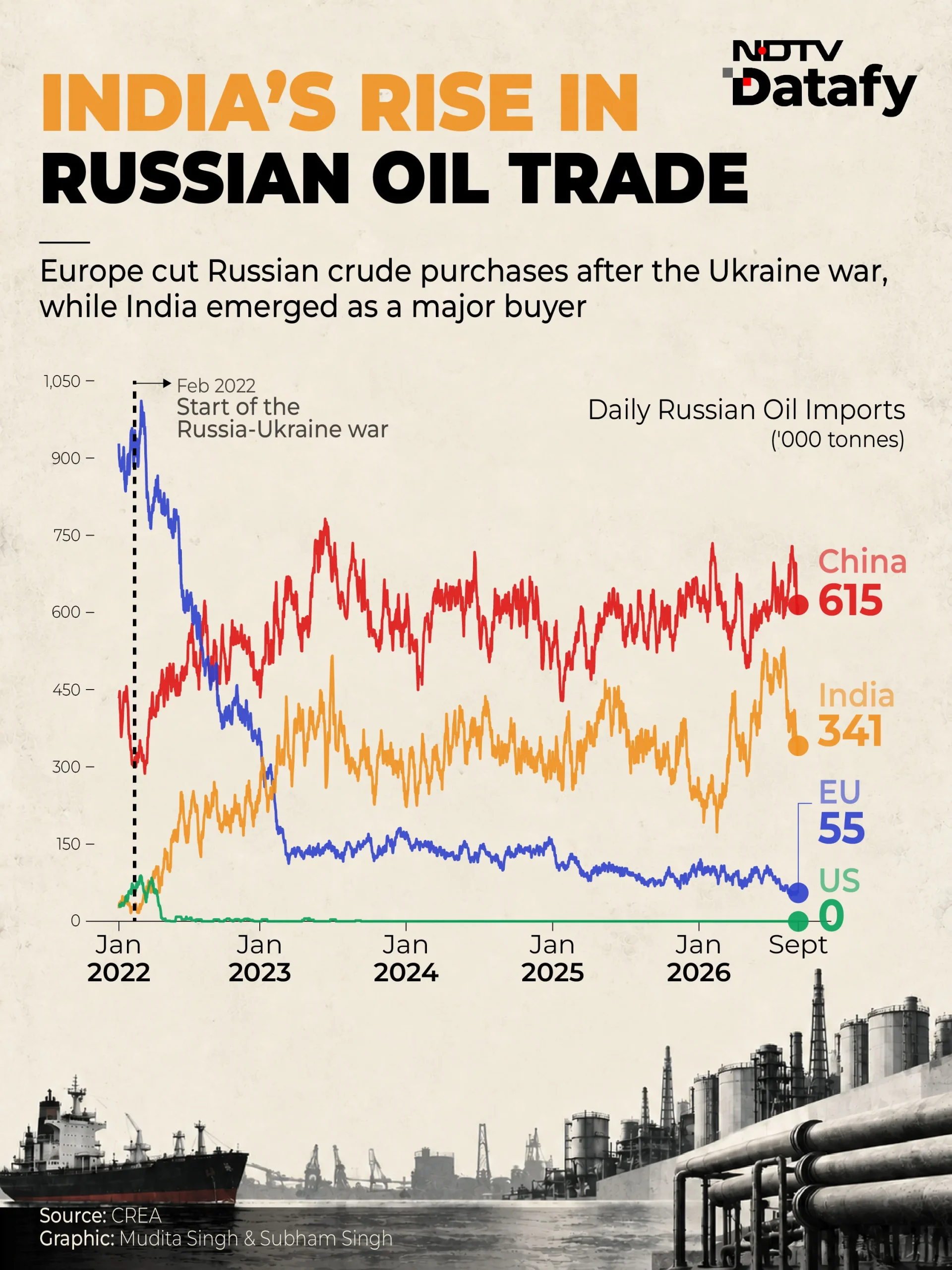
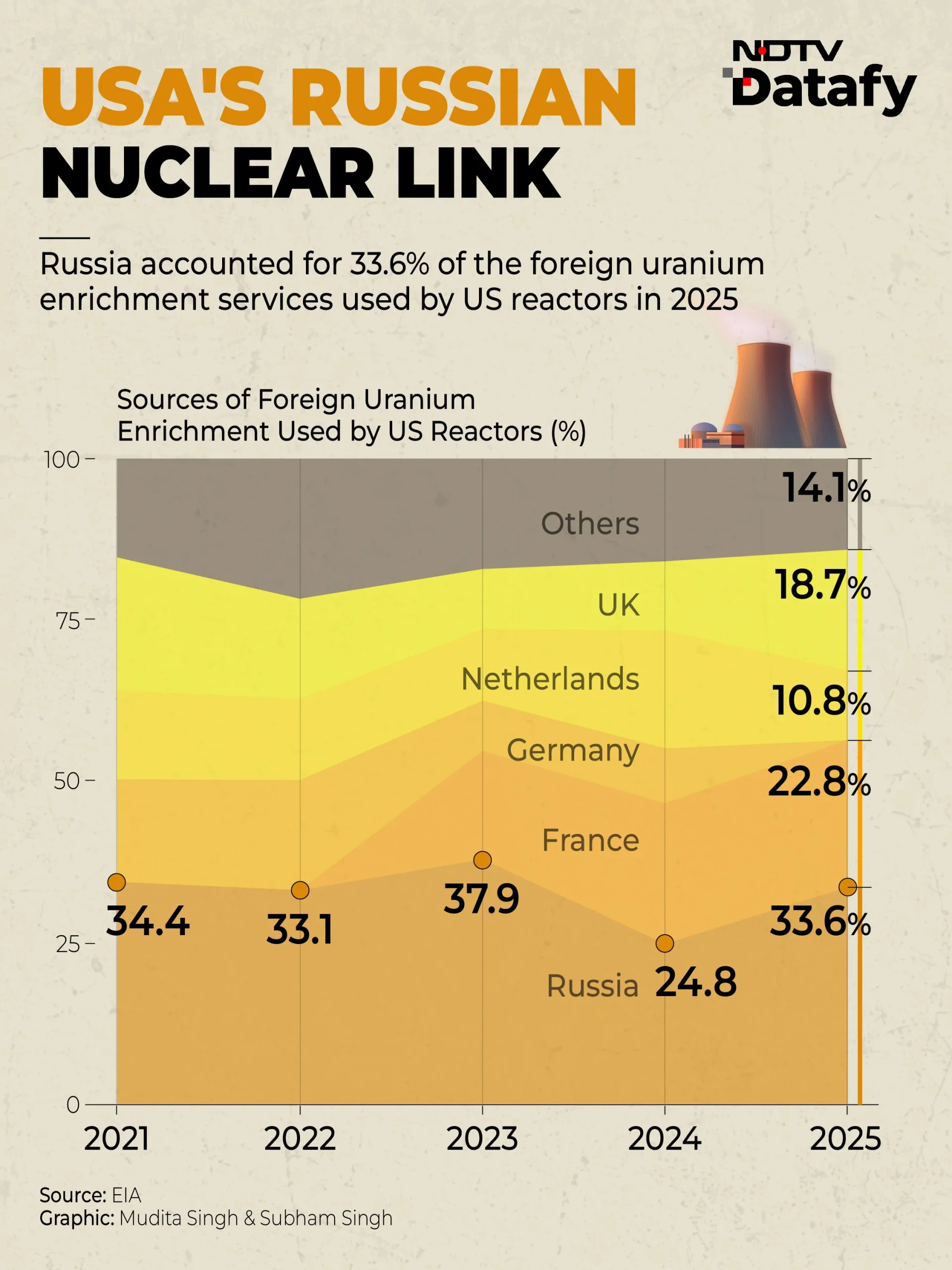
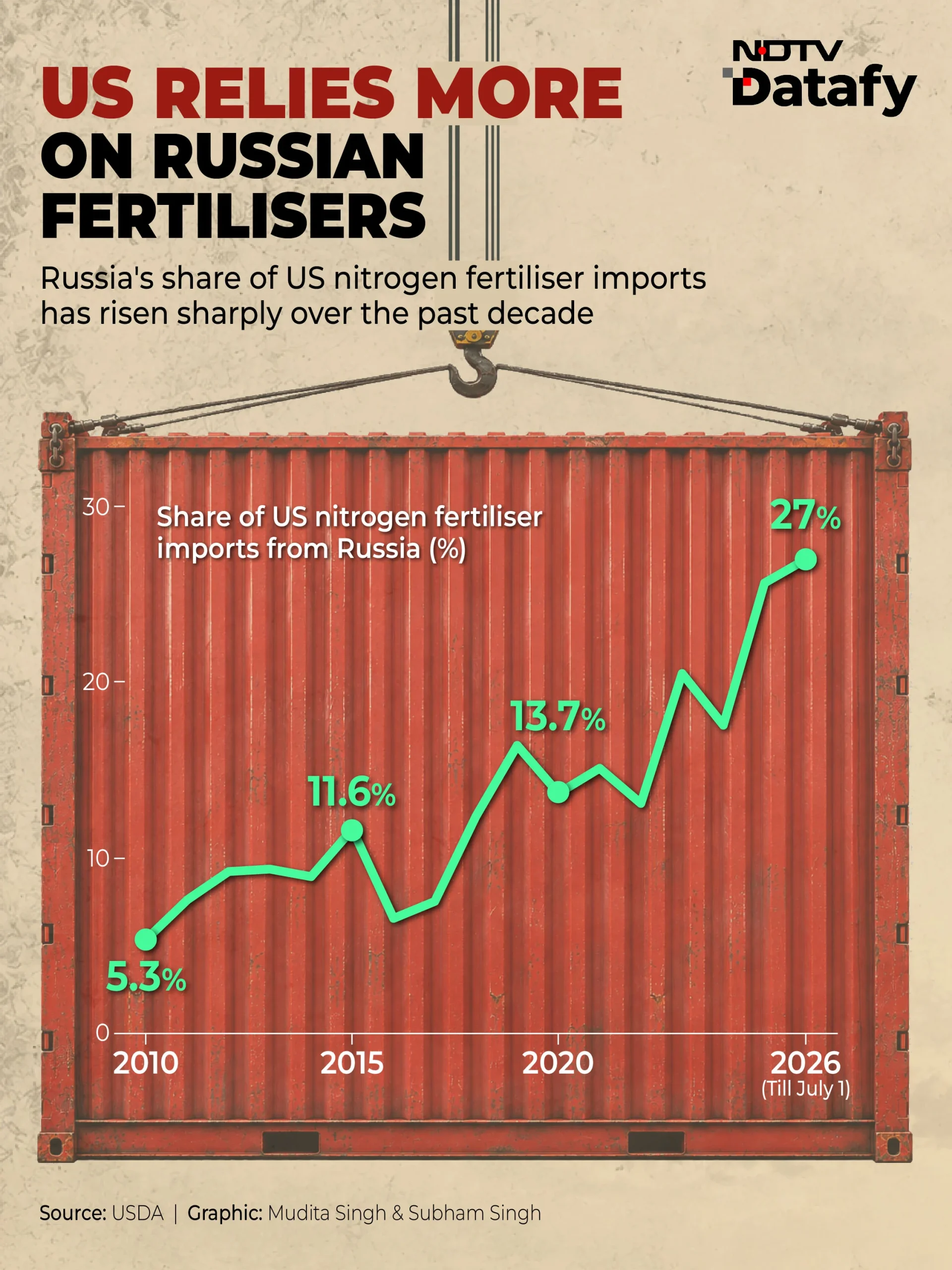
Together, China and India contributed more than half of Russia’s fossil fuel export revenues during the period. However, sanctions and policy changes led European countries to sharply reduce imports. At the same time, India’s imports moved in the opposite direction. What was once a relatively small trade relationship transformed into one of Russia’s most important oil markets as India ramped up purchases of discounted crude. This shift effectively reshaped the global trade map for Russian oil. As Europe stepped back, India stepped in. The result was that Russia found new buyers for its crude despite Western restrictions, while India benefited from cheaper energy supplies. the United States itself continues to rely on Russia in sectors that are critical to its economy and energy system While Washington has criticised countries buying Russian energy. The dependence has remained significant for several years. In simple terms, roughly one out of every three foreign enrichment services used by US reactors came from Russia. Data from the USDA Fertiliser Transportation Dashboard show that Russia’s share in US nitrogen fertiliser imports has been steadily increasing for more than a decade. Fertilisers are a critical input for agriculture, making them an important component of food security. The growing Russian share suggests that despite efforts to reduce economic ties with Moscow, American agriculture continues to source a sizable portion of its nitrogen fertiliser imports from Russia. The numbers point to a complex reality. The United States is seeking to increase pressure on countries buying Russian oil, yet America itself remains dependent on Russia for key products that support electricity generation and agricultural production. From nuclear fuel enrichment to Fertilisers, Russia continues to play a significant role in parts of the US economy even as Washington pushes allies and trading partners to reduce their dependence on Russian energy.
Because of how rapidly its purchases of Russian crude increased after the Ukraine war began, among the countries that could face the greatest impact from tariff-linked action, India stands out. Data from the Centre for Research on Energy and Clean Air (CREA) show that since January 2023, China has been Russia’s biggest fossil fuel customer, accounting for 35.3 per cent of Russia’s fossil fuel export earnings. India follows with a 20.2 per cent share, while Turkey accounts for 13.8 per cent. CREA data tracking daily Russian crude oil imports show the EU’s purchases steadily declining after 2022. Russia accounted for 33.6 per cent of all foreign enrichment services used by American reactors, ahead of France (22.8 per cent), the United Kingdom (18.7 per cent) and the Netherlands (10.8 per cent) in 2025. Russia’s share stood at 34.4 per cent in 2021, 33.1 per cent in 2022, rose to 37.9 per cent in 2023 and remained at 24.8 per cent in 2024. Russia accounted for just 5.3 per cent of US nitrogen fertiliser imports in 2010. That figure climbed to 16.4 per cent in 2019, crossed 20 per cent in 2023, reached 25.7 per cent in 2025 and stood at 27 per cent in 2026, the highest level in the series.
Russia remained the largest foreign supplier of uranium enrichment services purchased by US nuclear reactor operators, according to data from the US Energy Information Administration.
Before the war, Europe was one of the largest buyers of Russian oil.