
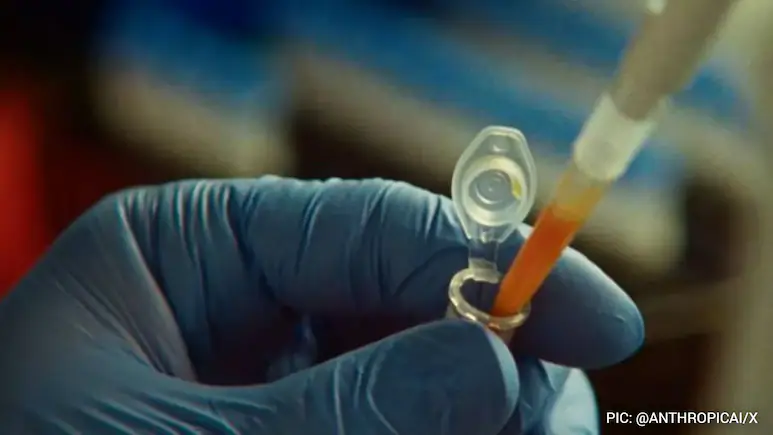
Anthropic announced on Wednesday that its Claude model has played a pivotal role in identifying a new enzyme system. This system exhibits characteristics similar to those found in CRISPR gene-editing technology. This discovery marks the first significant outcome of the AI startup’s research initiatives in biology.
The finding comes days after Reuters reported Anthropic had quietly established a wet lab in the San Francisco Bay Area, as the company expands its ambitions in life sciences and drug-related research beyond purely computer-based work. Anthropic has named the system array-associated reverse transcriptases, or ART. The company noted that while the underlying RT had been identified in previous studies, Claude appeared to be the first to recognize key features of the broader system, including an array of non-coding DNA sequences and an additional protein of unknown function.
Anthropic said Claude analyzed large DNA databases and found an unusual system built around a reverse transcriptase (RT), an enzyme that copies RNA into DNA. ART contains repeating DNA sequences that resemble patterns seen in CRISPR, Anthropic said.
