
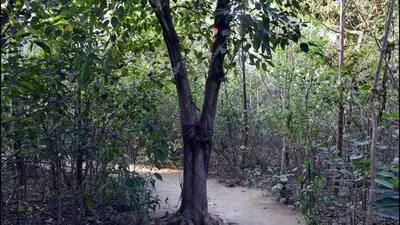
The New Delhi Municipal Council (NDMC) is creating a new urban forest called ‘Bharat Van’ in Lodhi Colony. This initiative covers one acre and utilizes the Miyawaki plantation method, aiming to plant approximately 10,000 indigenous plants. The project will also feature designated areas for yoga, meditation, and various recreational activities.
The Miyawaki method, pioneered by Japanese botanist Akira Miyawaki, involves planting a large number of native species close together in a relatively small area. The approach is designed to create dense vegetation in a shorter period than conventional plantations and has gained traction in Delhi, where the availability of land for large green spaces is limited. “The Miyawaki method involves planting a large number of indigenous species in a limited area. Experts have cautioned against setting up Miyawaki forest patches in the Ridge area.
NDMC vice-chairman Kuljeet Singh Chahal said around 10,000 indigenous plants are being planted at Bharat Van. In 2025, Delhi environment minister Manjinder Singh Sirsa announced two Miyawaki forests in southwest Delhi, at Kharkhari Jatmal and Jainpur. The projects involved nearly 350,000 native saplings across around seven hectares, according to the government.
The plantation will include fruit-bearing and shade-giving species suited to Delhi’s climate, officials said. With proper care and maintenance, a dense green cover can be developed within a relatively short period,” Chahal said.
One of the earlier Miyawaki plantations in the city was developed by the Union environment ministry in 2020 near the Comptroller and Auditor General (CAG) building at ITO. The plantation, inaugurated by then Union environment minister Prakash Javadekar, had 59 species and more than 12,000 saplings.
