
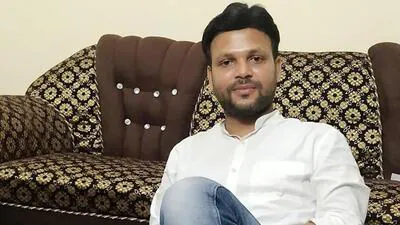
The Supreme Court has upheld the bail conditions for Meeran Haider, one of the accused in the 2020 Delhi riots. The court ruled on Friday that Haider is prohibited from participating in any public programs, addressing gatherings, or distributing promotional materials, such as posters or banners. The justices noted that the decision intentionally kept the restrictions broad, rather than limiting them solely to Haider’s specific case.
Agarwal referred specifically to two conditions. The relief he got pertained to the condition requiring him to appear every Monday and Thursday at the police station. He instead requested the court to make it on a weekend.
Agarwal informed the court that his client seeks employment and weekdays will not be possible due to working hours. However, the bench modified one condition from the January 5 judgment relating to physical attendance before the concerned police station twice a week. The bench allowed him to appear once a week before the Crime Branch police station of the Delhi Police on Saturday and exempted him on two Saturdays falling on October 17 and 24, considering the special circumstance of his marriage in the week beginning October 17. The trial in the 2020 Delhi riots case is continuing, with the police having invoked offences under the Unlawful Activities (Prevention) Act (UAPA) against the accused.
A bench of justices Aravind Kumar and Vipul M Pancholi said, “We will not relax any condition except one,” after Haider’s lawyer, senior advocate Siddharth Agarwal, requested the court to consider relaxing three other conditions besides the one the court agreed to. One said, “The appellants shall not participate in any programme or address or attend any gathering, rally or meeting, whether physically or virtually till conclusion of the trial.
Court Rejects Narrow Scope for Legal Conditions
In a recent court ruling, the bench dismissed Haider’s request to limit the legal conditions to the current case. The judges emphasized that the scope must be broader, stating, ‘It has to be much wider. Consciously we have not said ‘in this case’. We are very clear we will not restrict it.’ Consequently, Haider’s application was denied.
