
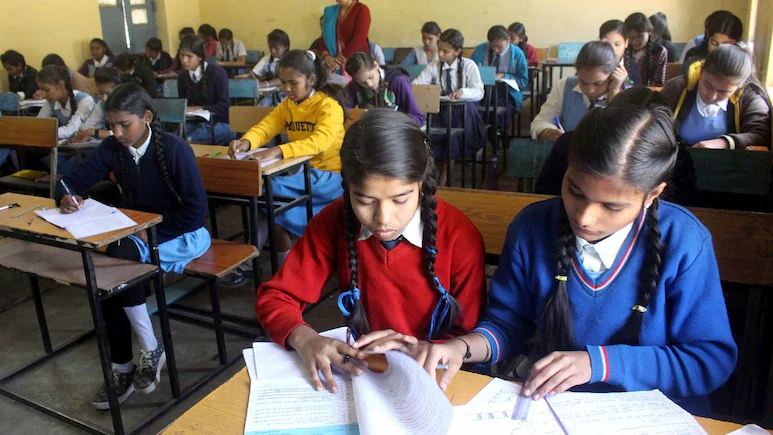
Students in the early grades often spend much of their classroom time listening rather than speaking or interacting, a new survey has found. Many children get limited opportunities to participate in discussions, ask questions or learn from their classmates.
The survey found that children were mostly quiet in nearly two-thirds of classrooms, with few opportunities to speak freely, interact with teachers or learn from their peers. More than half of the teachers mainly asked questions to the entire class. This often resulted in children answering together, making it difficult for teachers to assess whether individual students had understood the lesson. Only a small number of teachers used different methods to check individual students’ understanding. The survey also found that teachers were not often using different strategies to meet the learning needs of children at different levels. Teachers also made limited use of children’s real-life experiences and open-ended questions during oral language activities. The use of children’s home languages was another area where the survey found a gap. The findings highlight the need to make early-grade classrooms more interactive, with greater opportunities for children to speak, participate in activities and learn from one another. More use of learning materials, open-ended questions and children’s everyday experiences could also make classroom learning more engaging.
The Teaching Learning Practices Survey (TLPS) 2025, conducted by the Language and Learning Foundation (LLF) studied teaching and learning practices in Grade 1 and Grade 2 classrooms across nine states. It covered 1,050 classrooms and focused on language and mathematics teaching. Only 30 per cent of teachers used differentiated teaching methods. only 10 per cent used them consistently to improve children’s participation and understanding Although 73 per cent of teachers knew the home languages spoken by their students. The survey found that children remained off-task for 27 per cent of classroom time. Of the time they were engaged, 32 per cent was spent listening to or watching the teacher or another child read, or copying from the blackboard. Another 17 per cent was spent on choral repetition or answering together. Teaching-learning materials were also not used by children in 53 per cent of classrooms.
Why Are Students Staying Quiet In Class? Survey Finds Limited Participation

