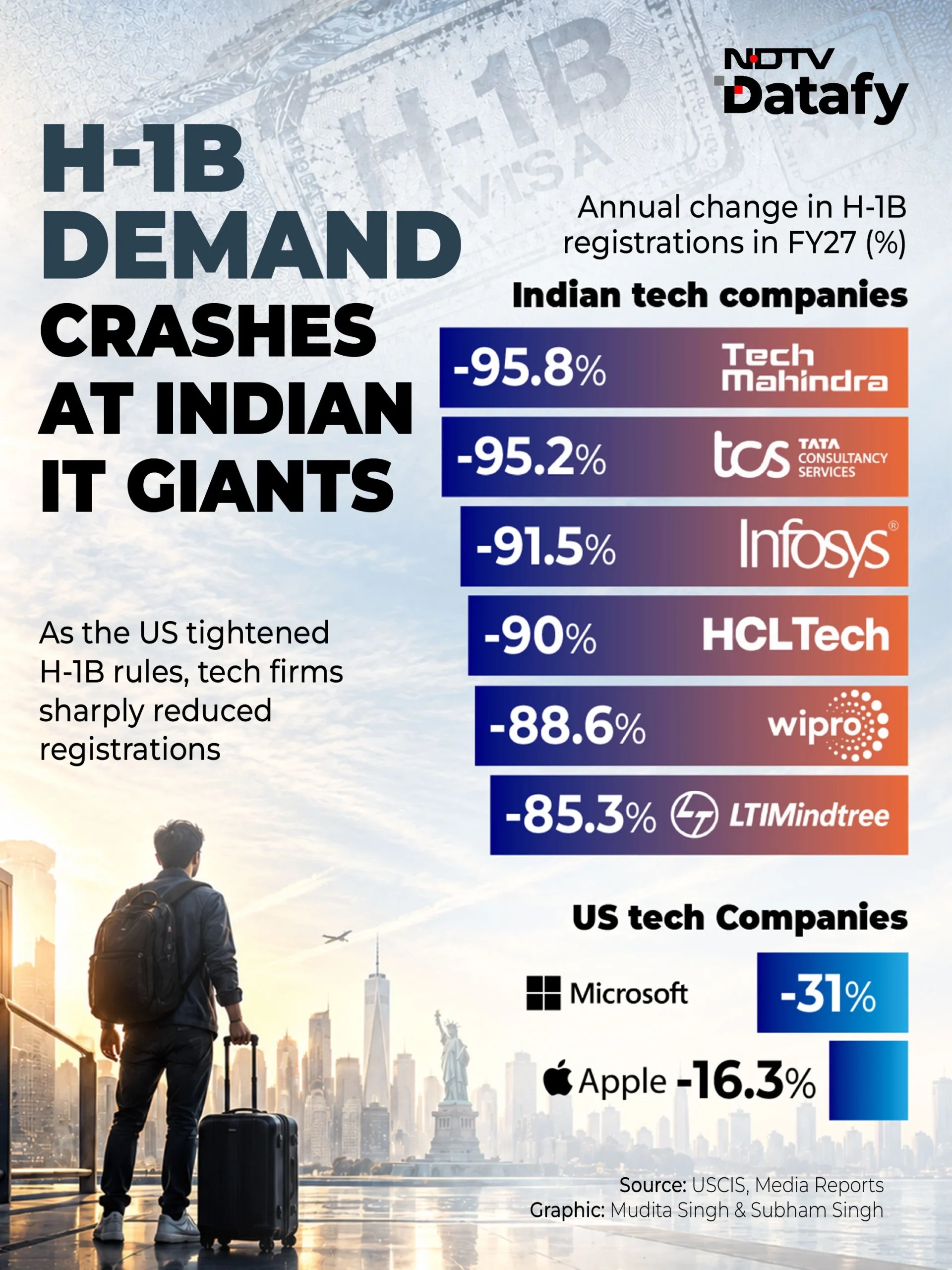
Major Indian technology companies have sharply reduced their reliance on the H-1B visa route, highlighting how changing US immigration policies are reshaping the way the industry hires talent. Data from the United States Citizenship and Immigration Services (USCIS) show H-1B registrations by India’s largest IT firms fell dramatically in Financial Year 2027. Infosys cut registrations from 8,886 to 759, while TCS reduced from 5,955 to 284. Similar declines were recorded by HCL America, Tech Mahindra and Wipro, with drops ranging from 85 per cent to nearly 96 per cent.
One reason behind the sharp decline is a series of policy changes introduced under the Donald Trump administration. The administration argued that the measure would discourage overreliance on foreign labour and protect American jobs. The pressure increased further this month. The order also requires closer coordination among labour, homeland security and other federal agencies when reviewing visa petitions. Even as fresh registrations decline, Indian professionals remain at the centre of the H-1B programme. Together, India and China accounted for more than four out of every five approved H-1B beneficiaries.
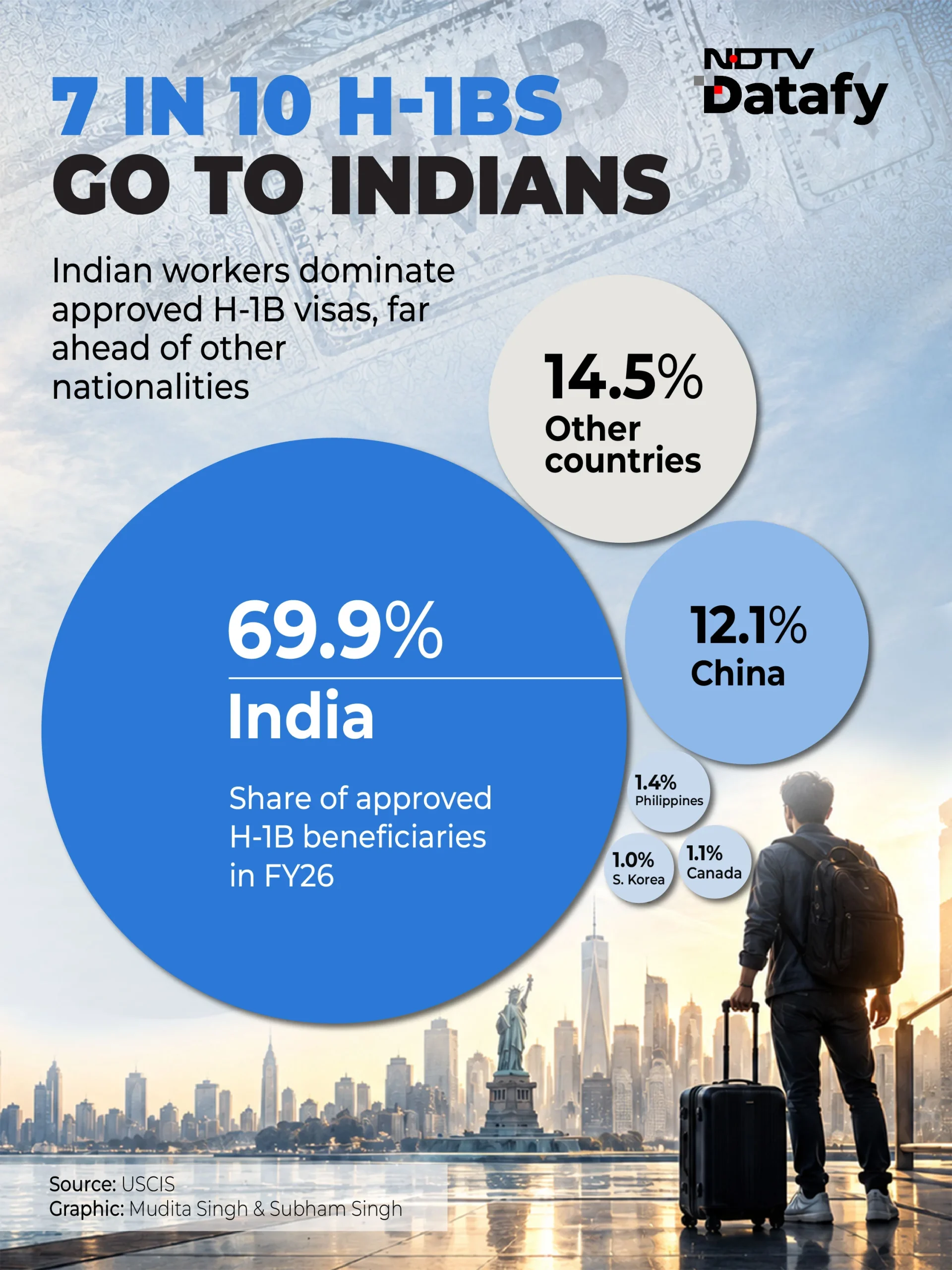
In September 2025, the US imposed an additional $100,000 payment requirement on certain new H-1B petitions involving workers seeking to enter the country from abroad. The requirement was extended for another year until September 2027, although it continues to face legal challenges. On September 18, 2026, President Trump signed an executive order directing federal agencies to apply greater scrutiny to H-1B applications filed by companies that have recently laid off American workers. Indians accounted for 69.9 per cent of all approved H-1B beneficiaries, according to FY2025 approval data from USCIS. Out of 4.06 lakh approved beneficiaries, 2.83 lakh were born in India. China ranked a distant second with a 12.1percent share.
This overwhelming Indian presence helps explain why Indian technology firms have been among the biggest users of the visa programme. Companies such as Infosys, TCS and Wipro have long depended on the H-1B route to move engineers and technology professionals from India to client locations across the United States. However, that business model has been changing. Faced with higher visa costs, tighter regulations and greater scrutiny from US authorities, many Indian IT firms have increasingly focused on hiring workers locally in the United States. The shift is visible in the broader H-1B registration trend as well. The figures suggest that demand for the programme has cooled significantly after years of rapid growth. For Indian IT firms, the message is clear. Rising visa costs and tougher oversight have made the H-1B route less attractive than it once was.
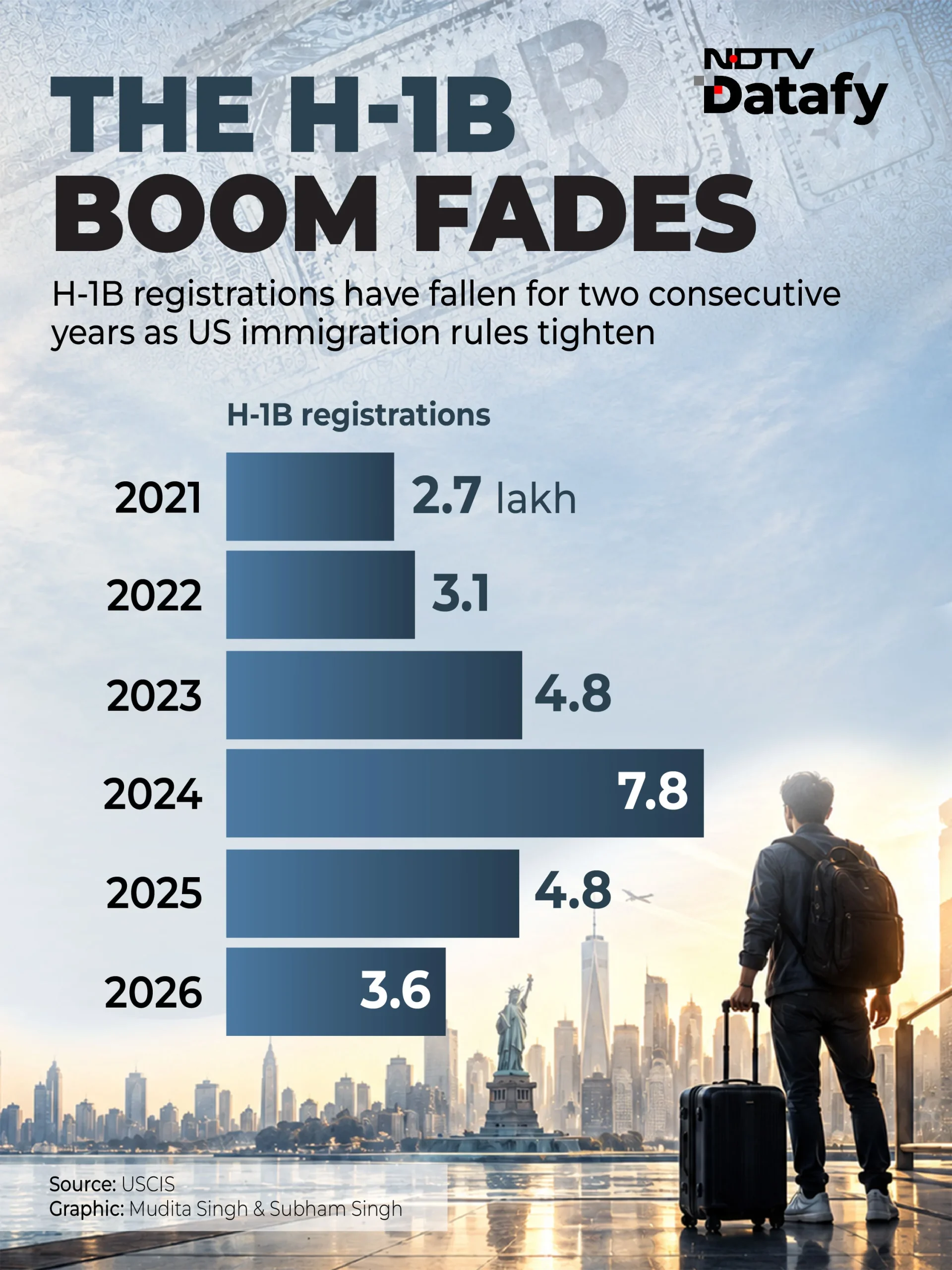
As a result, many companies are replacing a model built on overseas transfers with one focused on local hiring and more selective use of the US visa programme. Total H-1B registrations rose from 2.74 lakh in FY2021 to a record 780,884 in FY2024. Since then, registrations have fallen sharply, dropping to 4.79 lakh in FY2025 and further to 3.58 lakh in FY2026. In announcing the September 18 executive order, the administration said H-1B petitions should face enhanced scrutiny when there is a risk of American workers being displaced.
The White House has framed these changes as part of an “America First” approach aimed at protecting domestic workers.