
UNESCO Report: Teachers in Kiribati, a country in Oceania, are using creative classroom methods to introduce students to technology, as schools across the Pacific island nation continue to face limited infrastructure, unreliable electricity, and weak internet connectivity, the United Nations Educational, Scientific and Cultural Organization (UNESCO) said in a recent report.

UNESCO said the model-school approach is intended to generate lessons that can later be adapted across Kiribati, including areas where access to basic learning resources remains limited.
For many students, digital learning is closely connected with their career ambitions. Other students at the school reportedly aspire to become doctors, pilots, police officers, and teachers. However, although they are interested in technology, several have not had regular opportunities to practise using computers at school. “Maybe at home they see computers from their parents, or brothers and sisters. But they don’t have practice in school,” he added. For teachers such as Tetuai, the programme represents more than the arrival of new equipment. It could give students the opportunity to learn through practical experience and connect their classroom education with the careers they hope to pursue.
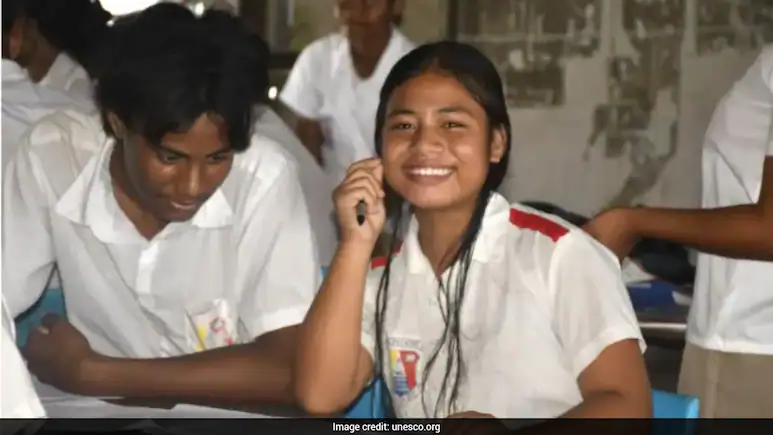
Because hospitals use computers extensively, a 13-year-old student identified by UNESCO as Teina said she hoped to become a nurse and believed computer skills would be important. At TUC 1 Junior Secondary School in South Tarawa, Year 8 teacher Aroito Tetuai teaches students about satellites, computers, and digital communication – technologies many of them have never had the opportunity to use directly.
“Most of the students enjoy learning about technology,” Tetuai said. UNESCO said the model-school approach is intended to generate lessons that can later be adapted across Kiribati, including in remote island communities where access to basic learning resources remains limited.
