
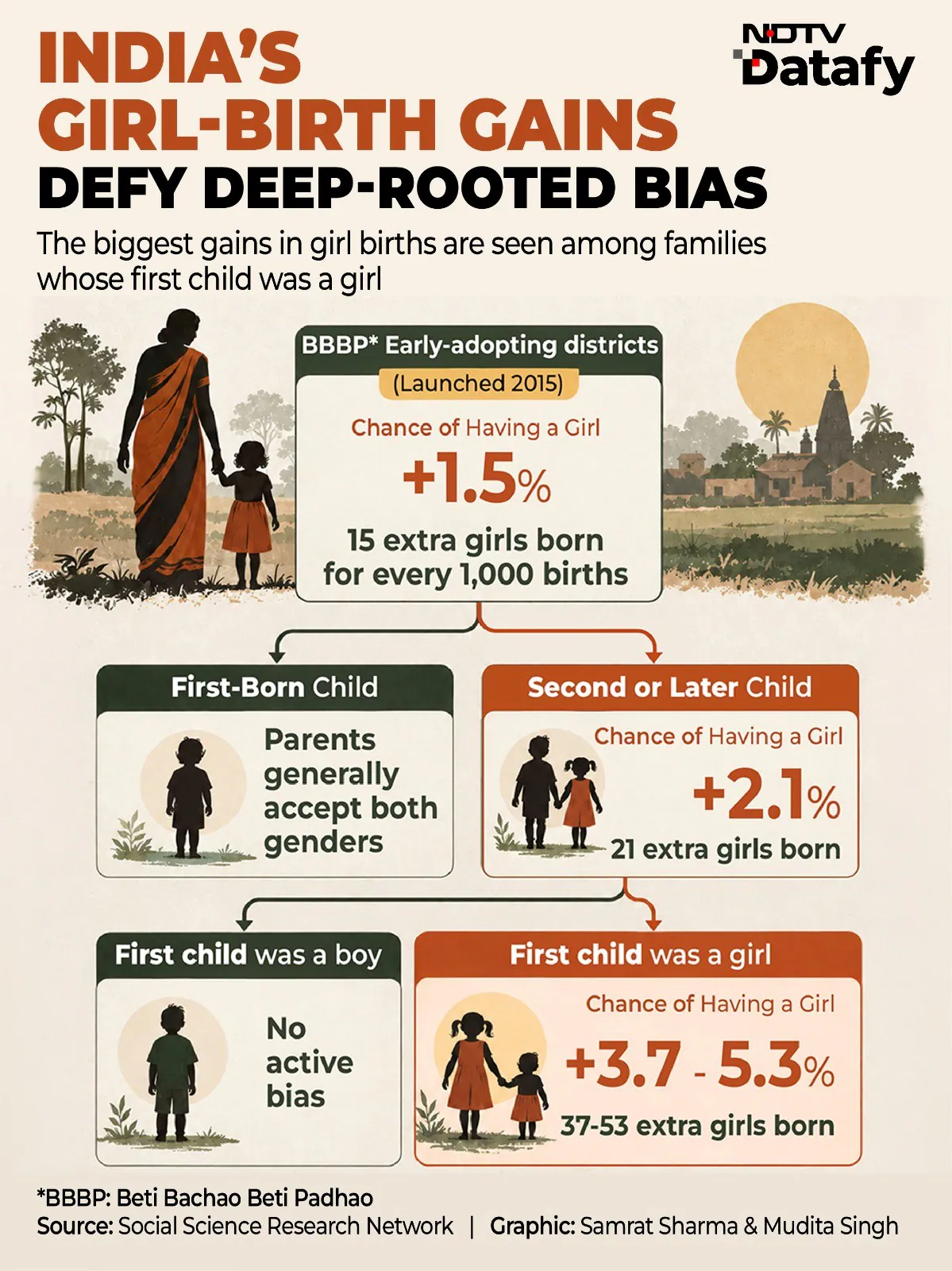
The estimates suggest about 15 additional girls for every 1,000 births.
India’s Beti Bachao, Beti Padhao (BBBP) programme has improved the odds of girls being born in the districts where it was first implemented, according to the report ‘Policy Interventions and the Sex Ratio at Birth: Evidence from India’.
The gains were most visible among second and later births, where son preference has traditionally been strongest. This indicates that the programme had the greatest impact where the pressure to have a son is typically highest. The study’s most striking finding relates to families whose first child was a girl. By contrast, researchers found virtually no change among families whose first child was a boy.
Among these births, the probability of a girl being born increased by 2.1 percentage points. In such households, the probability that the second child would also be a girl rose by 3.7 to 5.3 percentage points, which translates into 37 to 53 additional girls per 1,000 births.
What The Study Suggests
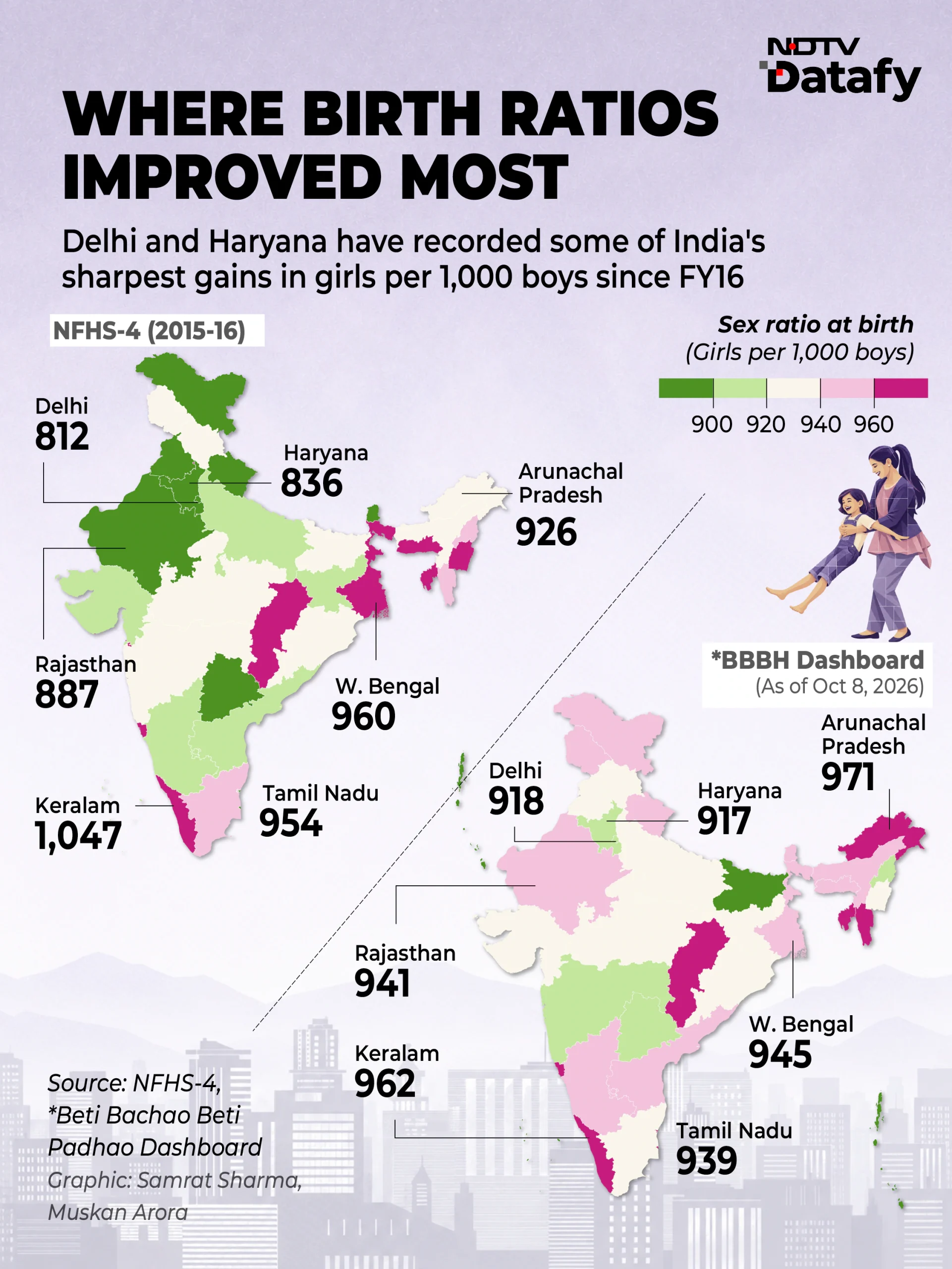
Its findings indicate that policy interventions, awareness campaigns and community outreach may be helping reduce the pressure on families to have a son, particularly after the birth of a daughter.
The study suggests the change is concentrated where gender bias has historically been most entrenched.
