
Reported by Saumya Pandey: Thakur Ronith Singh’s journey from a stable job at Fiat India Automobiles to becoming an electric vehicle (EV) battery design engineer at Bajaj Auto is a story of discipline, difficult decisions and personal resilience. Today, he works on Chetak EV in Pune, with a long-term goal of developing sustainable engineering solutions. After working for around two and a half years at Fiat, he left his job in 2020 to prepare for the Graduate Aptitude Test in Engineering (GATE). During this period, he lost his father to COVID-19 but continued preparing with the support of his family. He secured admission to IIT Delhi in 2022 and graduated in 2024 with an M.Tech in Thermofluids Engineering, ranking first in the Mechanical Engineering department and earning a gold medal.

For him, the IIT Delhi gold medal did not directly open new professional doors. Instead, its real value lies in the discipline, work ethic and skills he developed while working towards it. Once in a while, one should shift the focus away from the finish line, look back, and appreciate how much one has grown in this relentless pursuit. He believes in breaking larger goals into measurable milestones, evaluating the advantages and disadvantages of important decisions, and seeking advice from friends and family when ambition begins affecting personal well-being.
Reflecting on success, Ronith said: “The concept of being ‘successful’ is an ever-moving finish line that inches away as you get closer to it.
Today, Ronith works as an Assistant Manager and battery design engineer for Chetak EV at Bajaj Auto in Pune. Before joining IIT Delhi, Ronith had already gained professional experience at Fiat India Automobiles. Despite this personal loss, he continued preparing for the examination, drawing strength from the unwavering support of his mother and brother. Speaking to NDTV, Ronith explained that returning to academics after working for around two and a half years required him to rebuild his academic foundation. Many of his classmates had recently completed their B.Tech degrees, while he had been away from classrooms for four years. His preparation strategy involved completing the syllabus within a few months through online coaching, followed by revision, problem-solving and strengthening fundamental concepts. He also believes students should develop communication skills alongside technical knowledge, as explaining ideas clearly becomes increasingly important in professional life. Ronith does not believe that consistency requires following a perfect schedule every day. He understands that some days can be more challenging than others and that plans may need to change. Small, consistent steps can contribute to meaningful progress over time. Running also became an important part of his routine, helping him manage anxiety around examinations, career decisions and uncertainty. It allowed him to clear his mind and return to problems with a calmer perspective. If he were to prepare for GATE again, he would focus less on solving a large number of numerical problems and more on selecting challenging questions, identifying gaps in understanding and connecting concepts with real-life applications. One of the most important decisions in Ronith’s professional journey came while selecting his master’s thesis at IIT Delhi. He chose a multidisciplinary project involving batteries and machine learning, which eventually influenced his career direction. Rather than pursuing a conventional thermal engineering role involving internal combustion engine products, he moved towards battery engineering for electric vehicles. His work connects his engineering background with his growing interest in sustainable transportation. His interest in renewable energy and sustainability also developed while reflecting on his long-term goals during a postgraduate scholarship application. He decided he wanted to contribute to renewable energy systems and sustainable technologies that could improve people’s lives. For him, working on electric vehicles represents an initial step towards this broader ambition. he decided to build his career in India Although Ronith considered opportunities abroad. Staying close to his family and gaining firsthand experience of the country’s research and development ecosystem were important factors in his decision. However, he still misses the academic environment at IIT Delhi, particularly the freedom to explore ideas and interact with scholars from different disciplines. Speaking to NDTV, Ronith also discussed the need for India to strengthen its deep-tech, core engineering and manufacturing sectors. particularly in technology and artificial intelligence, he believes capital-intensive engineering businesses need greater investment and government support While he acknowledged the rapid expansion of the startup ecosystem. He sees closer collaboration between startups and research institutions as an important opportunity. Research can generate new ideas, while established companies can help turn promising technologies into products that reach wider markets. He points to the electric two-wheeler sector as an example of this potential.
However, he decided to leave his stable job in late 2020 and dedicate a year to GATE preparation. The decision came during the COVID-19 pandemic, when uncertainty made taking such a risk particularly challenging. Soon after returning home, he lost his father to COVID-19. His efforts eventually helped him secure admission to IIT Delhi’s M.Tech programme in 2022. On such days, he believes even 30 minutes of focused study is better than abandoning the day’s efforts altogether.
In the final two months before the examination, he focused on mock tests to assess his progress, improve time management and analyse mistakes. His earlier industry experience also helped him transition into corporate life after completing his master’s degree.
He responded by participating actively in classes, spending additional time on assignments and taking extra courses. For Ronith, the gold medal was not simply about competing with classmates or meeting family expectations. It was a personal test of whether he could set an ambitious goal and work consistently towards achieving it. He initially approached academic excellence as a target, but gradually began enjoying the learning process, including coursework and interactions with faculty members and fellow students. Even while performing well, he experienced moments of self-doubt. Support from his loved ones helped him recognise small achievements and continue working towards his goal. Looking back, he credits discipline and a strong work ethic for his academic success. Ronith followed a demanding routine during his M.Tech programme. However, he did not view discipline as following a rigid timetable or counting study hours. Instead, he focused on using time effectively and making adjustments to improve productivity. The habit developed during GATE preparation, which involved tracking how he spent his time, continued throughout his postgraduate studies and now helps him in his professional life. His advice to competitive-exam aspirants is to focus on personal improvement instead of comparing mock-test scores with those of other students. He believes that small, consistent improvements can make preparation more effective. Speaking to NDTV, Ronith highlighted three important lessons for students preparing for competitive examinations: discipline, identifying weaknesses through practice and mental strength.
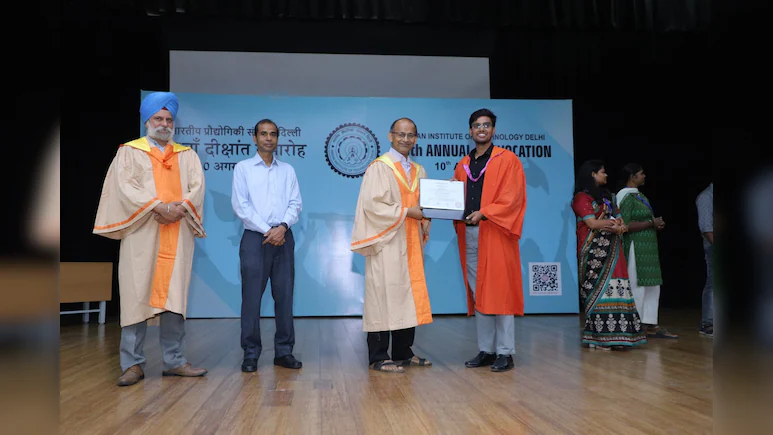
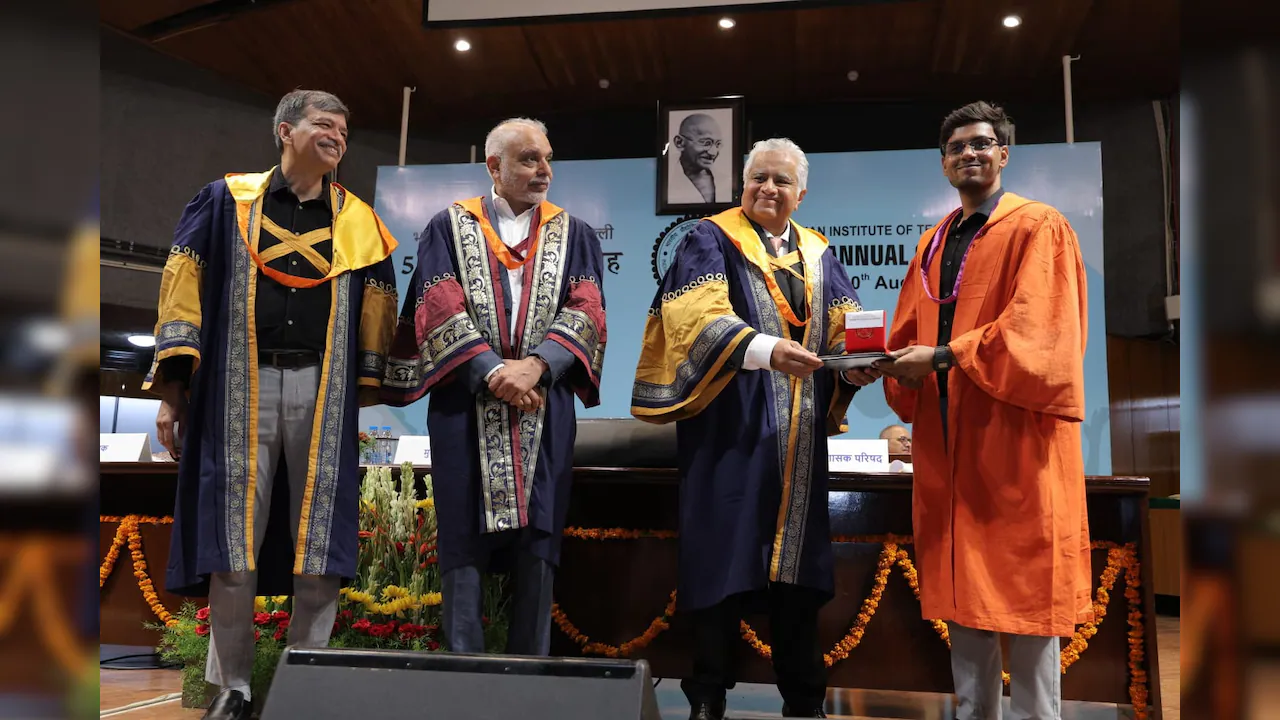
His consistent efforts culminated in a gold medal at IIT Delhi’s 2024 convocation. Classes generally continued until around 3 pm, after which he studied in the library. He went to the gym at 6:30 pm and continued academic work until midnight or 1 am.
Ronith is gradually moving towards a managerial role while continuing to develop his technical and people-management skills. Over the next decade, he hopes to lead teams and develop products using emerging technologies in the automotive and power sectors. His long-term ambition is to use engineering and leadership to create sustainable solutions that improve lives and inspire future engineers. Looking back, he wishes he had paused to appreciate his gold medal more instead of immediately focusing on the next goal. For Ronith, success is no longer limited to a designation, salary or academic achievement. His journey from leaving a stable job to earning a gold medal and working on electric vehicles reflects a larger lesson: meaningful progress comes from consistent effort, learning from setbacks and using one’s skills to contribute to a larger purpose.
As he puts it, “If I can keep working towards improving people’s lives through sustainable engineering solutions and inspiring young engineers to do the same, I would call everyday a success,” he says.
