

It took me a while to recall the scene in one of the films in the ‘Golmaal’ franchise where a mute Tusshar Kapoor, possessed by a soul, begins speaking in Patekar’s distinctive voice.
When I asked my eight-year-old son if he knew of any Nana Patekar movie, he said, ‘ Golmaal ‘. It was a moment of comic absurdity, but it also said something about the actor’s cultural reach.
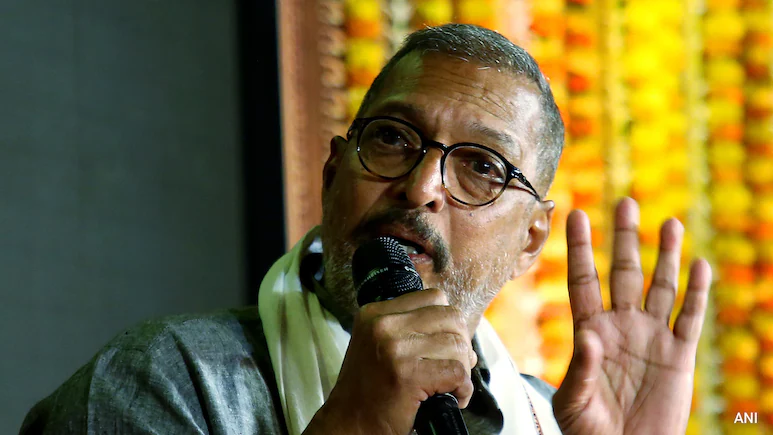
Here was an actor whose gravelly baritone, staccato rhythm and intense voice modulation travelled across generations, becoming instantly recognisable even to children who may never have watched his most celebrated performances. Patekar had a rare ability to make a character’s anger feel personal. He did not always behave like the conventional Hindi film hero. He was abrasive, uncomfortable and difficult to like. Yet it was almost impossible to look away. The character’s exaggerated seriousness and wonderfully timed reactions made him hilarious without diminishing his screen presence. His chemistry with Anil Kapoor’s Majnu Bhai became one of the film’s biggest attractions. Different generations could claim different versions of Nana Patekar as their own. For some, he was the fierce actor; for others, he was the menacing presence, an emotionally complex father or a gangster whose dreams of becoming an actor provided much of the humour. And all these characters were delivered with one quality that made Nana Patekar unique: Individuality. You cannot imagine another actor doing the film with same intensity, abrupt pauses and a distinct humour.
In ‘ Parinda ‘ (1989), he was frighteningly convincing as Anna Seth, a gangster whose violence and unpredictability made him one of the film’s most memorable characters. In ‘ Krantiveer ‘ (1994), he brought a different kind of fury to the screen as Pratap Narayan Tilak, a man whose anger was directed at corruption, injustice and communal divisions. As Uday Shetty in ‘ Welcome ‘ (2007), Patekar turned an underworld don into an unlikely comic icon.
His impassioned speeches became an integral part of the film’s identity, particularly the ” Hindu Ka Khoon, Musalman Ka Khoon ” analogy.
