
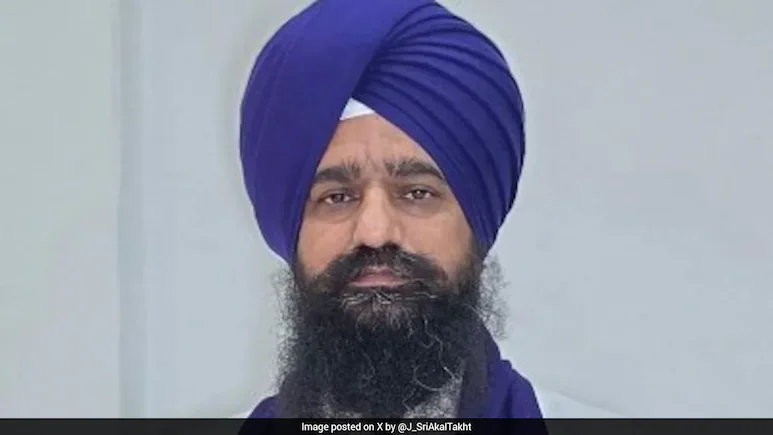
The jathedar (head) of the Sikh temporal seat Sri Akal Takht Sahib, Giani Kuldip Singh Gargajj, has directed Shiromani Gurdwara Parbandhak Committee (SGPC) member Karnail Singh Panjoli to refrain from meeting Punjab Chief Minister (CM) Bhagwant Mann over the issue of release of Sikh political prisoners, citing that Mann has been declared “Guru Dokhi and Khalsa Panth Virodhi” (‘enemy of the Sikh religion and the gurus’).
In a letter to Panjoli, the secretariat of Akal Takht said the entire Panth needed to unite and launch an organised struggle to secure the release of the “Bandi Singhs”.
The jathedar argued that the Aam Aadmi Party-led Delhi government of the time, under Arvind Kejriwal, had failed to approve his release despite having the authority to decide the matter. It claimed that his file had either been rejected or kept pending at different stages. The letter further alleged that false cases had been registered against young Sikh men in Punjab, leading to their imprisonment; and reports of fake police encounters had also emerged. It cited the Tamil Nadu government’s efforts to secure the release of convicts in the assassination of former Prime Minister Rajiv Gandhi.
The letter also raised the case of Davinderpal Singh Bhullar, who is serving a life term for a 1993 car bomb explosion in Delhi that killed nine people. Referring to Jagtar Singh Hawara, convicted for the 1995 killing of the then CM Benat Singh, the letter said his elderly and ailing mother had been waiting for a long time to meet her son, but he had not been granted parole for the meeting.
Questioning the rationale behind meeting the CM, the jathedar’s letter said that, as a member and representative of the SGPC, the Sikh religious Parliament, it was Panjoli’s responsibility to comply with directives of the temporal seat. It said the Punjab government was politicising the issue, and thus participating in its efforts to advance such political interests would amount to turning one’s back on the Akal Takht. Questioning the AAP’s position, it alleged that while the state government had written in support of parole, “it also opposed it”. Describing these as serious human rights concerns, the letter said expecting such a government to protect the human rights of Sikh prisoners was futile.
