

Religion is expected to be a major poll plank in the 2027 Punjab elections as issues like sacrilege, the controversial Jaagat Jot Sri Guru Granth Sahib Satkar (Amendment) Act, 2026, and Panthic politics were already dominating the election scene.
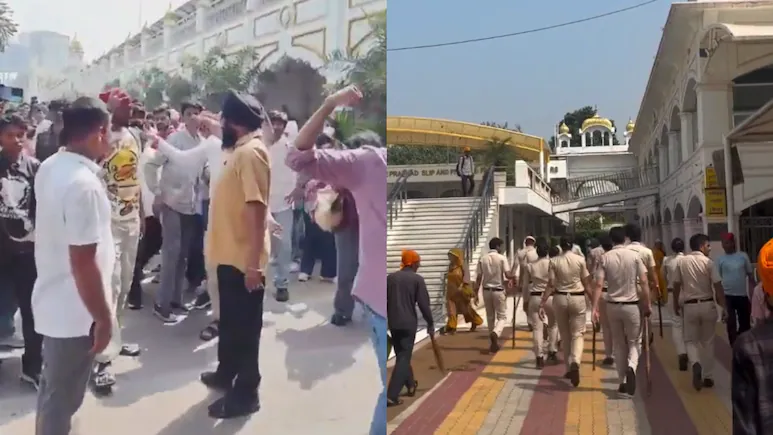
The debate between AAP and BJP over the Bangla Sahib Gurdwara episode clearly shows that both the parties were bent on outdoing each other on Sikhism and the sanctity of gurdwaras and Guru Granth Sahib. Fuming after the recent CBI and ED raids, the fight moves to New Delhi as Bhagwant Mann tries to rake up the alleged police action inside the gurdwara complex. The AAP’s narrative spins around the tenets of Sikhism and Sikh shrines, which make it mandatory to cover one’s head and remove shoes while entering a gurdwara. The target is not BJP but the Delhi Police, which is controlled by the Union Home Ministry and not by the Delhi chief minister, the prerogative which AAP chief Arvind Kejriwal wanted to enjoy while heading the Delhi government. That’s why the AAP leaders, including Bhagwant Mann and other Punjab party leaders, were trying to paint BJP as anti-Sikh and anti-Punjabi. Bhagwant Mann not only condemned the Delhi Police action in strong terms but also targeted Union Home Minister Amit Shah, asking why he was in a hurry to send police to the gurdwara. Interestingly, he also reminded that Sikhism did not differentiate people based on caste and religion and everyone was welcome to take shelter in a gurdwara. He insisted the Sikh community would not forget what he described as a shameful act by the BJP. The timing is hard to miss. That episode had drawn accusations from the SGPC and others that he had questioned offerings. He was also declared Guru Dokhi for disrespecting Sikh Gurus and was now positioning himself, and AAP, as the defender of the same institutions. The AAP has used the Bangla Sahib episode to argue that the Centre and Delhi Police showed scant regard for Sikh religious practice, turning the entry into both a violation of sanctity and proof of continuing high-handedness. BJP leaders counter that the party is simply using the controversy to paper over its own problems in Punjab. Reports from the ground say the gurdwara management barred cops from the main premises, and police remained in the outer areas. Even so, the political use of the incident has already spread. In Punjab, both parties are now mobilising Sikh opinion, each trying to cast the other as the greater danger to religious dignity. The argument over whether a place of worship can also serve as a protest shelter is unlikely to fade quickly – especially when both sides see it as useful ground for the next election. The larger question is whether gurudwaras will continue to be drawn into these contests whenever one party or the other spots an opening.
Because chief Minister Bhagwant Mann, the AAP’s chief ministerial face again, has been declared Guru Dokhi and has been pulled up by the Shri Akal Takht over the shortcomings in the law being enacted to prevent sacrilege, more so.
Bhagwant Mann invoked principles such as the oneness of humanity and “Ik Onkar” to argue that the entry, with officers bare-headed and wearing boots, trampled the dignity of the shrine.
Mann is the same chief minister who earlier faced sharp criticism and was summoned by the Akal Takht over remarks about gurdwara golaks. Mann had, however, called his own video clips fake and clarified his position before the Akal Takht secretariat.
