

In the decades since, technology has evolved through a rapid, compounding acceleration that marks a distinct shift in human history. Artificial intelligence (AI) has moved beyond solving mathematical problems and writing poems and is playing a crucial role in modern warfare. Because of the gritty and intense ‘The Terminator’, that was the first time when the possibility of machines taking over humans became established firmly in collective human consciousness.
The year was 1984. Arnold Schwarzenegger’s stoic, mechanical demeanour turned the T-800 into an unforgettable pop-culture villain.
This was a classic example of an AI-powered attack that showed how time to take targeting decisions was reduced from days to just seconds , raising questions about accountability and the cost of civilian life. The MSS uses data from National Geospatial Intelligence Agency to give live view of the battlefield to commanders. The system is continuously analysing data through machine learning models, identifying objects and assigning confidence scores to potential targets. At the heart of the MSS is Anthropic’s Claude. The AI systems used by Israel military, the IDF, are Lavender and Hasbora.
In April, more than 13,000 targets were struck under Operation Epic Fury, 1,000 of which were hit on the opening day alone, according to US Central Command (CENTCOM). Lavender chooses human targets, which according to a Guardian report, identified 37,000 potential targets While Hasbora identifies targets like buildings and other infrastructure.
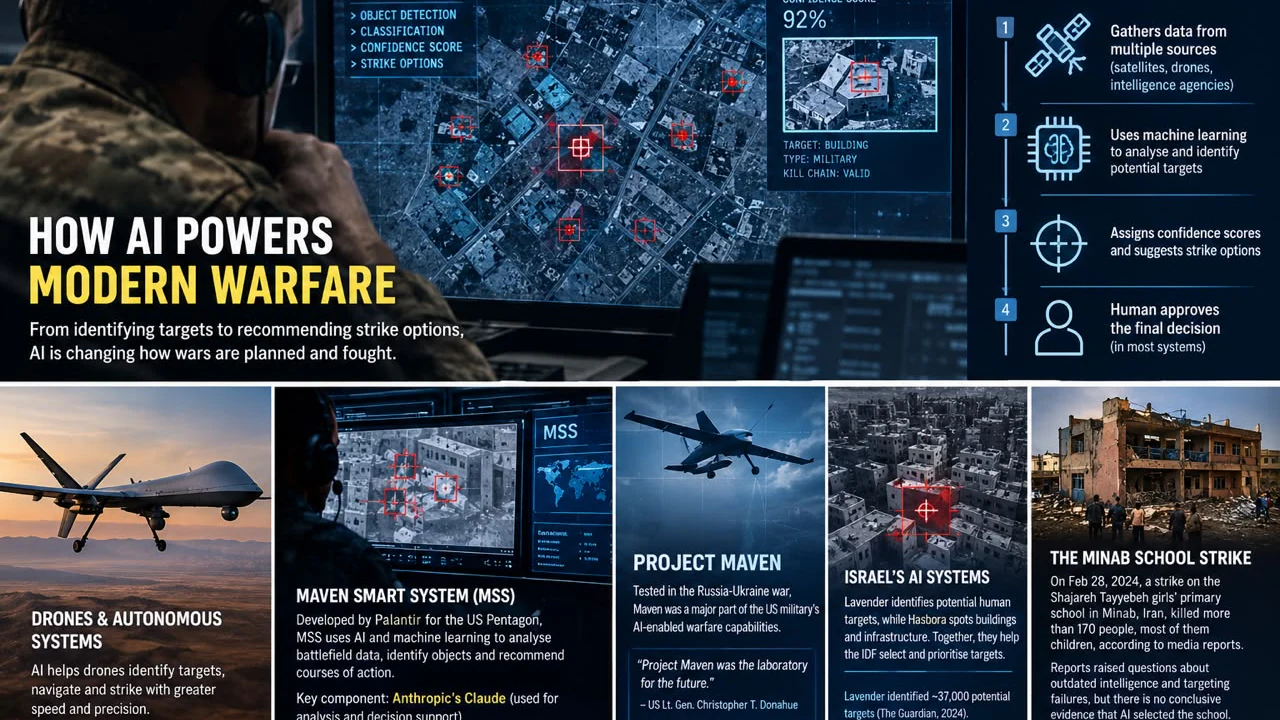
Subsequent investigations raised questions about whether outdated intelligence and failures in the targeting process contributed to the tragedy, amid the US military’s wider use of AI-enabled systems such as Palantir’s Maven Smart System. However, publicly available reporting has not conclusively established that AI selected the school as a target. The incident has intensified a critical debate: when technology helps accelerate military decisions, can human oversight prevent a mistaken target from becoming a civilian catastrophe?
The dangers of AI-assisted warfare came into sharp focus on February 28 this year, when a strike on the Shajareh Tayyebeh girls’ primary school in Minab, southern Iran, killed more than 150 people, most of them children.
