
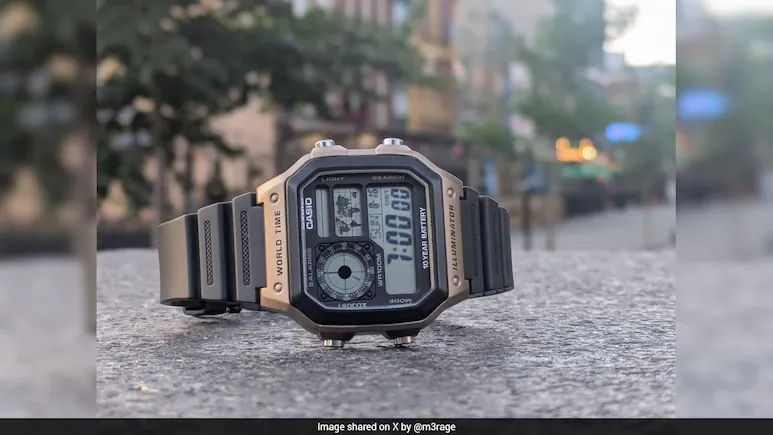
In Thai politics, where luxury watches are a familiar status symbol, the latest must-have costs less than $60 and comes from the prime minister.
The Casio AE1200WH, engraved with Prime Minister Anutin Charnvirakul’s name, is turning up on the wrists of cabinet ministers, senior bureaucrats and political allies.
The watches offer a glimpse into the personal relationships that have helped Anutin build one of the country’s most stable governments in decades. A consummate political dealmaker, he has forged alliances across Thailand’s fractious political landscape, from influential provincial families in his ruling Bhumjaithai Party to senior officials at the powerful Interior Ministry. “The value of what we wear isn’t just in its price. He received his from Anutin after a recent cabinet meeting and has worn it almost every day since, joking that he has all but stopped wearing luxury watches worth tens of thousands of dollars. Recipients have even begun comparing notes on whether they received metal or resin bands. Government spokesman Ekkapob Pianpises played down any suggestion that the gifts identify an exclusive political inner circle, saying Anutin simply likes the watch for its practicality and wants to share it with others. Thai politicians have a long history with statement watches. Anutin’s Casios cost a fraction of those luxury watches.
One of the biggest controversies came in 2017, when then-Deputy Prime Minister Prawit Wongsuwan faced an anti-graft investigation after photographs showed him wearing a succession of expensive timepieces. Investigators examined 22 watches worth more than $1 million that Prawit said he had borrowed from a wealthy friend who later died and cleared him of wrongdoing the following year.
For me, it’s in the person who gives it,” Deputy Transport Minister Siripong Angkasakulkiat, one of the Casio recipients, said in an interview. Anutin buys the Casios from small shops and markets during his travels and site visits around Bangkok, then has his name engraved on them before giving them away, according to Siripong, who said he had to wait a while for his. “It’s not a signal of anything political,” he said. But as personal gifts from the prime minister, they can carry their own political significance, according to Napon Jatusripitak, a visiting fellow at the ISEAS-Yusof Ishak Institute in Singapore. “They potentially create an obligation to return the favour and may cultivate a sense of loyalty in the recipient to follow, to abide and to obey,” Napon said.
