

Indian politics has never been short of theatrics. The recent INDIA bloc protest march to the Supreme Court against Chief Election Commissioner Gyanesh Kumar and SIR (Special Intensive Revision) was full of such spectacles.
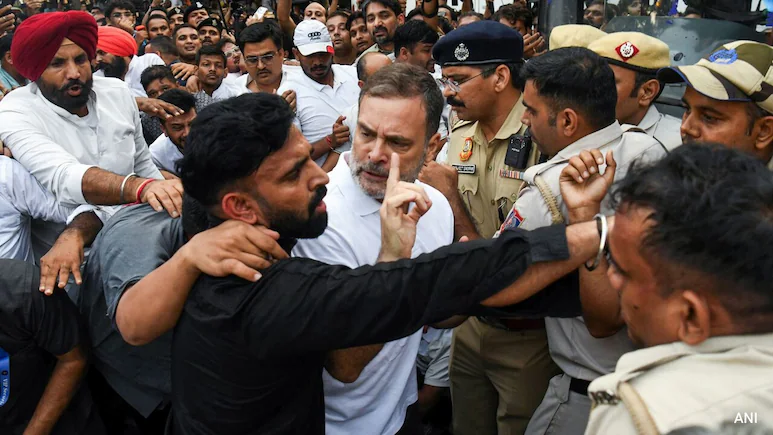
Of course, Shivakumar on Tuesday denied being pushed by Rahul Gandhi during a protest march to the Supreme Court. Congress leaders and siblings Rahul Gandhi and Priyanka Gandhi Vadra have been at the centre of demonstrations in which confrontation with the police, dramatic roadside protests, and emotionally charged gestures have attracted considerable public attention. Footage showing Rahul Gandhi apparently elbowing a fellow protester and pulling back the ‘kurta’ of his own party chief minister – Karnataka Chief Minister DK Shivakumar – has added another layer to the controversy. Rahul Gandhi has made the protection of constitutional institutions, electoral integrity, and democratic accountability central to his political messaging. The INDIA bloc’s campaign against the Election Commission’s SIR of electoral rolls is rooted in concerns about voter deletions and the integrity of electoral processes. The controversy surrounding Rahul Gandhi and Shivakumar illustrates this dilemma. Shivakumar is not merely another party worker in a crowd – he is the elected chief minister of Karnataka. Any footage appearing to show him being physically pulled back by a senior colleague naturally invites questions about personal space, leadership conduct, and the treatment of fellow party members. But visuals speak louder. As Leader of Opposition, demanding accountability from powerful institutions, Rahul Gandhi must understand that his own conduct will be scrutinised just as closely. That is a communications challenge for the Congress. The party must explain why its campaign matters to ordinary citizens who may be less interested in the political fortunes of individual leaders than in whether their own names remain on electoral rolls and whether the election process is transparent. The comparison becomes particularly relevant when established parties like Congress and the INDIA bloc adopt similar forms of theatrical protest but hesitate to give credit to the CJP. In fact, on social media, some Congress supporters are openly discrediting the CJP and see it as a plot to undermine Rahul Gandhi’s youth base. The CJP leaders’ absence from Rahul Gandhi’s tea party, thrown for all protesters (including the INDIA bloc members and AISA leaders) the same evening, has brought much glee for the government.
Ultimately, the Gandhi siblings and the INDIA bloc face a question that extends well beyond a protest or controversial video – can they make institutional accountability the centre of their politics without allowing confrontation to overshadow it?
