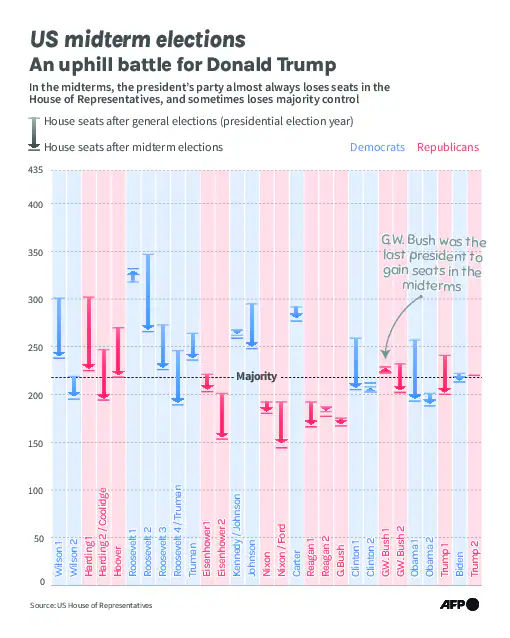
Unlike presidential elections, the midterms will not determine who occupies the White House. Instead, voters will elect members of Congress and decide which party controls the two chambers that make laws, approve spending and scrutinise the government. For President Donald Trump, the elections will be an important test of public opinion halfway through his term. For India, the outcome could have implications for trade, immigration, technology and the wider relationship between the two countries.
Americans will vote on November 3 in elections that could reshape the balance of power in Washington.
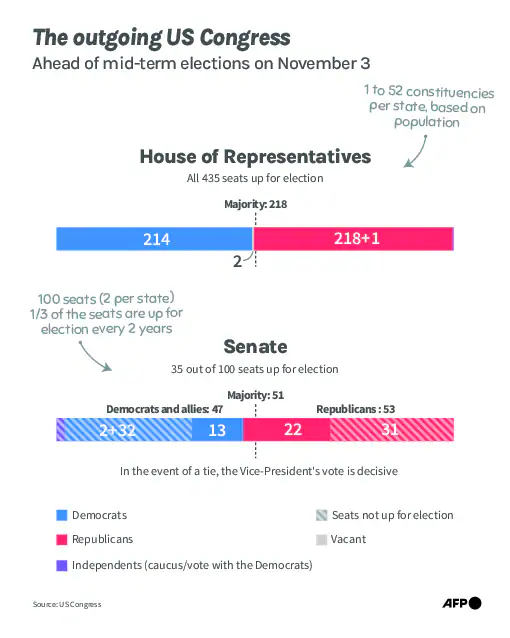
If Republicans retain control of both chambers, the president could have a more straightforward path to advancing legislation, although disagreements within his own party can still complicate matters. If Democrats gain control of either chamber, they could make it harder for the administration to pass legislation. Control of House committees would also give them greater power to investigate government decisions and scrutinise the administration. A divided Congress can also affect negotiations over federal spending, taxation and other major policy questions. Recent polling shows a low approval rating for Trump. Trade and tariffs: Congress has constitutional authority over taxation and foreign commerce, but the president also exercises significant powers under trade laws. The practical impact of the elections would depend on the legislation, executive actions and negotiations involved. H-1B visas and immigration: Indian professionals working in the US, as well as those planning to move there, will be watching immigration policy closely. Congress can legislate on immigration, while the administration has powers over the implementation of existing laws. A change in congressional control would not, by itself, alter visa rules. Foreign policy: Congress has powers relating to spending, legislation and oversight, while the president directs much of the day-to-day conduct of foreign policy. The balance between the two can influence debates over defence spending, sanctions and international engagement.
He began his second term as president with an approval rating of just over 50%, according to polling resource website Silver Bulletin, but in early October it was sitting at about 37%. Meanwhile, 61% disapproved of him.