
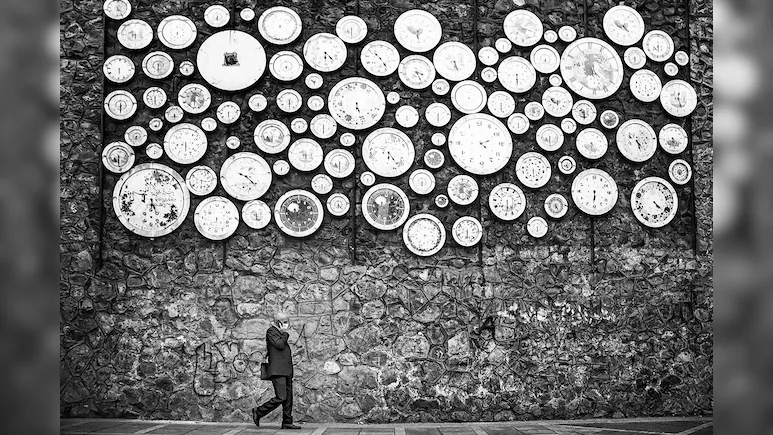
Gathered at a conference of the International Bureau of Weights and Measures in France, the decision was reached after decades of discussion and debate. The leap second will now be replaced with a leap hour to keep clocks in sync across the world. In a landmark decision, international scientists, diplomats, and timekeepers on Thursday (Oct 15) voted to end the leap second.
“After 30 years of debate, the leap second is making way for the leap hour,” said Dr Setnam Shemar, principal scientist in the time and frequency department at the UK’s National Physical Laboratory (NPL). “This will reduce the risks to the systems and national infrastructure that depend on accurate time while still preserving the fundamental link between our global time system and the rotation of the Earth.”
Since the dawn of history, Earth’s rotation on its axis has been the basis for timekeeping. Problems associated with leap second have only compounded as Earth’s rotation has sped up in the past decade. As per scientists, this increase in rotation means that timekeepers would have been forced to add the first negative leap second.
However, since Earth does not rotate at a consistent speed due to several factors, including tides, melting ice and earthquakes, the astronomical time and time measured by highly precise atomic clocks can gradually drift apart.
